Love & Death: The Murder of Kurt Cobain
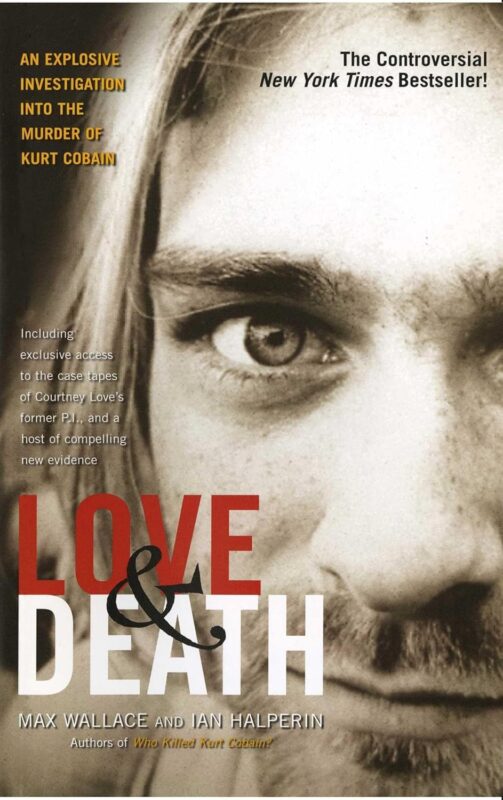
Love & Death: The Murder of Kurt Cobain by Max Wallace and Ian Halperin investigates the circumstances surrounding the Nirvana frontman’s death through forensic detail, contested testimony, and a trail of contradictions. The book constructs its argument through interviews, police reports, audio recordings, and testimonies from Cobain’s closest circle. The narrative does not drift toward speculation; it drives into concrete disputes about evidence, motive, and the silences left by official accounts.
The Seeds of Suspicion
Kurt Cobain was discovered dead on April 8, 1994, in a greenhouse above his Seattle garage. The Seattle Police Department ruled the case a suicide within hours. His death appeared consistent with a shotgun wound to the head, compounded by a lethal dose of heroin. The speed of the ruling raised questions. No homicide investigation followed. Police closed the file without a full inquiry into forensics, timeline inconsistencies, or possible external involvement.
Tom Grant, a private investigator hired by Courtney Love days before Cobain’s death, became the central voice challenging the suicide verdict. His recordings and notes revealed contradictions in Love’s statements, financial motives tied to divorce proceedings, and unusual behavior in the days leading up to the discovery of the body. These findings gained traction as journalists, forensic specialists, and family members began pointing out oversights.
The Grandfather’s Doubt
When the authors interviewed Leland Cobain, Kurt’s paternal grandfather, he spoke with conviction: “Kurt didn’t commit suicide. He was murdered.” His words reflect a family unease with the official story. Forensic specialists who reviewed details in the case—including the heroin levels in Cobain’s body—suggested physical impossibility in handling a shotgun after such a dose. Their assertions created fissures in the dominant narrative of suicide.
The Heroin Question
Toxicology reports revealed a concentration of morphine three times the level associated with fatal overdoses. Forensic scientists noted that an individual with such levels would be incapacitated within seconds. The act of arranging a shotgun, pulling the trigger, and staging the death scene presented physiological implausibilities. The heroin evidence turned the case into a murder theory built not on rumor but on pharmacology.
The Role of Courtney Love
Courtney Love stands at the core of the narrative, not as a grieving widow but as a figure surrounded by allegations of manipulation, coercion, and premeditation. Former associates, including her father Hank Harrison, accused her of being capable of engineering Kurt’s death. Divorce papers and Cobain’s intention to exit both marriage and business partnerships provided financial motive. Witnesses recounted her erratic behavior, including contradictory accounts about Cobain’s disappearance from rehab days before his death.
The authors traced Love’s trajectory from her chaotic childhood to her rise in rock culture. They examined patterns of ambition, instability, and destructive intimacy. By embedding her biography within the investigative framework, the book places her actions against the timeline of Kurt’s final weeks.
The Private Investigator’s Files
Grant’s tapes and notes form one of the book’s central evidentiary threads. His recordings captured Love fabricating details to police, reporting Cobain as suicidal while he wrote plans for a divorce, and misdirecting investigators. Grant followed financial records, travel schedules, and statements that contradicted physical evidence. His role transformed from hired investigator to whistleblower, and his persistence fueled public suspicion.
A Death Scene Unresolved
Forensic photographs and crime scene analysis revealed peculiarities. The shotgun was found inverted, ejected shells lay on the opposite side expected from firing mechanics, and the suicide note displayed handwriting inconsistencies. Experts in handwriting analysis identified differences in the final lines of the note compared to Cobain’s earlier letters. The note read like a retirement letter from music rather than a farewell to life until its closing sentences abruptly shifted in tone.
Seattle’s Reluctance to Reopen the Case
Despite mounting challenges, the Seattle Police Department has resisted reopening the case. Officers involved in the original investigation maintain confidence in their ruling. Yet retired law enforcement officials interviewed for the book criticized the speed of the suicide determination. Their critiques highlighted violations of investigative protocol: lack of fingerprint analysis on the gun, minimal photographic documentation, and reliance on circumstantial assessment rather than comprehensive forensics.
Media, Myth, and the Silence of Peers
The press embraced the suicide narrative as fitting the archetype of the tortured rock star. Images of Cobain as a doomed poet overshadowed forensic disputes. Nirvana’s surviving members offered minimal public commentary. Friends like Dylan Carlson provided fragmented accounts that fed ambiguity rather than resolution. Silence became part of the cultural canon surrounding Cobain, sealing the narrative in tragedy while investigative questions remained unresolved.
The Broader Context of Rock and Mortality
The book situates Cobain’s death within a broader pattern of music industry casualties. It points to the pressure of fame, the economics of record contracts, and the machinery of celebrity as accelerants of destruction. Yet it insists that Cobain’s end carried markers of planning by others rather than collapse from within. This argument reframes his story: not only a biography of despair, but a crime narrative entwined with inheritance, intellectual property, and financial stakes.
The Legacy of Doubt
Love & Death assembles voices of forensic experts, family members, and investigators who converge on the claim that the official version remains untenable. The authors argue for reopening the case, not to sensationalize, but to reconcile contradictions that persist three decades later. Their work reshapes Cobain’s story into one where murder remains a structural possibility supported by evidence rather than conjecture.
The Pressure of Fame and the Road Out of Aberdeen
Cobain’s journey from his troubled childhood in Aberdeen, Washington, to international fame threaded through alienation, art, and relentless ambition. He sought escape through music, and by 1991 Nirvana stood at the center of a global cultural shift. The book emphasizes how fame amplified Cobain’s disillusionment. Friends recounted how he voiced disgust at the audience demographics, industry exploitation, and the collapse of punk authenticity. Yet ambition and despair intertwined with a desire for creative freedom.
The Final Days
The chronology of Cobain’s last days forms one of the most gripping sections. After leaving rehab in Los Angeles, Cobain returned to Seattle. Witnesses placed him at multiple locations, yet the timeline remains inconsistent. Courtney Love reported him missing, but her own statements to police contradicted later testimony. When his body was found on April 8, coroners estimated he had been dead for days, creating temporal gaps filled with speculation and suspicion.
Why the Story Endures
The book asserts that unresolved evidence fuels Cobain’s enduring myth. Fans continue to spray “Who Killed Kurt?” under Aberdeen bridges. Documentaries, biographies, and police reviews return to the case, but the fundamental questions remain: How could Cobain operate a shotgun with lethal levels of heroin in his system? Why did police rush to close the case? What did Courtney Love know in the days before his death?
The Authors’ Role
Wallace and Halperin entered the investigation after years of journalistic work on Cobain. Their first book, Who Killed Kurt Cobain?, refrained from conclusions and instead called for inquiry. Love & Death moves further. With nearly a decade of new evidence, they frame Cobain’s death as a probable homicide. Their narrative does not soften with disclaimers but presses into the weight of forensic testimony, the inconsistencies of Love’s accounts, and the institutional reluctance of Seattle authorities.
The Demand for Resolution
The book concludes with a call for official reopening of the case. The precedent of other long-cold cases reignited decades later demonstrates possibility. The conviction of Michael Skakel in the Martha Moxley case—reopened after twenty-seven years—serves as a parallel cited by the authors. They insist Cobain’s case holds the same potential for judicial review.
The narrative of Love & Death leaves readers with sharpened tension. The weight of heroin dosage, the inconsistencies of the note, and the testimony of Cobain’s own family converge into a structure of doubt. The book repositions his story from the inevitability of suicide to the unresolved shadow of murder, and in doing so, forces the legacy of Cobain to remain a living question rather than a sealed myth.