Other Losses: The Shocking Truth Behind the Mass Deaths of Disarmed German Soldiers and Civilians Under General Eisenhower’s Command
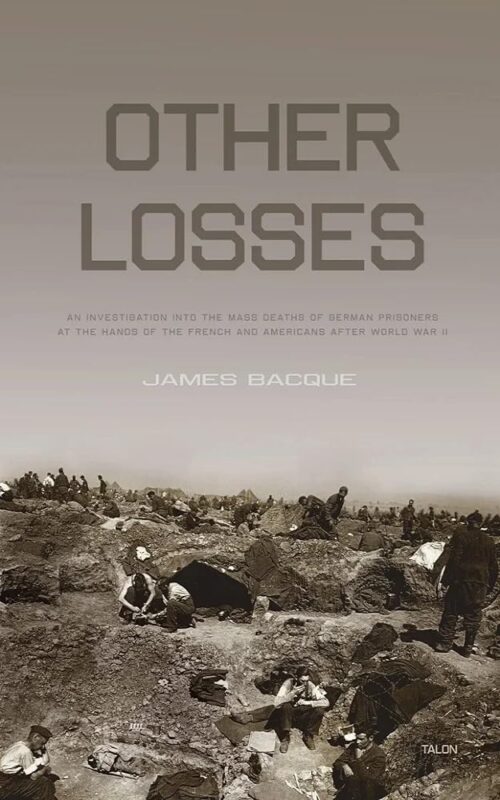
Other Losses: The Shocking Truth Behind the Mass Deaths of Disarmed German Soldiers and Civilians Under General Eisenhower’s Command by James Bacque exposes the hidden catastrophe that unfolded in American and French custody during the final months of World War II and its immediate aftermath. The book argues that hundreds of thousands of disarmed German troops and civilians perished in camps managed by the U.S. Army, their deaths concealed in reports under the category “Other Losses.” Drawing on declassified documents, eyewitness testimony, and meticulous statistical reconstruction, Bacque presents a disturbing account of policy decisions that shaped one of the darkest chapters of twentieth-century warfare.
The Birth of a Hidden Category
In March 1945, as Germany collapsed, General Dwight D. Eisenhower approved the creation of a new classification for surrendered German forces. These men would be called Disarmed Enemy Forces rather than Prisoners of War. By changing their status, the U.S. Army removed them from the protections of the Geneva Convention and shifted responsibility for feeding them onto German authorities who no longer controlled their own food supply. This administrative decision created a legal loophole. Once the label existed, the U.S. command could curtail rations, deny Red Cross inspections, and restrict external aid. The bureaucratic maneuver had immediate consequences on the ground.
The reporting system soon reflected the effects of this new category. Weekly camp returns contained a line item titled “Other Losses.” This catch-all absorbed unexplained reductions in headcount, officially described as transfers, escapes, or deaths. Bacque demonstrates that escapes from barbed-wire cages under constant guard were rare. Transfers could be tracked separately. What remained under “Other Losses” represented a staggering number of deaths caused by starvation, exposure, and disease.
The Scale of Death
The camps expanded rapidly after May 1945. In the American zone alone, over five million Germans surrendered. They were herded into open fields enclosed by barbed wire. Shelter was absent. Sanitation collapsed. Men stood shoulder to shoulder on mud that turned to a fetid swamp under spring rains. Dysentery spread through the ranks, and bodies piled up as the days passed. French-run camps, supplied with captives from American transfers, reported mortality rates of twenty-five percent in a single month.
Bacque reconstructs the numbers from archival tables that track prisoners from D-Day to January 1946. These records show vast discrepancies between captured totals and surviving figures. He identifies a missing population of nearly one million men, a number that aligns with reports from German families searching for relatives and from survivors who later testified to the lethal conditions. The death toll, he argues, likely exceeded 800,000 and may have surpassed one million, concentrated in the months of spring and summer 1945.
Archival Evidence
The foundation of the book lies in records from the U.S. National Archives, the George C. Marshall Foundation, and French military archives at Vincennes. Bacque discovered that routine reports submitted by the provost marshal and the German Affairs Branch of SHAEF consistently used “Other Losses” to explain drops in prisoner numbers. When interviewed decades later, Colonel Philip Lauben, who had prepared these reports, confirmed that the phrase included deaths. He acknowledged that escapes were negligible and transfers tracked elsewhere.
The documents reveal that the Combined Chiefs of Staff approved the Disarmed Enemy Forces designation exclusively for American use. The British declined to apply it to their own captives, continuing to treat them as Surrendered Enemy Personnel with full POW rights. The secrecy surrounding DEF status was deliberate. Orders instructed that the change never be announced publicly. Only years later, through Bacque’s investigation, did the hidden framework emerge.
The Role of Food Policy
Food availability in the West contradicts claims that mass deaths resulted from general scarcity. Statistics from the U.S. Department of Agriculture and British records show substantial wheat surpluses in 1944–46. American farmers harvested record crops, and warehouses stored millions of bushels. Ships carried grain across the Atlantic. Caloric availability for Allied populations remained high. Yet in the camps, prisoners starved.
Bacque demonstrates that U.S. Army warehouses contained hundreds of thousands of mess kits, millions of toilet articles, and vast reserves of barracks equipment, none of which reached the wire enclosures. Food shipments intended for Germany were blocked, returned, or delayed. The policy was not accidental but systemic. By redefining prisoners and limiting relief access, the command created conditions where mass mortality became inevitable.
Testimonies of Survivors
The book amplifies the voices of those who endured the ordeal. Former German soldiers recounted standing for days without food, drinking from puddles contaminated by human waste, and watching comrades collapse. Some camps recorded death rates higher than battlefront attrition. In one French facility, survivors recalled that one in four men died within weeks. Others described emaciated figures buried in shallow graves while guards looked on impassively.
These accounts gain weight through their convergence with archival evidence. Reports from the International Committee of the Red Cross documented overcrowding, lack of shelter, and denial of access. Local French and German civilians witnessed truckloads of corpses transported from camps. Even American guards wrote letters describing the horrors, which were later corroborated in oral history interviews.
Strategic Context
Why would the Allied command permit such destruction after victory? Bacque situates the policy within broader plans to dismantle Germany’s capacity for resurgence. In 1944, Allied planners debated proposals to reduce the nation to an agrarian society. The Morgenthau Plan openly advocated deindustrialization. While official policy shifted under public pressure, elements of this approach persisted in the treatment of surrendered forces. Eisenhower’s deep antipathy toward Germany, expressed in private communications, reinforced the harsh measures.
The classification of prisoners as DEF aligned with these objectives. By burdening Germany with the task of feeding millions of captives under conditions of ruined infrastructure and disrupted agriculture, the Allies intensified the collapse. The result was mass death among soldiers who had already laid down their arms.
The Pattern of Concealment
Bacque devotes significant attention to how records were altered or obscured in later summaries. He demonstrates that figures in official histories diverge from contemporaneous reports. Transfers to the French were inflated, deaths minimized, and capture totals adjusted. The process created an illusion of orderly administration while masking catastrophic losses.
The phrase “Other Losses” epitomizes this concealment. Bureaucratic blandness disguised human catastrophe. Each entry in the column represented men reduced to statistics, their deaths stripped of names and contexts. By reconstructing the original reports, Bacque rehumanizes the vanished and restores their place in the historical record.
Reception and Controversy
The book provoked intense debate upon publication. Historians challenged Bacque’s methods, while others confirmed the plausibility of his findings. Colonel Ernest Fisher, a retired U.S. Army historian, contributed a foreword endorsing the central claims and condemning the scale of the atrocity. The controversy underscored the stakes of historical interpretation: whether these deaths represented isolated tragedy or systematic policy.
Regardless of disagreement over numbers, the existence of DEF status, the denial of Geneva Convention protections, and the presence of mass mortality in the camps stand as documented facts. The archival trail remains undeniable. The debate concerns magnitude and intent, not occurrence.
Ethical Reckoning
The narrative forces a confrontation with moral responsibility. What does it mean when a victorious army presides over mass death of disarmed men? How should societies reckon with policies that turn legal categories into instruments of destruction? Bacque argues that recognition is the first step. Only by acknowledging the truth of what happened can reconciliation and justice proceed.
The book also raises questions about historical memory. For decades the story remained buried in classified files. Public accounts celebrated liberation while ignoring the suffering of those who had surrendered. The exposure of “Other Losses” challenges triumphalist narratives and compels a more complex understanding of postwar Europe.
Lasting Significance
The implications extend beyond the events of 1945. The manipulation of legal definitions, the control of information through archival secrecy, and the bureaucratic language that conceals death all resonate in contemporary discussions of war crimes and humanitarian law. “Other Losses” becomes more than a historical detail; it represents a warning about the dangers of administrative power unchecked by moral constraint.
By documenting how a phrase in a report masked the deaths of hundreds of thousands, Bacque demonstrates how language can become a weapon. The lesson reaches across decades: vigilance must extend to words as well as actions.
Conclusion
Other Losses The Shocking Truth Behind the Mass Deaths of Disarmed German Soldiers and Civilians Under General Eisenhower’s Command by James Bacque stands as a powerful indictment grounded in evidence, testimony, and moral clarity. It reconstructs the fate of men consigned to oblivion by policy, paperwork, and silence. It compels readers to recognize that the end of a war does not guarantee the end of suffering. Victory without justice yields atrocity concealed beneath administrative phrases. Bacque’s work ensures that those lost in the column marked “Other Losses” are remembered, and their story becomes an integral part of the history of the twentieth century.

About the Book