Clowns A Panoramic History of Fools and Jesters
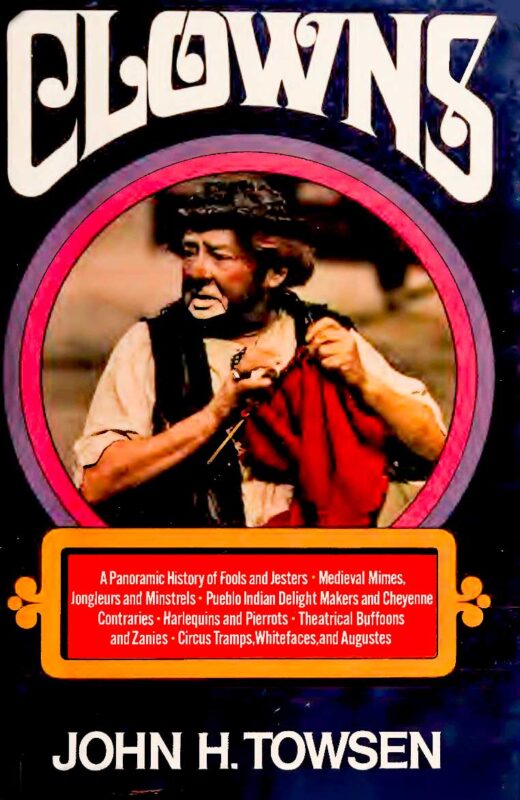
Clowns A Panoramic History of Fools and Jesters by John H. Towsen maps the evolution of comedic performance from ritual buffoonery to the circus ring with an archival precision that renders its sweep definitive. Towsen documents the rise of the clown as sacred disruptor, satirical voice, popular actor, and modern entertainer, grounding his analysis in rare photographs, detailed descriptions, and carefully reconstructed performances. The book demonstrates how clowns embody cultural memory, communal tension, and theatrical innovation across centuries.
Ritual Origins and Sacred Play
The story begins in indigenous ritual, where clowns performed as sanctioned disruptors of sacred ceremony. Pueblo Indian delight makers smeared their bodies with mud, mocked fertility dances, and parodied ritual chants to provoke laughter that reinforced social bonds. Cheyenne contraries rode horses backwards, spoke in inverted speech, and performed illogical acts that turned disorder into spiritual force. These societies used clowning to critique alcohol abuse, expose hypocrisy, and regulate community behavior through public satire. What sustained the ritual clown was the recognition that folly clarified truth, that laughter preserved order by dramatizing its violation.
The Fool as Archetype
Towsen defines the fool as both natural and artificial. Natural fools embodied eccentricity, deformity, or madness, often perceived as spiritually touched or divinely protected. Artificial fools enacted folly by design, transforming comic perception into social commentary. Court jesters across Europe assumed this second role with sharp wit and calculated insolence. The artificial fool’s speech, filled with riddles, couplets, and comic inversions, served as a tool of license that allowed critique of monarchs and nobles. From Mathurine at the French court to Scogan under Edward IV, jesters manipulated humor to reveal power’s vulnerability.
The Feast of Fools and Folk Societies
Medieval Europe institutionalized folly in the Feast of Fools. Clergy reversed hierarchies, donned donkey ears, and sang parodied Mass responses. Towns demanded these celebrations with fervor, sometimes kidnapping clergy to guarantee performance. From these beginnings grew secular fool societies like the Enfants Sans Souci and Dijon’s Mère-Folle, whose motto proclaimed “the number of fools is infinite.” These groups issued mock currency, staged sotties that ridiculed kings and priests, and punished corrupt citizens with public satire. The clown became both entertainer and regulator, exposing greed, vice, and hypocrisy through parody and theatrical inversion.
The Clown on Stage
Theater offered new ground for clowning, where improvisation tested the boundaries of scripted drama. In Sanskrit theater, the Vidusaka clown-servant spoke Prakrit instead of Sanskrit, turning epic gravitas into comedy through vulgar wit and clumsy antics. Chinese opera clowns, marked by white patches around the eyes, performed both verbal wit and acrobatic feats. In Balinese temple drama, the clowns Penasar and Kartala disrupted ritual with parody, cowardice, and slapstick mischief. These roles amplified satire, grounded myth in vernacular speech, and brought audiences into direct relation with performance.
The Western Mime Tradition
Greek mimes, or deikelistai, shaped the first professional comic theater. They performed domestic quarrels, sexual exploits, and parodies of gods on temporary wooden stages. Their farces traveled to southern Italy as phlyakes comedies and into Rome as mime and Atellan farce. Stock characters like the braggart soldier and larcenous slave became enduring templates for later comedy. Minstrels and jongleurs of the Middle Ages absorbed these traditions, carrying humor into villages and courts, juggling satire with physical agility. Their legacy culminated in commedia dell’arte, where zanies, Harlequins, and Pierrots improvised with acrobatic brilliance and biting wit.
From Pageant to Circus
The eighteenth and nineteenth centuries saw clowning migrate into the circus ring. English clowns like Joseph Grimaldi introduced whiteface makeup, exaggerated gestures, and musical parody that set the model for modern performance. In the one-ring American circus, clowns improvised with horses, wagons, and audience interaction, merging physical comedy with spectacle. With the rise of the three-ring circus, the Auguste clown emerged as foil to the Whiteface, red-nosed and bumbling, forever the victim of pies, slapsticks, and pratfalls. Towsen traces how these archetypes structured comic duos, balancing order with chaos, control with anarchy.
Stand-up, Knockabouts, and Entrees
Clowning diversified into multiple forms of performance beyond the circus. Knockabout troupes staged cascades of acrobatic collisions, while stand-up clowns addressed audiences directly with monologues that blended satire and physical business. Entree clowns specialized in running gags and recurring sketches, recycling routines across continents yet customizing them for local humor. The persistence of set-pieces like the water bucket gag or ladder pratfall demonstrated how repetition, variation, and timing sustained laughter across generations.
The Clown in America
The American circus developed a unique clown identity shaped by the one-ring format. Tramp clowns, inspired by post-Civil War vagrancy, wore patched costumes and exuded a mixture of pathos and resilience. They became icons of depression-era survival and comic resilience. Rodeo clowns, meanwhile, assumed life-saving roles in bullfighting arenas, using humor to distract danger while safeguarding riders. These performers fused comedy with risk, embodying the paradox of laughter at the edge of peril.
The Clown-Mime Convergence
The twentieth century witnessed a convergence of mime and clowning, embodied in artists like Marcel Marceau and Jacques Lecoq. Their work distilled clowning into elemental gestures, silence, and universal physicality. Stage clowns emerged in avant-garde theater as poetic figures, at once comic and tragic. Federico Fellini’s film “I Clowns” memorialized this world even as he declared its decline, yet Towsen identifies a resurgence in clown training, with Ringling Bros. Clown College and university programs producing new generations of performers.
Contemporary Relevance
Towsen emphasizes that clowning thrives because it adapts. The clown survives commercial branding, from Bozo to Ronald McDonald, yet flourishes outside advertising in street theater, political satire, and experimental performance. The tradition persists because clowns mediate tension between sacred and profane, power and rebellion, order and disorder. Their antics regulate communities, entertain multitudes, and challenge authority. The clown functions as poet and orangutan, improviser and critic, healer and satirist.
Conclusion
John H. Towsen presents a panoramic history that situates clowns as central agents of culture. He reveals their presence in Pueblo plazas, medieval cathedrals, royal courts, Shakespearean stages, Parisian boulevards, American circuses, and contemporary theater schools. Clowns emerge not as marginal entertainers but as performers who hold mirrors to societies, channeling disorder into laughter, and laughter into collective recognition. Their survival demonstrates an enduring cultural need for folly, irreverence, and comic disruption that transforms spectatorship into shared experience.
