The History Thieves: The History Thieves: Secrets, Lies and the Shaping of a Modern Nation
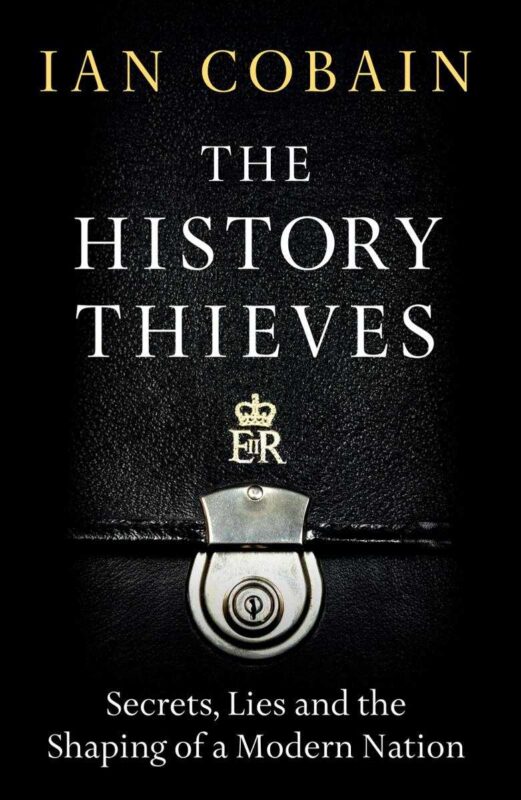
The History Thieves: Secrets, Lies and the Shaping of a Modern Nation by Ian Cobain traces the hidden architecture of British secrecy, showing how a centuries-long system of concealment shaped the nation’s political identity, its wars, and its moral self-perception. Cobain reconstructs how the British state built and maintained an infrastructure designed to protect itself from scrutiny, from the Privy Council oath of silence in the thirteenth century to the digital surveillance regimes of GCHQ in the twenty-first. His investigation follows the path of the secret file, the burned document, the sealed archive, and the unrecorded act, demonstrating that secrecy functions as a mode of power rather than a defensive necessity.
The Invention of Official Secrecy
In the nineteenth century, Britain presented itself as the world’s most transparent government, yet the habits of discretion embedded in the ruling class sustained a private culture of silence. The Privy Council oath—unchanged since 1250—bound ministers to secrecy as a sacred duty. When Giuseppe Mazzini’s mail was intercepted in 1844 under the direction of Home Secretary Sir James Graham, Parliament and the press briefly glimpsed the hidden machinery of surveillance. That episode revealed a government that opened correspondence, copied seals, and concealed the extent of its operations behind appeals to “public good.” Outrage over the Mazzini affair led to no reform. The state learned instead that the language of security could legitimize concealment.
The Birth of the Official Secrets Acts
The second half of the nineteenth century brought a flood of paperwork and a new clerical class that did not share the loyalties of the aristocratic administrators who preceded them. As literacy spread and newspapers multiplied, leaks became profitable. The government answered with the 1889 Official Secrets Act, passed in nine minutes of debate. The law criminalized unauthorized disclosure of information “contrary to the interests of the state.” In 1911, amid hysteria about German espionage inflamed by novelist William Le Queux’s Spies of the Kaiser and his collaboration with Lord Northcliffe’s Daily Mail, Parliament expanded the Act. Section 2 rendered all government information secret unless released by authority. A civil servant discussing his work with family committed a crime; a journalist receiving such information shared that guilt.
The Institutionalization of Silence
Through the early twentieth century, secrecy hardened into bureaucratic routine. Cabinet discussions left no minutes. Ministers justified silence as “collective responsibility.” Departments developed elaborate hierarchies of classification—Confidential, Secret, Top Secret—without oversight. The historian Peter Hennessy would later describe secrecy as part of Britain’s landscape, as ordinary as its hills. This landscape extended to Empire. Dispatches from colonial officers passed through a censor’s eye, and the files that documented rebellion, punishment, and exploitation disappeared into restricted vaults. Secrecy produced the illusion of moral governance abroad and stability at home.
The Secret Wars of a Peaceful People
Cobain traces how concealment transformed Britain’s military record. After 1945, official narratives celebrated victory while omitting campaigns that contradicted the image of liberation. Few Britons knew that in 1945 British troops rearmed Japanese prisoners of war to fight the Viet Minh on behalf of France. The four-year undeclared war against Indonesia in the 1960s and the eleven-year campaign in Oman—conducted under cover of “military assistance”—remained unreported. Each conflict generated classified archives that excluded the public from understanding the extent of Britain’s global engagement. The effect was cumulative: a nation could believe itself post-imperial while its soldiers fought secret wars.
Operation Legacy and the Theft of Colonial History
At the end of Empire, the state engineered an act of historical erasure unprecedented in scale. Operation Legacy directed colonial administrators to destroy or remove sensitive files before independence. Records detailing torture in Kenya, executions in Malaya, and coercive labor systems across Africa and the Caribbean were burned or dumped at sea. Thousands of surviving files were shipped to a secure facility at Hanslope Park in Buckinghamshire, hidden under a false classification for decades. When scholars uncovered their existence during a 2011 legal case brought by Kenyan veterans of the Mau Mau uprising, the Foreign Office admitted to holding over 1.2 million secret colonial records. The admission exposed a system designed not to preserve history, but to curate national memory.
The Vault and the Northern Irish Conflict
The pattern continued in Northern Ireland. During the Troubles, units such as the Force Research Unit and the Military Reaction Force operated under layers of secrecy that masked extrajudicial killings and arms transfers to loyalist paramilitaries. The official narrative described a counterterrorist campaign constrained by law. The classified record shows a dirty war managed through intelligence channels that left few traces in the public archive. Even today, the Public Record Office of Northern Ireland holds extensive closed files, many of them indefinitely sealed under “national security” exemptions. Cobain demonstrates that these practices shaped public perception of the conflict, allowing the British state to claim legality while acting beyond it.
The Architecture of Concealment
The National Archives, established under the Public Records Act, symbolizes openness but functions as a filtering mechanism. Departments decide what to release. Files marked for destruction vanish before historians can request them. Freedom of Information legislation introduced under Tony Blair promised transparency, yet exemptions multiplied until disclosure became the exception. The destruction of hard drives at The Guardian’s London office in 2013—overseen by intelligence officers after the Edward Snowden leaks—illustrated the persistence of control. The symbolism of that act, Cobain argues, revealed a state still determined to define the boundaries of permissible knowledge.
The Intelligence State and the Control of History
For decades after World War II, MI5, MI6, and GCHQ officially did not exist. Their directors’ names were classified even as Soviet intelligence knew them. The story of Bletchley Park and the breaking of the Enigma code remained secret until 1974, three decades after the victory it ensured. When journalists finally exposed GCHQ in 1976, the government prosecuted them under the Official Secrets Act. These agencies retain authority to decide what historical material to release. MI5 has curated a small selection of files to project an image of moral professionalism. MI6 has released nothing since its founding in 1909. As a result, the British public knows less about its intelligence services than Russians do about the KGB.
Secrecy in the Courts
The judicial system has absorbed the same logic of exclusion. Since 9/11, British courts have conducted closed hearings in terrorism cases where evidence of torture or rendition could embarrass the state. The Investigatory Powers Tribunal and the Special Immigration Appeals Commission hold sessions in undisclosed locations where complainants cannot attend. The Justice and Security Act of 2013 legalized “Closed Material Procedures,” allowing government evidence to be heard in secret even from the claimant’s lawyers. These proceedings create a body of case law invisible to the public yet binding on future judgments. Cobain identifies this as the emergence of a secret jurisprudence parallel to the official legal order.
The Psychology of Obedience
Cobain examines how secrecy became internalized as virtue. Civil servants are trained to treat silence as loyalty. The oath of confidentiality replaces civic accountability. The Official Secrets Acts operate less through prosecution than through deterrence, embedding caution in daily bureaucracy. A file may remain classified not because it endangers security but because disclosure would expose inconsistency, incompetence, or cruelty. This psychological structure sustains the continuity of government by ensuring that embarrassment carries the same weight as espionage.
Memory, Myth, and National Identity
Secrecy constructs identity as much as it conceals fact. When citizens lack access to their state’s record, they build history from selective fragments. Myths of fair play, restraint, and administrative decency fill the gaps left by missing archives. Cobain links this mythmaking to the erasure of colonial violence and to the portrayal of Britain as a reluctant imperial power. The destruction of evidence during Operation Legacy was not only a bureaucratic act but a cultural one: it protected a narrative of moral purpose. The same impulse shapes modern denials of complicity in rendition or torture.
Contemporary Secrecy and Digital Surveillance
The partnership between GCHQ and the U.S. National Security Agency demonstrates how secrecy evolves with technology. Bulk data collection replaces the interception of letters that began with Mazzini’s mail. The Snowden documents showed that GCHQ captured the content and metadata of communications worldwide through programs such as TEMPORA. The government justified this surveillance through the same logic articulated in the nineteenth century: protection of national security requires opacity. The destruction of the Guardian’s computers symbolized continuity between the analog secrecy of the Empire and the digital secrecy of the information age.
The Consequences of Concealment
Cobain argues that secrecy distorts democracy by crippling collective memory. When wars, abuses, and errors vanish from the record, citizens cannot evaluate policy or demand redress. The theft of history undermines moral self-knowledge. In the absence of full disclosure, the electorate cannot see the true extent of Britain’s military reach or its colonial inheritance. The persistence of classified archives ensures that decisions made decades ago still shape the moral vocabulary of the present.
The Structure of a Hidden State
Across two centuries, the British government refined techniques of concealment: legal instruments, bureaucratic discipline, selective declassification, and public narrative. These methods reinforce one another. The Official Secrets Acts create the threat of prosecution; the archival system filters what reaches historians; intelligence agencies control their own records; courts operate behind closed doors. The structure functions as an ecosystem whose product is ignorance. Its continuity demonstrates design rather than accident.
The Question of Accountability
Can a democracy sustain itself when its history remains unseen? Cobain frames this question through example rather than abstraction. Each act of secrecy—whether the destruction of a file, the redaction of a document, or the sealing of a courtroom—removes a piece of evidence that connects citizens to power. Without those connections, accountability becomes rhetorical. The state governs through what it withholds. The future, therefore, depends on the recovery of what was hidden.
The Shape of the Modern Nation
The book closes with the assertion that the modern British state emerged from its secrets as much as from its institutions. The mechanisms of concealment built during Empire, refined during world wars, and adapted for the digital age define the limits of public knowledge. To understand Britain’s role in the world requires tracing the silences within its own archives. Cobain positions secrecy not as a symptom but as a foundation—an enduring system that shapes the stories the nation tells about itself and the truths it permits to survive.