The Terror Factory: Inside the FBI’s Manufactured War on Terrorism: The ISIS Edition
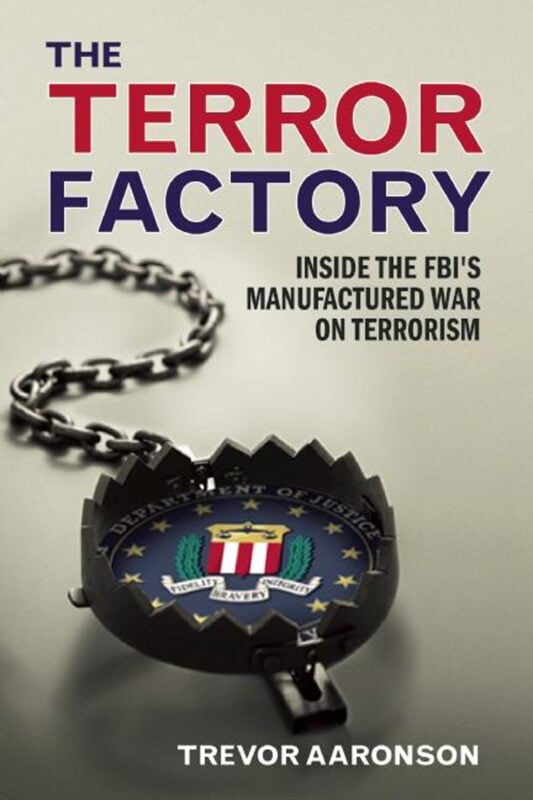
The Terror Factory by Trevor Aaronson investigates the inner workings of the FBI’s post-9/11 counterterrorism strategy, exposing the agency’s use of elaborate sting operations and informants to shape the American understanding of terrorism. Through a comprehensive examination of federal court records, investigative interviews, and statistical analysis, Aaronson draws a portrait of an agency that systematically manufactures plots, cultivates informants, and reframes the terrorist threat within the United States.
The Rise of the Manufactured Terrorist
After 2001, FBI leadership demanded a shift from reactive law enforcement to preemptive intelligence operations. Trevor Aaronson reveals that this transformation depended on aggressive informant recruitment and an unprecedented expansion of domestic surveillance. Congressional funding of $3 billion per year funneled into the FBI’s counterterrorism programs produced an informant network ten times larger than during the COINTELPRO era. The Bureau positioned its agents and informants across American Muslim communities, identifying individuals susceptible to suggestion or inducement. The new operational doctrine targeted young, disenfranchised men with radical views or expressions of dissent, using the logic of prevention to justify wide-ranging infiltration and sting operations.
Sting Operations and Informant Networks
The FBI’s strategy involved embedding informants—often with criminal records or financial motivations—into social circles where targets voiced frustration or sympathy for extremist causes. Informants, incentivized by cash rewards exceeding $100,000 per successful case, acted as agent provocateurs. They developed relationships with targets, introduced ideas for attacks, and supplied fake weapons or explosives. In hundreds of terrorism cases analyzed by Aaronson, the plot’s conception, planning, and logistical support originated with government actors. The informant industry grew into a system managed through advanced tools like the Delta database, which allowed agents to select informants by language, ethnicity, or geographic mobility.
Case Study: The Anatomy of a Sting
Consider the story of Michael Curtis Reynolds, a man with a tenuous grip on reality, limited financial resources, and no operational ties to organized terror. Reynolds’ online fantasies of attacking U.S. infrastructure caught the attention of an FBI informant posing as an al Qaeda financier. The informant offered money, guidance, and logistics for an attack Reynolds could never have executed alone. When Reynolds traveled to collect the promised funds, federal agents arrested him, charging him as a dangerous terrorist. At trial, prosecutors and law enforcement officials framed Reynolds’ arrest as the prevention of a deadly plot. In Aaronson’s telling, Reynolds becomes the emblem of a new breed of “terrorist”—a product of FBI engineering and inducement rather than independent capability or intent.
The Data Behind the Narrative
Aaronson’s research team compiled a database of 508 individuals prosecuted as terrorists in the decade following 9/11, relying on a unique data set made public by the Justice Department in 2010. Analysis revealed that 243 defendants faced investigation through an FBI informant, with 158 implicated in sting operations and 49 manipulated by agent provocateurs. The defendants who did not encounter informants typically landed in the Category II bucket—minor offenders charged with immigration violations or making false statements, and linked to terrorism by only the loosest associations. Aaronson’s review of case files found that a minuscule fraction of these defendants possessed the means or intent to carry out an attack independently. The database exposes a pattern: large numbers of “terrorists” result not from stopping dangerous plots, but from orchestrating scenarios that ensnare the vulnerable and marginalized.
Redefining Threat: From Organized Cells to Lone Wolves
The FBI’s operational pivot followed a logic shaped by fear of the unknown. Agency leaders, recognizing the reduced capacity of al Qaeda and the decentralization of international terror networks, developed the “lone wolf” theory: that the greatest threat emerged from isolated individuals radicalized within American borders. The Bureau equipped its agents to monitor online forums, community gatherings, and religious institutions, searching for signs of ideological drift. The agency’s preemption policy—variously called disruption or prevention—authorized surveillance and investigation without criminal predicate, relying instead on suspicion, association, or expression. The Domestic Investigations and Operations Guide (DIOG) institutionalized this flexibility, removing previous restrictions that required credible evidence of criminality. In practice, the FBI used this mandate to investigate mosque attendees, gather data from community outreach events, and use personal vulnerabilities as leverage for informant recruitment.
Ethical Dilemmas and Legal Consequences
The legal boundary between surveillance and entrapment blurs when government actors supply the motive, means, and opportunity for criminal activity. Defense attorneys and civil liberties groups challenge the integrity of prosecutions based on stings, arguing that the government creates crime in order to claim its defeat. In many cases, such as that of Antonio Martinez, defendants faced charges for plots conceived, supplied, and enabled by FBI informants and agents. Martinez, a young man with no criminal resources, became the protagonist of a manufactured attack on a military recruiting station after agents coached him through each stage, provided fake explosives, and managed logistics. Faced with overwhelming evidence, often including secretly recorded conversations orchestrated by informants, defendants plead guilty rather than risk lengthy prison terms at trial. Aaronson’s analysis reveals that entrapment defenses rarely succeed, as courts typically uphold the government’s argument that the target displayed predisposition to commit violence.
Public Perception and Political Incentives
The FBI’s success in public relations relies on a steady cadence of high-profile arrests and foiled plots. Federal prosecutors and agency spokespeople convene press conferences to announce the prevention of imminent attacks, reinforcing the image of an omnipresent threat and an effective defense apparatus. This narrative supports continued Congressional funding, shapes legislative priorities, and justifies the expansion of domestic surveillance powers. Politically, the strategy functions as a demonstration of competence and resolve, especially under administrations seeking to burnish national security credentials. Aaronson details how the Obama administration increased the frequency of sting operations and related prosecutions, responding to public and political pressures for proactive action against terrorism.
The Role of Media and Public Discourse
Mainstream media outlets, given access to case files and press releases, amplify the government’s narrative of victory against terror. The underlying complexities of stings, informant inducement, and the questionable threat posed by many defendants rarely surface in headlines or news coverage. The public receives a steady stream of stories about disrupted plots and dangerous individuals, with little attention to the role of government in their manufacture. This asymmetry in information reinforces suspicion toward Muslim communities, fosters a climate of anxiety, and creates obstacles to open dialogue about the nature and scale of domestic terrorism.
Societal Impact and Community Distrust
Aaronson examines the repercussions within targeted communities. The deployment of informants and surveillance generates fear and mistrust among American Muslims, discouraging cooperation with law enforcement and eroding social cohesion. Community leaders, aware that outreach events and religious gatherings serve as intelligence-gathering opportunities for the FBI, urge caution and vigilance. The Bureau’s tactics push some individuals toward isolation, exacerbate feelings of alienation, and complicate the already challenging process of integrating diverse communities into the fabric of American society.
From Domestic Policing to Intelligence State
Trevor Aaronson’s investigation uncovers the structural logic that drives the FBI’s evolution into a domestic intelligence agency. The adoption of techniques and strategies once reserved for international intelligence services—data mining, demographic mapping, proactive stings—reflects a redefinition of law enforcement’s mission. The Bureau’s National Security Branch, guided by former CIA analysts and supported by powerful analytic tools, coordinates intelligence gathering, informant deployment, and domain management. These systems allocate resources and personnel according to demographic, religious, and ethnic profiles, targeting communities and individuals most likely to yield results for ongoing investigations.
Convergence of Security and Civil Liberties
The Terror Factory scrutinizes the costs of security policy for American democratic institutions. The logic of prevention, when unchecked by rigorous standards of evidence or criminal predicate, risks infringing on constitutional protections of speech, association, and privacy. The tension between security and liberty intensifies as government agencies deploy informants and surveillance tools in pursuit of potential threats, rather than investigating actual crimes. Aaronson’s research invites policymakers, legal scholars, and the public to reconsider the balance between the need for security and the imperative to protect individual rights.
Conclusion: The Engineered Threat
The FBI’s manufactured war on terrorism, as described by Trevor Aaronson, emerges from a nexus of political, institutional, and economic incentives. The agency’s practices—rooted in sting operations, informant inducement, and preemptive surveillance—generate a cycle of threat, prevention, and publicity that shapes public understanding and drives policy. The individuals caught in this cycle rarely possess the means or intent for violence independent of government manipulation. The resulting prosecutions, headlines, and budgetary approvals depend on the continued production of threats that bear the Bureau’s own fingerprints. The Terror Factory stands as a call to scrutinize the foundations of security policy, demand accountability, and recognize the structural patterns that manufacture both danger and its defeat.
