The Naked Bible: The Truth about the Most Famous Book in History
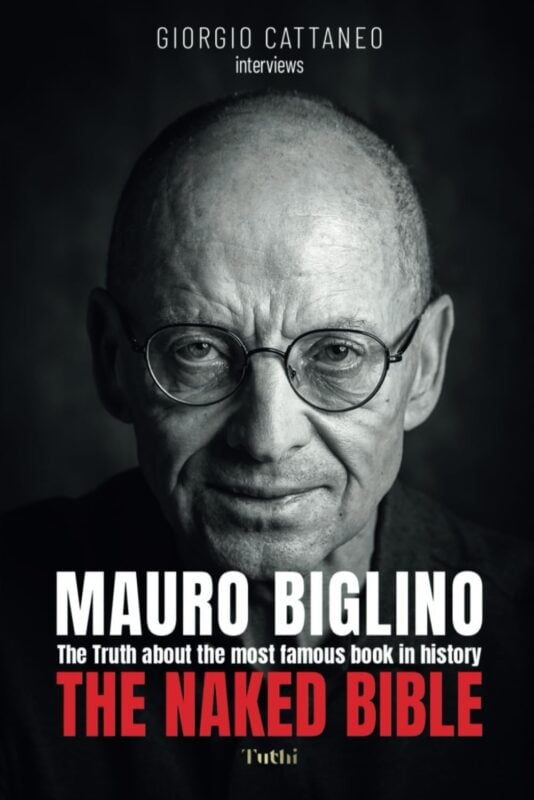
The Naked Bible by Mauro Biglino and Giorgio Cattaneo reconstructs the Old Testament through a literal reading that challenges centuries of theological tradition. Biglino, a former Vatican translator, offers philological evidence that undermines the concept of a singular, omnipotent deity present in the Hebrew scriptures. He contends that the original texts describe advanced beings—Elohim—interacting with a chosen human group for strategic purposes, not spiritual guidance. By exposing errors in traditional translations, the authors present a cohesive historical framework rooted in ancient Semitic linguistics.
The origins of scripture as historical record
Biglino argues that the earliest biblical texts did not seek to convey theological truths but to document interactions between the Israelites and powerful non-human entities. These Elohim acted as military leaders and genetic engineers rather than divine creators. The Genesis narrative, when translated literally, reveals a sequence of genetic manipulation, territorial governance, and inter-group conflict. Words commonly translated as “God,” “soul,” or “eternal” lack linguistic basis in the ancient Hebrew. The term “Elohim” is plural and used to denote multiple corporeal beings engaged in human affairs.
Deconstructing divinity through syntax
Hebrew grammar in the foundational texts refutes metaphysical interpretations. The verbs and syntax do not imply omniscience or omnipresence. Instead, verbs linked to the Elohim describe physical actions—descending, speaking, consuming, fighting. Biglino demonstrates that theological layers were imposed centuries later by editors who retrofitted metaphors to create coherence with emerging doctrines. These layers converted the original political and tribal histories into religious myths. The consistent absence of abstract spirituality in the early texts underscores the claim that the Bible’s theological frame is extrinsic.
Angels, archangels, and extraterrestrial command
Archangels like Michael are described in physical, visible terms—warriors who appear, speak, and give instructions. The “Saint Michael Line,” a series of strategically placed sanctuaries, aligns geographically across Europe and the Middle East. The pattern suggests intentional placement along energy nodes or ancient routes. Biglino interprets these figures not as symbolic protectors but as operative commanders coordinating territorial installations. His analysis of their movements and descriptions in the scriptures points to real historical presences, not literary allegories.
Ezekiel’s machines and Yahweh’s technology
Descriptions of flying chariots, thunderous clouds, and metallic beings recur across prophetic texts. Ezekiel’s vision of the “wheel within a wheel” has long intrigued scholars and mystics. Biglino identifies in these verses technical language that matches aeronautical phenomena. Yahweh is portrayed commanding devices that create fire, sound, and movement—far from the intangible figure of Christian theology. The literal terms used—noise, fire, descent, ascent—indicate mechanical operations. These descriptions create a cohesive framework for interpreting Yahweh as a localized, non-omnipresent commander with advanced machinery.
The Jesus narratives and power struggles
The authors challenge the theological portrait of Jesus by examining early Christian texts and historical context. They frame Jesus as a political rebel with messianic claims rooted in Jewish nationalism, not universal salvation. References to redemption target the house of Israel, not mankind. His execution by Roman authority, resistance to Temple hierarchies, and apocalyptic language align him with first-century zealot movements. Canonical gospels, written decades later under Greco-Roman influence, adapted his story to serve broader theological and imperial objectives.
The misinterpretation of Revelation
Biglino unpacks the Apocalypse of John as a coded political document addressed to persecuted early Christians. The infamous number 666 corresponds to Nero through Hebrew gematria, reinforcing the view that Revelation attacks imperial Rome rather than forecasting cosmic judgment. Variations of the number in ancient manuscripts—616, 665—support the identification of specific Roman rulers as the “beast.” The text’s language aligns with resistance literature, encoded to evade censorship and inspire underground communities. Rather than prophecy, it functions as subversive political communication.
Canonical formation and the politics of exclusion
The process of selecting biblical texts was driven by doctrinal consolidation rather than historical accuracy. Books attributed to Isaiah, for example, were composed by multiple authors across centuries. Editors attributed all sections to a single prophet to create unity and authority. Biglino underscores that many texts cited in the Bible are missing from the canon—at least eleven books are acknowledged but absent. These editorial choices reflect theological agendas, not objective curation. The resulting canon privileges narrative consistency over documentary integrity.
The manipulation of origins and the Sumerian connection
Genesis parallels earlier Mesopotamian texts such as the Enuma Elish and Epic of Gilgamesh. These stories predate the Hebrew Bible and contain motifs of flood, creation, and divine conflict. Biglino asserts that the biblical account replicates Sumerian narratives with minor adaptations. The term “Adam” may derive from “Adamu,” a word for worker or servant in Akkadian texts. The role of the Elohim mirrors that of the Anunnaki—technologically advanced beings who engineer and command. The authors suggest these similarities stem from a shared origin myth, not literary coincidence.
Historical use of myth as social control
Religious institutions have long used allegory to obscure literal meanings in ancient texts. Biglino draws on the writings of Eusebius and Philo of Byblos to show that ancient historians accused priestly castes of inventing allegories to mask inconvenient truths. These myths created sacred narratives that served political ends. The shift from factual report to spiritual metaphor enabled the consolidation of ecclesiastical power. Once theological meaning was grafted onto literal events, dissent could be suppressed as heresy and alternative histories discarded as myth.
The role of translation in constructing dogma
Biglino’s central claim rests on philological fidelity. He demonstrates how key Hebrew terms were mistranslated to align with emerging doctrines. Words lacking any reference to eternity or soul were rendered as metaphysical to support theological systems. The word “ruach,” often translated as “spirit,” actually denotes wind or breath. “Nephesh,” often read as “soul,” indicates a living creature or throat. These translations transformed human authorship into divine inspiration, human conflict into divine will, and localized rulers into universal gods.
The interface of power, knowledge, and secrecy
Ancient elites maintained control through restricted knowledge. Access to sacred texts was limited. Interpretation became the domain of hierarchies that decided what the public could know. Biglino explores how allegorical overlays preserved elite control while presenting moralistic narratives to the masses. This pattern of epistemic stratification recurs in modern institutions. He draws parallels with contemporary strategies of narrative control in politics and media. By monopolizing interpretations of the past, these structures condition public understanding of present authority.
Implications for monotheism and modern belief
If the original texts describe a multiplicity of beings, then the theological claim of a single, omniscient God emerges from later editorial synthesis. Biglino refrains from asserting metaphysical conclusions. He focuses instead on what the text says. His analysis removes divine attributes from scriptural characters and restores their original roles as physical agents in human history. This reinterpretation disrupts theological continuity and invites a reevaluation of the foundations of Judaism, Christianity, and Islam.
Patterns of deletion and reinvention
The early Christian era saw deliberate redactions of texts and ideas that conflicted with institutional priorities. The Gnostic gospels, the Book of Enoch, and other apocrypha reflect traditions excluded from orthodoxy. Biglino examines these texts as complementary sources that align more closely with the literal Hebrew readings. These materials depict a cosmos populated by multiple forces, human-alien hybrids, and knowledge transmission from external beings. Their suppression marks a shift from open narrative diversity to centralized theological authority.
From metaphor to machinery
The biblical descriptions of heavenly phenomena, angelic interventions, and divine warfare take on new meaning when viewed as literal reports. Biglino’s interpretive framework suggests these are records of technological events interpreted by pre-scientific observers. The linguistic pattern supports this reading: fire, wheels, thunder, clouds, brightness, descent, ascent. These are sensory details, not metaphysical categories. They describe interaction, not revelation. The prophets were witnesses, not mystics.
The challenge to tradition and the return to the text
Biglino invites readers to dispense with inherited assumptions and read the Bible as a historical artifact. This shift exposes a consistent logic behind the narratives—military campaigns, territorial covenants, biological interventions, and cultural engineering. These actions create a coherent narrative when read without theological presuppositions. The book concludes with a call to critical literacy: reclaim the original words to recover the intentions behind them. In doing so, the Bible ceases to be a mythic codebook and becomes a record of ancient power struggles written in human language.

