The Secret Teachings of All Ages: An Encyclopedic Outline of Masonic, Hermetic,: Being an Interpretation of the Secret Teachings concealed within the Rituals, Allegories, and Mysteries of all Ages
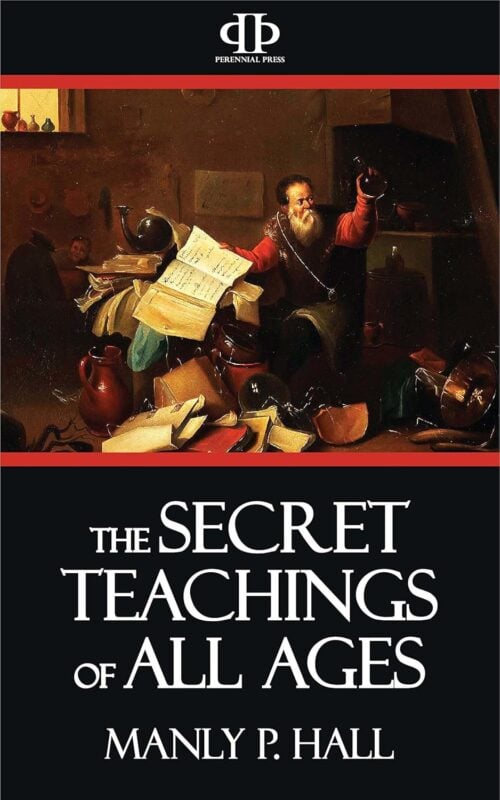
The Secret Teachings of All Ages by Manly P. Hall distills millennia of esoteric philosophy, arcane symbology, and hidden ritual systems into a single, encyclopedic volume that continues to command the attention of scholars, mystics, and seekers of hidden wisdom.
The Architecture of the Mysteries
Ancient mystery schools functioned as repositories of transcendent knowledge. Hall reconstructs their philosophical architecture from scarce textual fragments, ritual accounts, and symbolic artifacts. Egyptian initiations in the pyramids, the Eleusinian rites in Greece, and the Mithraic ceremonies in Rome emerge as instruments of inner transformation. The structure of these rites encoded spiritual hierarchies, cosmological models, and paths to personal divinization. Each stage of initiation served not merely to inform but to transform. Initiates moved through death-like trials to awaken new faculties of perception.
Atlantis, Archetypes, and Ancient Knowledge
The account of Atlantis frames the primordial narrative of spiritual regression. According to Hall, the Atlanteans were stewards of a profound wisdom tradition. Their eventual fall into materialism exemplifies the dangers of spiritual amnesia. The archetypal story of a golden age lost to corruption recurs across mythologies because it encodes a memory trace embedded in the collective psyche. Hall treats this memory not as allegory but as a reference point for the rediscovery of inner archetypes. The past serves the present through symbols that persist beyond the erosion of time.
Hermes Trismegistus and the Hermetic Chain
Thoth, as Hermes Trismegistus, embodies the synthesis of deity, sage, and scribe. His teachings form the bedrock of Hermeticism, a lineage that influenced Neoplatonists, alchemists, and Renaissance magi. Hall traces how the Hermetic corpus bridges Egyptian cosmology, Greek metaphysics, and Christian mysticism. The axiom "as above, so below" becomes the pivot of a worldview in which matter mirrors spirit. The Hermetic arts—astrology, alchemy, and theurgy—act as keys for aligning human consciousness with cosmic order.
Symbolism of the Sun and the Zodiac
Solar symbolism operates as a cipher for divine intelligence. Hall analyzes how the sun, across civilizations, signified spiritual sovereignty, the source of life, and the eye of providence. The zodiac becomes not a tool of fatalistic prediction but a symbolic diagram of the soul's cyclical journey through states of being. Each sign expresses a phase in the process of individuation. The twelve-fold division mirrors the twelve faculties of the human soul, which must be harmonized under solar governance.
Pythagoras and the Geometry of the Soul
Pythagorean doctrine elevates number to a metaphysical principle. Hall presents numbers as archetypes—living intelligences whose relationships express the architecture of both cosmos and psyche. The tetractys, the harmony of the spheres, and the symbolic ratios of music reveal a spiritual science of correspondence. Mathematics becomes the language through which the divine structure of reality speaks. By understanding number, the initiate approaches the mind of God.
The Body as a Living Temple
The human body contains within its proportions, organs, and energies the glyph of the universe. Hall interprets anatomical features as esoteric symbols. The spine becomes the axis mundi. The heart mirrors the sun. The endocrine system, through its chakric analogues, transmits occult forces. In this reading, physical health aligns with spiritual discipline, and the body becomes a microcosmic temple through which divine energies circulate.
Rosicrucianism and the Reconstitution of Wisdom
The Rosicrucian manifestos offered more than a veiled commentary on scientific revolution; they issued a call for the reconstitution of sacred knowledge. Hall deciphers Rosicrucian symbolism as a synthesis of alchemical, Qabbalistic, and Hermetic traditions. The Rosy Cross unites opposites: life and death, body and spirit, matter and meaning. The Fraternity's ideal was the inner transformation of society through the spiritual transformation of the individual. Their secrecy functioned not as concealment but as filtration—a guardrail for the unready.
Alchemy as Spiritual Transmutation
Alchemy, misread as proto-chemistry, unfolds in Hall’s treatment as a roadmap of internal regeneration. The operations of calcination, dissolution, conjunction, and sublimation represent stages in the purification of the soul. The Philosopher's Stone signifies the stabilized union of opposites within the psyche. Gold is the solar consciousness forged through inner fire. The alchemist’s laboratory becomes the soul’s crucible. Each flask and retort replicates a psychic operation. The art is sacred not because of its results but because of its orientation.
The Qabbalah: A Cosmic Blueprint
The Tree of the Sephiroth maps the descent of divine light into form. Hall explores how Qabbalistic cosmology articulates the metaphysical scaffolding of creation. Ten emanations flow from the infinite source, coalescing into the world of matter while preserving the structure of spirit. Human beings, created in the image of this tree, contain the same pattern. Qabbalah thus provides a spiritual cartography for ascent as well as descent. Through contemplative practices, the initiate reascends the tree, reclaiming divine likeness.
Ceremonial Magic and the Astral Realm
Ritual magic operates on the principle that the astral world mediates between thought and form. Hall investigates the formulas and symbols through which ceremonial magicians invoke intelligences, banish malignancies, and sculpt their psychic environment. The ritual implements—wand, sword, cup, and pentacle—are not props but instruments of directed will. Magic, in this context, disciplines imagination through geometry, speech, and gesture. It is the art of harmonizing microcosmic forces with macrocosmic patterns.
Islam, Christianity, and Esoteric Continuity
Hall treats Islamic mysticism and Christian Gnosticism as tributaries of a perennial stream. Sufi symbolism, particularly the inner path of the heart, resonates with Hermetic and Qabbalistic modes of spiritual ascent. Hall considers Christ a solar archetype and examines the crucifixion as a cipher for initiatory death and rebirth. The Book of Revelation, when interpreted through esoteric lenses, becomes a map of inner apocalypse—the unveiling of the true self through spiritual trial.
Indigenous Symbolism and Sacred Geometry
American Indian symbols, petroglyphs, and myths encode cosmologies parallel to those of the Old World. Hall identifies common geometries, such as the circle and the spiral, that organize spiritual space across traditions. The tipi, like the pyramid or ziggurat, manifests sacred geometry. Mythic figures embody principles of fertility, transformation, and cosmic balance. These forms preserve a wisdom rooted in experiential contact with the cycles of nature.
The Apocalypse as Interior Event
The final chapters reframe apocalypse not as cataclysm but as unveiling. Revelation speaks in the language of archetypes. The beasts, angels, seals, and trumpets signify psychic states. Hall reads the Book of Revelation as an esoteric document outlining the stages of inner initiation. The apocalypse unfolds within the soul, stripping away illusion and revealing the image of the true self. This interpretation binds together the themes of transformation, symbolism, and the return to source.
Philosophic Foundations and Final Synthesis
From Plato to Kant, Hall positions philosophy as a discipline of ultimate values. He draws a thread through metaphysics, ethics, and aesthetics to show how speculative systems converge on spiritual principles. The ancients did not divide philosophy from initiation. Knowledge served transformation. Hall concludes that truth resides not in dogma but in disciplined intuition, not in belief but in symbolic action. The initiate becomes a living synthesis of sacred science, moral clarity, and creative imagination.
The Secret Teachings of All Ages offers a structured inquiry into the anatomy of wisdom traditions, each chapter functioning as a lens through which to perceive the invisible architecture of meaning. This book stands as a map of the esoteric terrain, a guide not just to knowledge but to the mode of knowing that integrates soul and cosmos.