The Huxleys: An Intimate History of Evolution
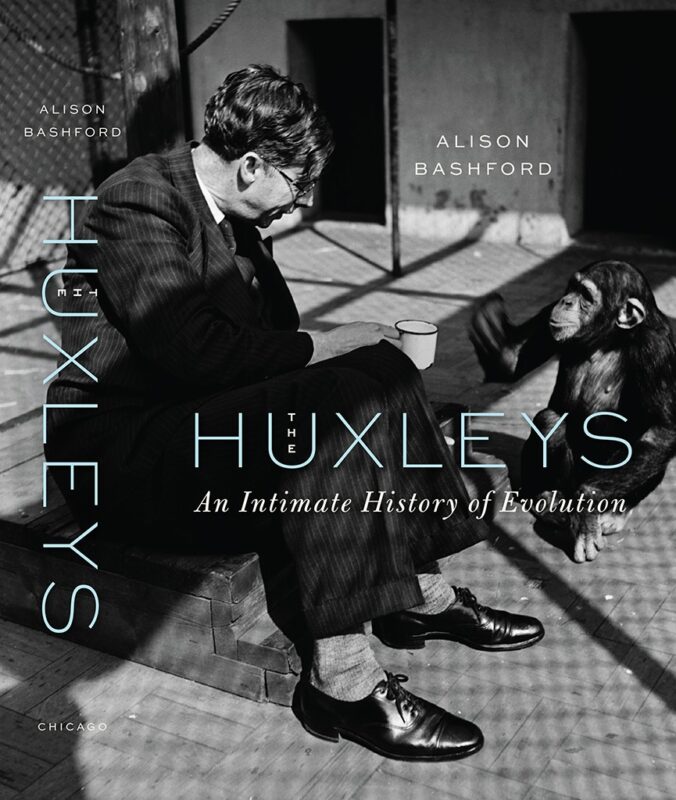
The Huxleys: An Intimate History of Evolution by Alison Bashford examines the entwined destinies of science, family legacy, and cultural change through the story of Thomas Henry Huxley and Julian Huxley, two architects of modern evolutionary thought. Their lineage does not only trace a family tree but entwines with the broader roots and branches of Western science, human self-understanding, and global institutions. Bashford presents the Huxleys as foundational agents, wielding the authority to define humanity’s place in nature while simultaneously shaping new worlds of ethics, politics, and meaning.
Origins of a Scientismic Dynasty
In Victorian England, Thomas Henry Huxley, born in 1825 in Ealing, emerged from the turbulence of the Midlands’ industrial and political change. He began with modest schooling, apprenticed early into medicine, and soon crossed into natural science through the Royal Navy’s HMS Rattlesnake voyage. This formative journey to the Pacific provided firsthand encounters with new species, colonial contexts, and the raw edges of natural history. Huxley earned recognition not only for his marine biology but for his extraordinary capacity to synthesize disparate fields—physiology, anatomy, anthropology—under the emerging framework of evolutionary theory.
The young Huxley’s experience in Coventry, surrounded by dissent, freethought, and the stirrings of working-class movements, forged an enduring skepticism of authority and an appetite for self-directed education. Reading by night, dissecting by day, he grew into the sort of intellectual who would later challenge religious and academic orthodoxies at the highest levels. In London, with limited means but relentless ambition, he built his reputation on anatomical precision and polemical clarity. He quickly became known as “Darwin’s Bulldog,” championing evolution by natural selection against entrenched religious interests and established scientific rivals.
Pedigree and Partnership
Family life, far from incidental, shaped the texture of Huxley’s intellectual world. His marriage to Henrietta Heathorn, whom he met in Sydney during the Rattlesnake expedition, linked him to another narrative of migration, education, and resilience. Henrietta, educated by Moravians in Germany, brought her own cosmopolitan breadth. Their union became the axis around which the Huxley dynasty would revolve—producing children and grandchildren whose impact on British and global thought would extend for over a century.
Leonard Huxley, their son, recognized the charged inheritance his family bore. His poem “The Inheritor,” written upon Julian’s birth, reflects the powerful intersection of genetic, cultural, and aspirational legacies that suffused the Huxley line. This sense of carrying both the weight and potential of previous generations established a narrative tension that persisted through Julian and his siblings—Aldous, Noel Trevenen, and Margaret—whose lives would play out in the long shadow of their grandfather.
Making Evolution Modern
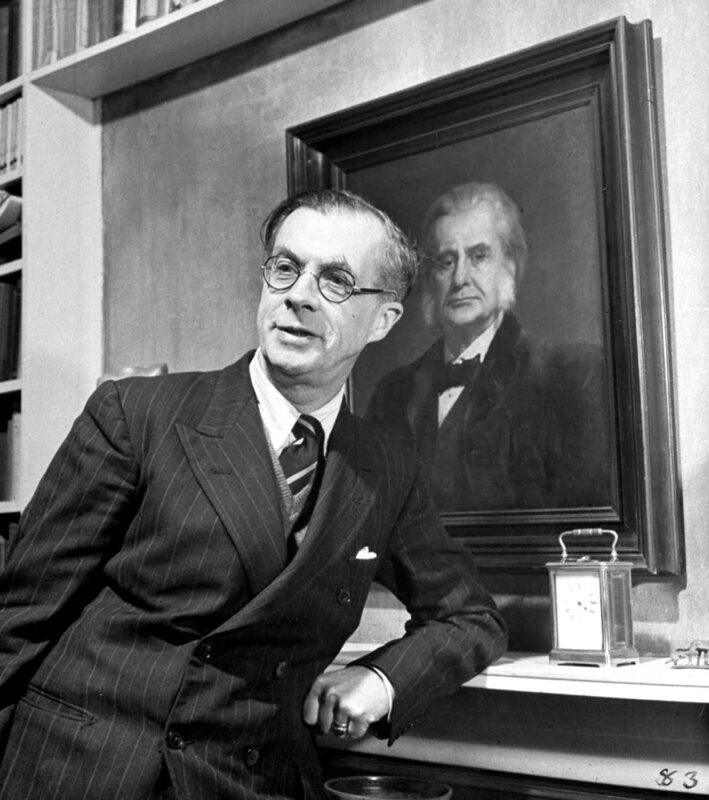
As the 19th century shifted into the 20th, evolutionary science itself evolved. T. H. Huxley’s era saw the battle for the acceptance of Darwinism; Julian’s world accepted evolution as scientific bedrock and demanded answers to more technical, ethical, and existential questions. Julian Huxley, educated at Eton and Balliol College, Oxford, inherited both the privileges and the anxieties of his forebears. He would help define the “modern synthesis”—integrating Mendelian genetics with Darwinian natural selection. His intellectual curiosity transcended the laboratory, drawing him into fields as diverse as ethology, conservation, science policy, and philosophy.
Julian’s approach to science did not merely rest on experimentation or analysis. He believed that human culture itself was a product of evolution, and that minds—uniquely among animals—could comprehend and direct evolutionary processes. This conviction seeded his lifelong advocacy for “evolutionary humanism,” a perspective that located human destiny within, rather than outside, natural law. The ability to reflect on and shape evolution, he argued, demanded a corresponding ethical and political responsibility.
Trustees of Evolution
Bashford’s narrative frames the Huxleys as “trustees of evolution”—a phrase Julian often applied to humanity but which the book asserts is exemplified most concretely by the Huxley lineage itself. This custodial role is both intellectual and moral. Thomas Henry articulated humanity’s evolutionary origins and our animal kinship with the rest of nature. Julian expanded the project: organizing international scientific bodies, founding Unesco, and promoting conservation as a planetary imperative.
Within this role, the Huxleys both shaped and responded to the central questions of modernity. What does it mean to be human in a world governed by evolutionary law? Can reason, science, and democratic ideals steer humanity toward a future worthy of its capacities? The family’s public stature made them leading voices in debates over education, ethics, race, and the global environment.
Culture, Nature, and the Question of the Human
The Huxleys’ inquiry into “man’s place in nature” drove continual examination of the boundaries between nature and culture, animal and human, body and mind. Thomas Henry’s work as a comparative anatomist rested on the dissection of dead specimens—skulls, bones, fossils. For him, the skull was a secular object, a talisman of knowledge, divorced from supernatural meanings. Yet the symbolic resonance of the human cranium threaded through Huxley family history, connecting the study of physical evolution to the deepest anxieties about consciousness, mind, and feeling.
Julian, in contrast, embraced the study of animal behavior in vivo, developing the emerging science of ethology and becoming a pioneer in observing animal emotions and sociality. His fascination with the rituals of birds, especially the courtship of the great crested grebe, highlighted the evolutionary roots of behavior and communication. By shifting attention from dead specimens to living interaction, Julian reoriented zoology toward questions of empathy, observation, and conservation.
Mental Life and Melancholy
Bashford traces the Huxley family’s long engagement with the inner life—the interplay between brain, mind, and experience. Thomas Henry investigated consciousness, sensation, and the mechanics of mind, while maintaining an agnostic stance toward the existence of a soul. Julian’s generation, schooled in psychoanalysis and new forms of psychology, grappled with depression, creativity, and the shadow of inherited melancholy. The family’s intellectual work and emotional struggles often converged, as inquiries into inheritance, heredity, and evolution became intertwined with personal affliction and public confession.
From Disenchantment to Re-enchantment
Victorian science, as dramatized by Thomas Henry Huxley, championed disenchantment—the expulsion of supernatural explanations from science and society. Bashford, however, reveals how the Huxley story does not settle into secular reduction. Julian, Aldous, and later descendants became fascinated by the possibilities of spiritual experience, parapsychology, and altered states of consciousness. The pursuit of meaning, wonder, and sacredness persisted, taking new forms compatible with scientific rationality yet gesturing toward something beyond the material.
Ethics, Eugenics, and the Politics of Improvement
The Huxleys’ place at the center of scientific modernity drew them into the most contentious ethical debates of their times. Julian Huxley, in particular, devoted immense effort to the project of human improvement. He popularized the concept of “transhumanism”—the possibility of enhancing human capacities through science and social intervention. He took prominent roles in the British Eugenics Society and promoted ideas of selective breeding, fitness, and mental health, linking them to aspirations for social progress.
Bashford scrutinizes these ambitions in their historical context, mapping the complex interplay between anti-racism, genetics, and scientific elitism. Julian’s work for Unesco and his efforts to articulate a postwar “statement on race” reflect both the hope for a universal human future and the persistent tensions over diversity, hierarchy, and the legacy of eugenics. The Huxleys’ positions often reveal the contradictions and unresolved challenges of their era.
Global Communication and Legacy
Julian Huxley transformed scientific communication, expanding beyond print to radio, film, and television. His collaborations with H. G. Wells and his appearances alongside early television figures such as David Attenborough brought science into the living rooms of millions. This public-facing orientation became integral to the Huxley legacy, reinforcing the connection between personal authority and global influence.
The Huxleys’ engagement with institutions such as the London Zoo, the Royal Society, and Unesco shaped not only scientific policy but the very structure of public knowledge. Their advocacy for wildlife conservation, population control, and global cooperation resonated through the postwar decades and remains relevant amid contemporary debates about the Anthropocene and planetary stewardship.
Family, Memory, and the Shape of History
As Bashford’s narrative unfolds, the Huxley family becomes both subject and agent of history. The personal intersects with the epochal as births, deaths, and marriages align with the tectonic shifts of the nineteenth and twentieth centuries—industrialization, imperial expansion, two world wars, decolonization, and the dawning of the atomic age. The Huxley graves in Watts Cemetery and the family’s voluminous correspondence bear witness to the endurance of memory and the persistence of inherited aspiration.
What pattern emerges when a family acts as the living conduit for intellectual, ethical, and social revolution? The Huxleys’ story, as Bashford tells it, reveals the dynamic interplay of agency, legacy, and transformation. Their work shapes and reflects the broader movement of human thought from faith to science, from determinism to possibility, from isolation to interconnectedness.
The Ongoing Question of Evolution
The narrative returns, repeatedly, to the questions that animated both Thomas Henry and Julian Huxley: How do humans differ from other animals? What constitutes the boundary between nature and culture? How do generations transmit both traits and aspirations? Bashford shows that the project of determining “man’s place in nature” is ongoing—never fully resolved, always contingent on new discoveries and changing circumstances.
The Huxleys offer a model for intellectual engagement that recognizes both the authority of evidence and the power of imagination. Their legacy endures not as a static inheritance but as a living invitation to inquiry. Evolution becomes, in this telling, a principle of both biological change and cultural creativity, a force that binds the species to its past and opens horizons for its future. Bashford’s chronicle of the Huxley family demonstrates the enduring power of scientific vision, the significance of generational inheritance, and the ceaseless drive to explore the boundaries of knowledge and meaning.