Technopoly: The Surrender of Culture to Technology
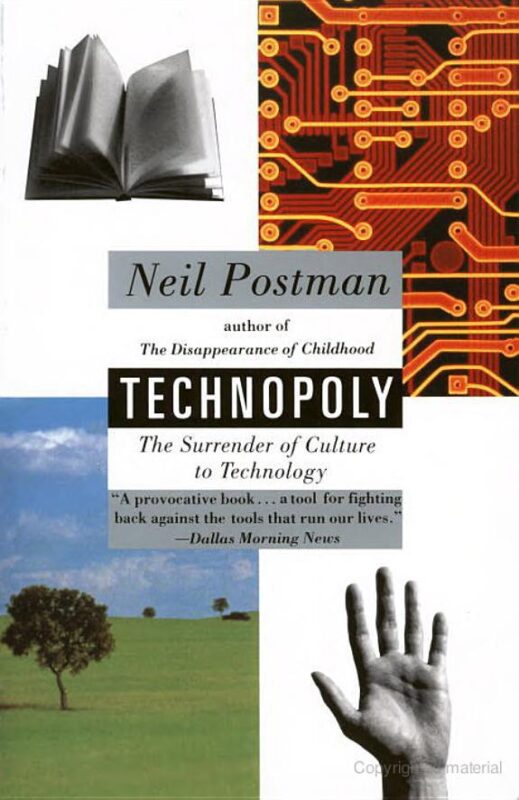
Technopoly: The Surrender of Culture to Technology by Neil Postman dissects the rise of technology as the defining force shaping American society, arguing that the relentless march of technological advancement has generated profound consequences for culture, meaning, authority, and human flourishing.
The Evolution from Tools to Technopoly
Cultures shape their tools and, in turn, tools shape their cultures. Tool-using societies invent implements to solve specific, practical problems or to serve symbolic needs in ritual, politics, and art. In these settings, spiritual or metaphysical frameworks govern the design and application of technology. Medieval Europeans harnessed windmills, clocks, and aqueducts, yet organized their daily lives around religious doctrine and the calendar of the church. Technology served the order and meaning imposed by tradition. Even where the Roman Empire relied on networks of roads and aqueducts, or the Middle Ages saw an explosion of technical ingenuity, theological frameworks set limits and directed invention.
Disruption emerges when a society reorganizes itself around tools rather than tradition. The stirrup transformed European warfare and reconfigured feudal society by amplifying the role of mounted knights. The mechanical clock, designed for monasteries to regulate canonical hours, moved outward to orchestrate urban life, industrial labor, and commercial exchange. Each innovation, born for a particular context, alters the entire culture’s rhythm and values.
Technocracy arises when the requirements of technology begin to subordinate the culture’s spiritual or traditional core. Instruments such as the printing press and telescope attacked the epistemological authority of orality and faith, relocating the seat of truth from God to measurement, precision, and empirical verification. Copernicus, Kepler, and Galileo unwittingly toppled the medieval world’s unity by revealing a universe indifferent to human significance, where equations and laws displaced sacred narrative. Francis Bacon articulated the connection between scientific inquiry and the improvement of human conditions, envisioning the union of progress, power, and the pursuit of happiness. In technocracy, tools and techniques seize the cultural imagination, setting the agenda for knowledge, governance, and identity.
The Structure and Logic of Technopoly
Technopoly forms when a society fully submits its cultural, moral, and social order to the authority of technology. In this state, technology not only dominates material production and social organization but also redefines the categories by which people understand truth, wisdom, value, and community. The tools of a technopoly, once embedded, reconstruct the meaning of memory, intelligence, fact, and reality itself. Writing, for instance, transformed memory from an internal art to the retrieval of external signs. The clock transformed the experience of time from natural rhythms to measured segments. The computer recasts information as quantifiable data.
Postman asserts that technological innovations do not function neutrally or merely additively; they enact total ecological change. When the printing press spread through Europe, it didn’t simply allow more books to circulate—it remade the intellectual, political, and religious landscape. Television did not merely entertain; it reconstituted family life, education, and public discourse. The arrival of computers and digital networks further accelerates the transformation of what counts as knowledge, how power is distributed, and how privacy and agency function.
Winners, Losers, and Knowledge Monopolies
Technological change creates distinct classes of winners and losers, granting knowledge monopolies to those who master and control new systems while disempowering those left behind. Every technology confers authority on its operators and designers. With each advance, a new elite arises—priests of the new order, whether they are television producers, software engineers, or data analysts. These groups gain social prestige and influence, often forming alliances of power, even as older knowledge monopolies dissolve. The teachers empowered by the printing press find their role undermined by the dominance of electronic media. The masses often cheer their own disempowerment, dazzled by the promise of convenience, connectivity, or efficiency, and rarely ask critical questions about the real beneficiaries.
Technopoly exploits the optimism of American culture, the appetite for novelty, and the absence of deep skepticism toward the costs of innovation. Entrepreneurs and promoters cultivate unity around improbable hopes, rarely revealing the price to be paid. Those left on the margins—whose skills or worldviews become obsolete—may experience loss as mysterious, unpredictable, or inevitable. The subtlety and rapidity of technological transformation conceal the emergence of new forms of control and vulnerability.
Redefining Knowledge, Authority, and Reality
Technology refashions language, social roles, and the foundations of thought. The introduction of grading systems in education, for instance, transformed subjective qualities of learning into numbers, reinforcing a belief that only the measurable is real. This process conditions people to view intelligence, creativity, or virtue as quantities to be scored and compared. The technological medium becomes the message, embedding its own logic in every aspect of life.
As technologies compete for dominance, their associated worldviews collide. The printed word cultivates logic, exposition, and detached objectivity, whereas television privileges imagery, emotional response, and immediacy. Schools become battlegrounds where children, conditioned by television and digital media, encounter the demands of the printed tradition. Failures of adaptation are interpreted as individual deficiencies, though they actually reflect structural conflicts between competing media environments.
Personal computers in classrooms introduce further complexities. Orality once fostered group learning and communal responsibility. Print stressed individual mastery and autonomy. The computer champions private learning and problem-solving, raising questions about the fate of community, cooperation, and shared responsibility in education. Technopoly advances individualism and efficiency, sometimes at the expense of social bonds and mutual care.
The Ideological Bias of Technology
Technopoly embeds the ideology of technology into law, governance, and cultural identity. Those who develop or control new tools shape the priorities of society. The medium influences the very questions that can be asked, the types of knowledge that count, and the boundaries of public discourse. New technologies redefine concepts such as freedom, intelligence, or fact, absorbing old meanings and assigning new significance without explicit debate. Language changes, sometimes subtly, as familiar words acquire new connotations and standards.
The ecological model of technological change asserts that the addition or removal of any major innovation produces total systemic transformation. When a new technology enters a society, it remakes the cultural, intellectual, and institutional environment. Each institution reorganizes itself to reflect the requirements of the prevailing technological paradigm, and crises erupt when older forms lose their rationale or capacity to function. Technopoly rewards those who anticipate these shifts and adapt quickly, while punishing or marginalizing those whose roles or values cannot be reconciled with the new order.
Cultural Authority and the Surrender to Technology
As technopoly spreads, traditional forms of cultural authority—priests, teachers, elders, and local leaders—lose legitimacy. The technological expert, the data analyst, or the algorithm designer assumes the power to define problems, propose solutions, and interpret reality. Postman observes that such experts tend to focus on efficiency, measurement, and control, often disregarding broader human purposes or ethical concerns.
Technopoly recasts questions of education, religion, and politics in technical terms. Educators measure outcomes, optimize delivery, and prioritize the skills needed to operate machines. Preachers contemplate how media can expand their reach. Politicians consider which medium best delivers a message, rarely examining how these media reshape political engagement, citizenship, or the meaning of democracy itself. The central drama unfolds as these practical considerations distract society from deeper questions about meaning, justice, and human flourishing.
Technopoly and the Transformation of Human Life
In the world that Postman describes, technology becomes the cultural environment rather than a set of external tools. It sets the conditions under which people think, learn, love, and decide. The computer, for instance, accelerates the quantification of experience, rendering private matters into data streams accessible to powerful institutions. Individuals find themselves more easily tracked, categorized, and controlled, and their sense of privacy and autonomy contracts accordingly.
The structure of authority shifts further from community to systems, from personal judgment to algorithms, from tradition to calculated efficiency. The culture’s symbols, rituals, and stories become subordinate to the logic of technique, measurement, and optimization. New technologies generate new expectations for happiness, success, and knowledge—expectations grounded in speed, novelty, and consumption rather than wisdom, reflection, or ethical consideration.
Postman contends that technopoly’s gravest risk lies in its ability to redefine the very terms by which people judge value and pursue purpose. The old questions—What is good? What is just? What does it mean to live well?—recede as technology compels society to ask what is efficient, what is feasible, and what is profitable. The logic of technique prevails, not as a supplement to moral or spiritual frameworks, but as their replacement.
Resisting Surrender: The Call for Critical Awareness
Technopoly demands trust and obedience in exchange for bountiful gifts, yet those gifts carry a heavy cost. To recover a sense of agency and meaning, citizens must develop the capacity to question the structure and purpose of technology in their lives. Postman calls for a kind of Thamusian skepticism: a discipline of asking what technology undoes, whom it serves, and how it changes the nature of knowing, loving, and being together. Critical engagement begins with the recognition that technological change is never merely technical. It involves choices, values, and consequences that unfold across generations.
The challenge facing modern society, then, is not to halt technological progress or retreat into nostalgia, but to revitalize cultural conversation about its meaning. By recognizing the ideological and ecological power of technology, individuals and communities can negotiate more wisely with the forces that shape their world. The enduring project, Postman insists, is to reclaim culture from the imperatives of technopoly and to reaffirm the human purposes that technology must serve.