Edgar Cayce on Atlantis
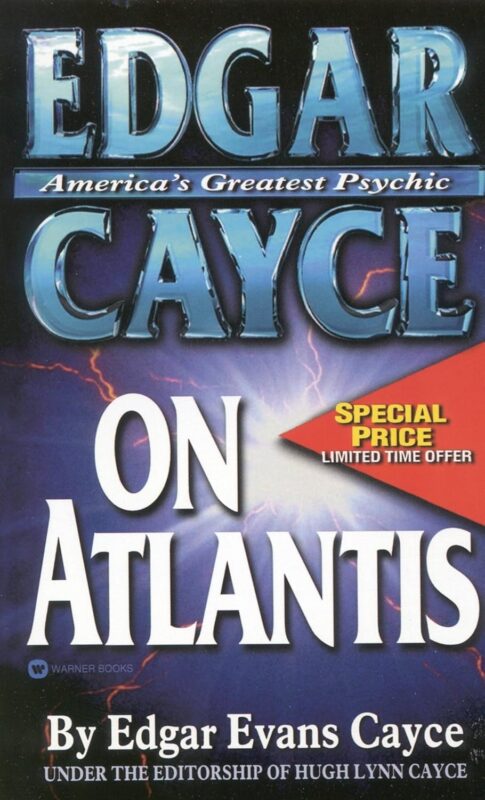
Edgar Cayce on Atlantis by Edgar Evans Cayce begins with a foundational claim: the legendary continent of Atlantis existed, thrived, and fell due to both cataclysmic forces and moral decline. The author, son of America’s most documented psychic Edgar Cayce, organizes over 700 life readings from individuals claiming past incarnations in Atlantis to reconstruct a compelling narrative of lost civilizations, advanced technologies, and spiritual evolution. These readings, conducted between 1923 and 1944, serve as the structural and evidentiary basis for a theory of ancient human development framed by cycles of rise, abuse of power, destruction, and rebirth.
The Origins and Geography of Atlantis
According to the readings, human souls first appeared in the earth plane around 10.5 million years ago, emerging simultaneously in five locations across the globe. One of these was Atlantis, then a vast island continent located in the Atlantic Ocean. Cayce describes a land of extraordinary fertility and technological achievement, segmented into provinces with complex social structures. Initially harmonious, this civilization aligned its knowledge of spiritual laws with practical science. Over time, this balance unraveled as materialism grew and factions formed around competing ideologies.
Cayce identifies three distinct periods of destruction. The first, around 50,000 B.C., marked the beginning of geological instability. The second, near 28,000 B.C., fragmented the continent into smaller islands. The final catastrophe, dated to roughly 10,000 B.C., corresponds with Plato’s account and submerged the last remnants of the Atlantean islands beneath the ocean. Survivors fled to Europe, Africa, and the Americas, seeding cultural patterns and technologies that would echo in Egypt, the Andes, and the Indus Valley.
Technological Mastery and Spiritual Decline
The Cayce readings describe Atlantis as a society with mastery over crystal energy, atmospheric flight, anti-gravitational transport, and advanced medical knowledge. Central to this technological prowess was the use of a powerful device called the Tuaoi Stone—an energy source that concentrated solar, lunar, and terrestrial forces. Used initially for healing and illumination, it became a weapon of exploitation when wielded by self-serving leaders.
The society split between two ideological factions: the Sons of the Law of One, who upheld spiritual laws and collective harmony, and the Sons of Belial, who pursued power and material gain without ethical restraint. This division deepened as technological advancements were diverted toward manipulation, domination, and war. Genetic experimentation led to the creation of "things," semi-human entities bred for labor and pleasure, triggering karmic consequences that reverberate through modern incarnations.
Reincarnation and Karmic Echoes
The book’s structure centers on reincarnation as the bridge between ancient Atlantis and contemporary individuals. Cayce’s life readings trace specific personalities through multiple lifetimes, identifying patterns of behavior, moral failures, and redemptive paths. People alive today, he asserts, often carry karmic residues from their Atlantean pasts. These include latent technical aptitudes, leadership qualities, and tendencies toward authoritarianism or spiritual service.
The case studies present emotionally complex portraits. A man drawn to electronics and warfare replicates destructive choices made millennia earlier. A woman burdened by chronic illness finds spiritual growth through patience and compassion, atoning for earlier roles in persecution and cruelty. These readings do not offer deterministic scripts but rather opportunities for conscious transformation rooted in spiritual law.
Atlantis and the Modern World
Cayce predicted that Atlantean souls would reincarnate in America during the 20th century, drawn to opportunities for technological and spiritual influence. The United States, he suggested, would become a karmic theater where the unresolved choices of Atlantis reemerge. Scientific acceleration, environmental disruption, and moral conflict form the structural parallels between then and now.
He warned of earth changes—geological upheavals, shifting coastlines, and climate transformation—that would reflect internal imbalances and force humanity into a reckoning. These were not arbitrary punishments but reflections of a universal law linking consciousness with environmental expression. The opportunity, Cayce claimed, lay in choosing cooperation, compassion, and ethical innovation over domination and exploitation.
Evidence and Scientific Convergence
Edgar Evans Cayce includes geological and archeological findings that resonate with the readings. The submerged ruins near Bimini in the Bahamas, discovered in 1968, match Cayce’s prediction of Atlantis rising. Deep-sea cores from the mid-Atlantic Ridge show traces of volcanic material that solidified in open air, suggesting land once existed above sea level. Fossil and tool similarities between Europe, North Africa, and the Americas point toward shared cultural origins.
The book references emerging oceanographic data, paleomagnetic shifts, and tectonic models that, while not confirming Atlantis, align with the possibility of a sunken landmass. More importantly, it emphasizes the internal consistency of hundreds of life readings given over decades without contradiction, constructing a historical framework that invites deeper investigation.
The Role of the Essenes and Early Christianity
Cayce links Atlantis not only with ancient civilizations but with the roots of Judeo-Christian spirituality. He describes the Essenes, a mystic Jewish sect, as inheritors of Atlantean spiritual science. They carried forward esoteric knowledge through disciplined communal life and prophetic mission. Many Essenes were reincarnated Atlanteans seeking redemption. Jesus himself, in this framework, represented the culmination of Atlantean spiritual ideals purified through trials.
Specific readings identify individuals present during Christ’s ministry as former Atlanteans. Salome, a woman involved with the Essene community near Qumran, allegedly bore witness to both the resurrection of Lazarus and the crucifixion. Cayce’s timeline anticipates the discovery of the Dead Sea Scrolls and the excavation of the Qumran ruins, strengthening the narrative’s coherence with historical developments.
The Ethics of Power and the Future of Humanity
Atlantis serves as both memory and mirror. Its story articulates the relationship between human intention and global destiny. Cayce asserts that technology must obey spiritual law or trigger collapse. Each innovation becomes a test of collective maturity. The “things” of Atlantis—beings created without soul—foreshadow ethical debates about genetic engineering, artificial intelligence, and human enhancement.
Cayce’s readings imply that civilizations rise when individuals align their will with divine purpose. They fall when knowledge outruns wisdom and power serves ego. The future, therefore, depends on whether humanity repeats Atlantean cycles or reclaims its creative inheritance in service of higher ideals.
Spiritual Evolution as Historical Engine
The book frames history as the story of soul development across lifetimes. Individuals return to resolve unfinished business, correct imbalances, and fulfill latent purpose. Political movements, cultural achievements, and technological revolutions express the aggregated karma of returning souls. Atlantis was one such culmination. Its memory persists because the souls who built it now walk among us.
This vision integrates reincarnation, karma, and moral responsibility into a cohesive metaphysical worldview. Spiritual growth is the prime mover of human progress. Every action, every choice, plants a seed in the collective garden. Atlantis fell because those seeds turned to weeds. The book asks: What are we planting now?
Converging Past and Present
Cayce’s legacy, as curated by his son, is not merely a collection of readings but a hypothesis about civilization itself. Atlantis represents both a literal past and a metaphor for cycles of creation and collapse. The contentions of Edgar Cayce on Atlantis insist on the structural linkage between technological capacity and ethical development, between individual karma and planetary destiny.
Through this synthesis, the book offers a framework for understanding human history as the iterative attempt to embody spiritual truths in material form. Atlantis remains a caution and a promise—both a memory of what was and a prelude to what might become if wisdom finally governs power.


