Blowback: America’s Recruitment of Nazis and Its Destructive Impact on Our Domestic and Foreign Policy
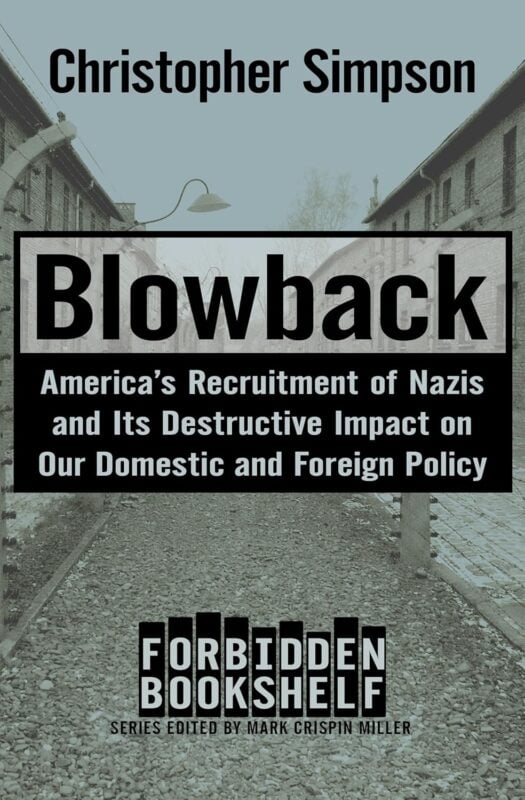
Blowback: America's Recruitment of Nazis and Its Destructive Impact on Our Domestic and Foreign Policy by Christopher Simpson opens with a startling revelation: after World War II, the United States recruited Nazi war criminals to serve in its intelligence and propaganda apparatus during the Cold War. These decisions, made in secrecy and defended through bureaucratic obscurity, reverberated across U.S. institutions, reshaping domestic policies and foreign alignments in lasting, corrosive ways.
How Collaboration Became Strategy
The U.S. government, facing an intensifying Cold War with the Soviet Union, launched covert programs to enlist the expertise of former Nazi officers, scientists, and propagandists. Officials rationalized that these men possessed crucial knowledge of Soviet strategies and terrain. Espionage agencies—including the CIA and Army Counterintelligence Corps—positioned these recruits within strategic initiatives spanning intelligence gathering, psychological operations, and paramilitary planning.
Simpson traces how officials framed these choices as pragmatic necessities. Classified memos, interagency agreements, and postwar intelligence reviews reveal a system built on selective amnesia. Agents redacted war crime records, manipulated immigration paperwork, and used clerical loopholes to bring collaborators into the United States, often under false names and forged biographical details.
Institutionalizing Denial
Government officials cloaked these operations in obfuscation. Records from the National Archives, once concealed or destroyed, show how agencies consistently denied involvement with war criminals—even when those individuals held documented SS or Gestapo ranks. The Barbie case, for example, initially portrayed as an isolated incident, was the tip of an iceberg. Klaus Barbie, once dubbed the "Butcher of Lyon," was protected, hidden, and ultimately spirited to South America through U.S.-run ratlines.
Internal critiques, like Simpson's suppressed report for the Interagency Working Group (IWG), documented systematic resistance to transparency. Agencies imposed self-limiting definitions of “war criminal” that excluded individuals without formal convictions. These legal technicalities excluded over 95% of known SS personnel from scrutiny, insulating records and shielding collaborators.
Exporting Atrocity into Policy
The ripple effects did not remain confined to archives. Recruited Nazis shaped Cold War operations, especially in Eastern Europe. Gehlen Organization members—former Nazi intelligence officers—provided the CIA with exaggerated estimates of Soviet military strength, driving up defense budgets and heightening geopolitical paranoia. These operatives advised on strategies, conducted fieldwork, and trained local anti-Communist forces in methods they once used for repression under Hitler.
In Southeast Asia and Latin America, similar networks informed U.S. counterinsurgency doctrine. Techniques once employed in Nazi concentration camps migrated into CIA interrogation protocols. Psychological warfare experts tested propaganda formulas rooted in Third Reich methods, fine-tuned for domestic audiences.
Seeding Reactionary Networks
Domestically, émigré organizations composed of former Axis collaborators established footholds in American political life. Funded covertly by U.S. intelligence, these groups gained influence in policy circles, especially through campaigns portraying them as noble “freedom fighters.” Ukrainian, Latvian, and Romanian nationalist factions received support, despite evidence of their involvement in Holocaust-era atrocities.
The CIA leveraged these communities for political mobilization, electoral lobbying, and cultural influence operations. Simpson identifies the Assembly of Captive European Nations as a critical platform—built and maintained by the agency—to amplify narratives aligned with U.S. Cold War ideology while sanitizing histories of ethnic cleansing and collaboration.
Legal Frameworks of Concealment
To maintain operational secrecy, the U.S. relied on legal and administrative instruments to bury evidence. Simpson details how the CIA enforced the “Waldheim Rule,” which limited declassification to documents proving involvement in specific war crimes, excluding broader context such as political activities, affiliations, or relationships with American handlers.
This self-defined relevancy standard made exposure nearly impossible. Agencies declined to investigate individuals unless independently proven guilty in court—an intentionally insurmountable bar in most cases. The CIA’s 2002 statement that 95.5% of names on the Department of Justice’s list were irrelevant exemplified this circular logic.
Media and Memory Manipulation
Public understanding of these operations was stunted by systematic suppression and media complicity. Publishers declined to release critical investigations. Prominent journalists dismissed credible allegations as conspiracy theory. Even when documents surfaced, the press frequently repeated official denials.
Simpson argues that this quiet censorship was more effective than overt bans. Books like his were marginalized not through prohibition but through omission. Libraries failed to carry them. Syllabi excluded them. Debates ignored them. In the marketplace of Cold War narratives, inconvenient truths disappeared beneath an avalanche of Cold Warrior hagiography.
Feedback Loops of Policy Degradation
The effects of this collaboration returned home. Blowback took multiple forms: disinformation shaping national debates, domestic surveillance influenced by wartime models, and institutional habits of secrecy imported from intelligence operations. When Congress questioned CIA abuses, agency veterans used their Cold War credentials to deflect scrutiny, citing their anti-Communist service as justification.
Networks forged through Nazi recruitment contributed to later interventions. Operation Bloodstone, for instance, trained former SS officers for counterinsurgency work. These men advised on tactics used in Guatemala, Chile, and Vietnam. Each operation deepened the bureaucracy’s reliance on the logic of clandestine expertise, further distancing policymakers from democratic oversight.
Enduring Legacy of Blowback
Simpson reveals a national security culture steeped in calculated forgetfulness. Agencies that welcomed Nazi collaborators developed systems to perpetuate secrecy. Declassification projects met institutional sabotage. Researchers encountered barriers, delays, and missing records. When partial disclosures emerged, officials misrepresented them as full transparency.
These practices eroded public trust. They weakened democratic mechanisms. They distorted foreign policy. Most dangerously, they embedded moral evasiveness into the foundation of American intelligence.
What Does Accountability Demand?
Where does recovery begin? Simpson suggests that accountability starts with truth. Naming names. Releasing full records. Acknowledging the deliberate decisions behind these alliances. Treating blowback not as accidental but as structural.
He challenges the assumption that secrecy serves security. It serves power. Transparency threatens no agency performing lawful work. Simpson’s call for historical clarity insists that democracies must confront their own shadows—not as a reckoning of guilt but as an act of restoration.
The Architecture of Forgotten Crimes
Recruitment of Nazis into American service was not an anomaly. It was a pattern, executed through ratlines, visa waivers, false biographies, and interagency cooperation. It was not a secret kept from everyone. It was policy shared among generals, directors, and diplomats who saw value in the skills of killers, propagandists, and torturers.
These collaborations shaped the postwar order. They seeded disinformation that justified militarization. They advised regimes that murdered civilians. They trained personnel in the arts of repression. Each decision carried downstream consequences—foreign and domestic, institutional and psychological.
Reclaiming the Archive
Simpson closes with a plea: history cannot heal what it refuses to reveal. Archival access must replace redaction. Public education must confront the realities sanitized in official reports. Policy must be built on foundations of transparency, not manipulation.
The record exists. Blowback is written into the architecture of the Cold War. It sits in cables, transcripts, and memoranda. Simpson’s work retrieves those fragments, assembles them, and names the system that buried them.