UNESCO: Its Purpose and Its Philosophy
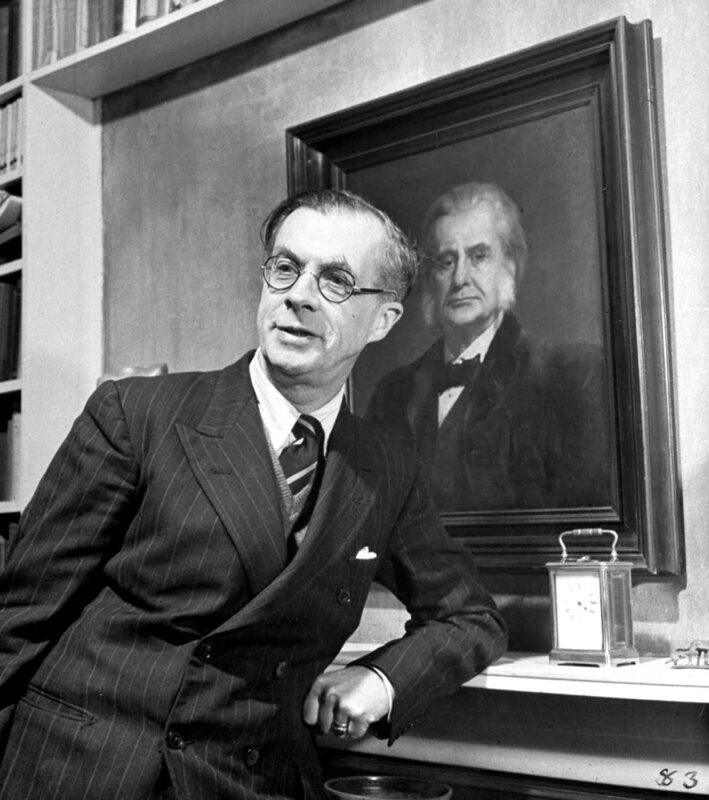
UNESCO Its Purpose and Its Philosophy by Julian Huxley defines the postwar vision for a global order guided by science, education, culture, and deliberate intellectual evolution. Huxley, as the first Director-General of UNESCO, argues for a guiding philosophy that both interprets the legacy of evolutionary thought and directs collective human purpose. He introduces “World Evolutionary Humanism” as a practical, actionable worldview, linking humanity’s destiny to the stewardship of progress and the transformation of global consciousness. Within this framework, he maps UNESCO’s mandate: forging a single world culture, preparing societies for political unification, and cultivating the mechanisms that will enable world peace, welfare, and mutual understanding.
World Evolutionary Humanism as UNESCO’s Core Philosophy
Julian Huxley structures UNESCO around the principle of World Evolutionary Humanism, which asserts that humanity possesses the agency and knowledge to consciously guide its evolution. He advances the claim that science, once a means of understanding nature, now becomes the essential tool for shaping future progress. UNESCO, he insists, requires both a practical purpose and a philosophical anchor: it must pursue peace, security, and human welfare through education, scientific application, and cultural engagement. This orientation calls for a global humanism rooted in scientific method, evolutionary thinking, and a commitment to treating all people as equals in dignity and opportunity.
Huxley’s evolutionary perspective links human values to the observable direction of biological and social progress. He contends that scientific advances, especially those that accelerate communication, travel, and material well-being, furnish the means for constructing a universal culture. The process of cumulative tradition—humanity’s ability to pass down knowledge, values, and skills—has replaced natural selection as the chief engine of change. Through speech, conceptual thought, and deliberate choice, humans have supplanted instinctual evolution with cultural and intellectual selection.
Education as the Mechanism of Progress
Education emerges as both the instrument and the arena in which human potential finds realization. Huxley defines education broadly, encompassing not only the transmission of information and skills but the cultivation of values, attitudes, and collective awareness. He challenges educational institutions to transcend local or national confines, urging them to prepare individuals for global citizenship. UNESCO, under his plan, assumes responsibility for campaigns against illiteracy, fundamental education for underprivileged regions, and the continual enrichment of adult minds.
Within this schema, education possesses a dual mandate: individual development and the creation of a shared intellectual tradition. He contends that lasting peace cannot arise from political or economic arrangements alone; it demands a foundation in the intellectual and moral solidarity of mankind. Thus, UNESCO must devote itself to harmonizing the educational, scientific, and cultural resources of the world, working relentlessly to let light into the world’s “dark areas” and to equip people for both personal growth and collective responsibility.
The Drive Toward Political Unification
Huxley directs the organization toward a goal that extends beyond its immediate capacities: preparing humanity for global political unification. He articulates this task as the “mental preparation of the world for world government.” Nationalism, in his analysis, operates as a barrier to evolutionary progress. He argues that the existence of multiple, sovereign political units provides the conditions for conflict, undermines cooperation, and slows the convergence of human tradition. He calls for the gradual transfer of sovereignty from nations to a global authority, establishing a single framework for the exercise of collective will.
UNESCO’s immediate function consists in facilitating mutual understanding, building a sense of shared purpose, and instilling the values required for unity. Through education, the arts, science, and mass media, it lays the intellectual groundwork that will make global government conceivable and, ultimately, feasible. Huxley stresses that the achievement of unity in the mind and values of the world population constitutes a precondition for any lasting political unification.
Eugenics and the Scientific Management of Human Evolution
Huxley places eugenics within the heart of the evolutionary humanist agenda. He distinguishes between the preservation of valuable human variety and the elevation of the average level of desirable qualities, such as health, intelligence, and aptitude. He asserts the necessity of public education about eugenics, arguing that the issues at stake must become “thinkable,” even if immediate implementation remains politically and psychologically distant.
He proposes a reexamination of democratic equality in light of biological differences, suggesting that opportunities should align with individual aptitude. UNESCO, he asserts, should promote research and informed public discussion to facilitate the eventual application of scientific eugenics. In this context, the organization emerges as both a vehicle for raising average human capacities and a forum for the ethical management of evolutionary direction.
The Creative Arts as Catalysts for Social Cohesion
Art, in Huxley’s vision, acts as a mechanism for expressing, shaping, and mobilizing collective sentiment. He underscores the necessity for public patronage of the arts, arguing that the creative faculties must serve the social organism. The arts, he claims, enable societies to comprehend their tasks, internalize their destinies, and align their actions with collective values. Music, architecture, drama, and visual arts all function as tools for forging unity, binding emotion to action, and translating intellectual vision into cultural reality.
He views public relations—“a new name for propaganda”—as an essential component of governance in the modern world. UNESCO, by fostering the arts and integrating them with science and public communication, creates the conditions for societies to both understand and pursue their evolutionary purpose.
Mass Media and the Construction of World Opinion
The expansion of mass media transforms the potential for directing public opinion. Huxley regards the press, radio, cinema, and other channels of mass communication as indispensable agencies for education, cultural dissemination, and the formation of a global outlook. He envisions UNESCO as the architect of a mass creed, applying the techniques of persuasion developed in wartime to the tasks of peace, unity, and progress.
Media, under UNESCO’s guidance, enables the rapid dissemination of ideas, fosters mutual comprehension across national and cultural boundaries, and builds a common intellectual landscape. The mass media division is charged with two primary functions: supporting formal and adult education, science, and culture, and advancing the growth of a common outlook shared by the world’s populations. Through these means, UNESCO seeks to replace division with convergence, shaping world opinion toward peace and collective welfare.
Restating Morality and Ethics for a Scientific Age
The pursuit of an evolutionary, scientific approach to human welfare necessitates a corresponding transformation in ethics and morality. Huxley insists that the ethical systems inherited from tribal, feudal, or industrial pasts do not suffice in an age of scientific knowledge and global proximity. He argues that values must align with the demonstrable direction of evolution, that ethical codes must adapt to new social realities, and that personal responsibility must expand to encompass collective and impersonal actions.
UNESCO’s philosophy division must stimulate inquiry into the foundations of morality, working in concert with natural and social scientists to produce a restatement of values fit for the modern world. Huxley’s project calls for the socialization of ethics, integrating them with the requirements of progress, unity, and scientific understanding.
Libraries, Museums, and the Architecture of Knowledge
Huxley highlights the importance of infrastructure for knowledge dissemination: libraries and museums function as critical nodes in the architecture of global education. UNESCO’s mandate includes supporting international cataloguing and classification, promoting the development of accessible public services, and innovating new forms of museums tailored to diverse purposes. By ensuring that information remains available, organized, and relevant, these institutions empower individuals and communities to participate in the creation and perpetuation of a shared world culture.
Scientific Method as the Engine of Social Change
The adoption of the scientific method beyond the natural sciences shapes the entire trajectory of UNESCO’s influence. Huxley claims that the application of scientific reasoning to social organization, policy, and collective action offers the greatest leverage for progress. The social sciences, under UNESCO’s auspices, provide the analytical tools for understanding human phenomena, directing educational strategies, and managing the complex dynamics of evolving societies.
Scientific technique enables not only the accumulation of knowledge but the conscious control of outcomes. It accelerates the rate of change, aligns innovation with human welfare, and supplies the mechanisms for both anticipating and guiding evolution.
Convergence Toward World Unity
Huxley’s project for UNESCO identifies convergence as the central motif of global evolution. The unification of tradition, the alignment of values, and the harmonization of scientific, educational, and cultural endeavors constitute the foundation of sustainable peace and welfare. He asserts that UNESCO’s success depends on its capacity to coordinate these forces, to bridge divides, and to bring disparate societies into constructive alignment.
The convergence Huxley seeks proceeds through deliberate action, guided inquiry, and the strategic application of education, culture, and science. The narrative of progress, as he defines it, involves the conscious cultivation of those conditions that foster collective development while preserving the vitality of diversity and creativity.
The Enduring Legacy of Huxley’s Vision
Julian Huxley’s articulation of UNESCO’s purpose and philosophy continues to inform debates over global governance, education, and the social implications of scientific knowledge. His structural model, built on the scaffolding of evolutionary humanism, prescribes actionable steps for advancing unity, progress, and ethical clarity. By synthesizing scientific methodology, educational outreach, cultural patronage, and media strategy, Huxley casts UNESCO as both architect and steward of humanity’s future.
The drive for world unity—grounded in evolutionary purpose, executed through scientific and educational institutions, and animated by the arts—captures the narrative arc of his proposal. As the world negotiates the complex interplay of national interests, technological transformation, and the imperatives of peace, Huxley’s framework demands attention. The work poses a clear question: how will societies direct the instruments of education, science, and culture to secure the flourishing of humanity on a global scale? The answer, Huxley contends, lies in embracing conscious evolution, enacting collective intelligence, and forging the intellectual solidarity necessary for a unified world order.