Secret Practices of the Sufi Freemasons: The Islamic Teachings at the Heart of Alchemy
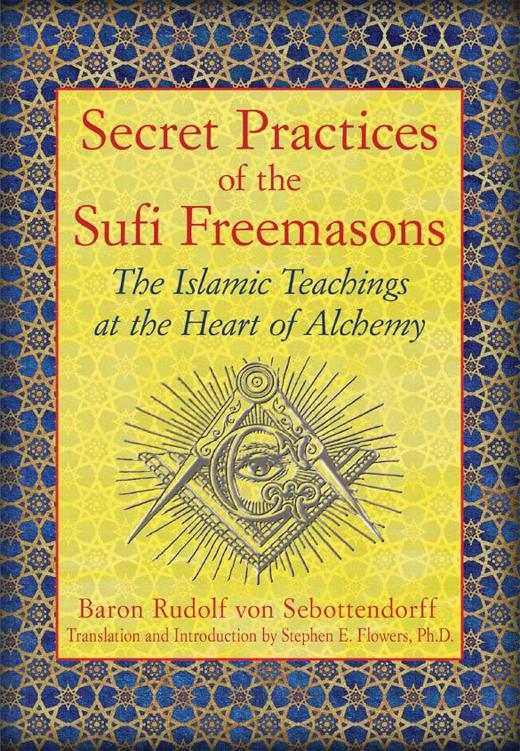
Secret Practices of the Sufi Freemasons: The Islamic Teachings at the Heart of Alchemy by Baron Rudolf von Sebottendorff opens the inner sanctum of Eastern spiritual science, inviting readers to witness the living transmission of Bektashi Sufi ritual, alchemical transformation, and esoteric Freemasonry as practiced in early twentieth-century Turkey. Sebottendorff, an adventurer, initiate, and intellectual provocateur, channels a lineage that fuses the ecstatic discipline of Islamic mysticism with Western traditions of self-perfection and metaphysical craft. The work foregrounds a series of spiritual exercises rooted in the manipulation of sound, sacred gesture, and the potent mysteries encoded in the abbreviated Arabic letters of the Qur’an. Through these, the practitioner seeks a direct encounter with divine reality, catalyzing a process of inner transformation that echoes through the lineage of alchemy and the mysteries of the ancient world.
Sebottendorff: Architect of the Esoteric Encounter
Rudolf von Sebottendorff, born Adam Alfred Rudolf Glauer, engineered his journey from humble origins in Saxony to the heart of Istanbul’s occult circles. He navigated the worlds of Freemasonry, Sufism, and political intrigue, absorbing the teachings of the Bektashi dervishes and the ritualistic wisdom of Turkish Freemasonry. His adoption by a German baron and Turkish citizenship forged a new identity, granting him access to both the inner sanctums of spiritual brotherhood and the turbulence of a continent in crisis. The narrative of his life forms a tapestry of adventure, initiation, and intellectual inquiry, marked by encounters with Jewish mystics, Islamic scholars, and the subterranean currents of secret societies.
The Bektashi Order: Vessel of Sufi Synthesis
The Bektashi sect of Sufism, a mystical order rooted in the teachings of Haji Bektash Veli, flourished as a vessel for spiritual synthesis in the Ottoman world. Characterized by ritual inclusivity, tolerance, and the absorption of diverse mystical streams, the Bektashi tariqat shaped a culture of spiritual egalitarianism. Music, dance, and assembly house worship fostered a living tradition where men and women engaged together in pursuit of direct knowledge of God. Hurufism, the veneration of sacred letters, and influences from other Islamic and non-Islamic mystical orders permeated Bektashi practice, generating an environment ripe for innovation and deeper esoteric work.
The Mystical Power of Arabic Letters
Sebottendorff emphasizes the foundational importance of the Arabic letters and their mystical resonances. In his account, each letter—defined by its shape, sound, and number—serves as a microcosm of cosmic forces. The abbreviated letters, or muqatta’at, which appear at the beginnings of select Qur’anic suras, function as gateways for spiritual energy and as vehicles for direct revelation. Practitioners employ these letters through sound, meditation, and gesture, accessing states of gnosis that transcend conventional understanding. The science of letters, or ‘ilm al-huruf, becomes a discipline through which the microcosm of the body aligns with the macrocosm of divine order.
Spiritual Alchemy: The Body as Laboratory
Sebottendorff’s treatise advances a vision of alchemy that unites physical, spiritual, and intellectual domains. The process of transmutation operates within the practitioner, who becomes both alchemist and athanor. Spiritual exercises transform base states of consciousness into higher, perfected forms, paralleling the mythic pursuit of the philosopher’s stone. The human body, with its esoteric physiology and circulating vital energies, emerges as the true locus of alchemical work. This view aligns with Sufi doctrines of the unity of being (wahdat al-wujud), which assert that all aspects of existence participate in a single, unfolding reality. The rituals and practices prescribed serve as catalysts for this inward journey, enabling the adept to achieve a state of illumination and self-completion.
Practices of the Oriental Freemasons
At the heart of Sebottendorff’s manual lies a curriculum of spiritual exercises structured for disciplined progression over months of dedicated practice. The work divides into preliminary, main, and advanced stages, each with a regimen of recitations, meditations, and bodily postures. The aspirant receives no promises of worldly reward, only the implicit assurance that faithful adherence to the exercises will unlock knowledge and wisdom beyond ordinary grasp. The orientation remains practical and experiential, favoring direct engagement with spiritual forces over abstract speculation. Success in this endeavor depends on courage, resolve, and a willingness to confront the depths of one’s being.
Esoteric Unity: Linking East and West
Sebottendorff asserts a deep affinity between Sufi mystical science and Western traditions of Freemasonry, Rosicrucianism, and alchemy. He traces the transmission of esoteric knowledge across continents and centuries, charting the convergence of Islamic, Jewish, and Christian mystical systems. This confluence, evident in the symbology and ritual of both the Bektashi order and ancient Masonic lodges, signals a perennial doctrine underlying humanity’s search for transcendence. The exercises of the Oriental Freemasons, inherited through Turkish Sufi brotherhoods, claim to preserve the lost wisdom of early initiatic orders, offering Western readers a pathway into the heart of spiritual transformation.
Narrative of Historical Influence
Sebottendorff’s own life story weaves together the drama of early twentieth-century Europe with the enduring power of esoteric movements. His involvement with the Thule Society, a precursor to the German Workers’ Party, and the subsequent entanglement with rising Nazi ideology, colors the legacy of the text. The work refrains from political argument, instead re-centering the narrative on the substance of the Sufi practices themselves. Nevertheless, the backdrop of social upheaval, war, and ideological ferment charges the text with urgency. The spiritual exercises presented appear both as remedies for individual alienation and as potential sources of collective renewal.
Mysteries of the Abbreviated Letters
What compels the seeker to delve into the muqatta’at of the Qur’an? These mysterious letter combinations, preserved for centuries as enigma and key, stand at the center of the book’s practical method. Sebottendorff provides an inventory of the fourteen distinct letters and their combinations, charting their numerical, sonic, and cosmological attributes. Interpretations range from connections to prophets, narratives, and cosmic processes, to the assertion that these letters act as sealed vessels for divine secrets. By meditating upon, reciting, and embodying these formulas, practitioners pierce the veil of ordinary perception, entering into communion with the mysteries preserved within the sacred text.
The Doctrine of Direct Experience
Sebottendorff’s system refuses reduction to dogma or rational analysis. The text asserts that direct experience, accessed through the discipline of ritual and meditative work, supersedes theoretical speculation. The Bektashi approach, in his telling, sidesteps theological dispute, instead instructing the seeker to practice and receive. The practitioner uses mystic signs and gestures, cultivating a direct, non-discursive relationship with spiritual reality. The transformation unfolds in lived experience, reshaping the individual at every level. The book insists that the mysteries of the Arabic letters, like the deeper currents of existence, yield only to engagement and inner realization.
The Alchemical Model: Enlightenment as Self-Completion
The ultimate aim of the practices Sebottendorff outlines is the spiritualization of matter, the elevation of the human being from an unfinished, raw state to the perfect, cubical stone of Masonic symbolism. This process, metaphorically akin to the refinement of gold, signals the awakening of the philosopher’s stone within. The model of operation depends on a unified cosmology, in which body, soul, and spirit participate in continuous transformation. The adept, through discipline and perseverance, embodies the catalyst for this process, enabling both personal fulfillment and the spread of enlightened influence within society.
Societal Implications: The Practitioner as Catalyst
Sebottendorff extends the promise of individual transformation to the realm of collective life. The spiritually awakened practitioner becomes a node of influence, whose presence and actions propagate the benefits of enlightenment throughout the broader community. The text advances the claim that spiritual knowledge, when actualized, contributes to the regeneration of social and cultural vitality. The exercises are framed as tools not only for personal ascent but for the upliftment of the collective, in harmony with divine law and order. Spiritual attainment confers the capacity to act as a force for good within the world.
Historical Context: The Decline and Revival of Islamic Spirituality
Sebottendorff situates his work against the backdrop of both Islamic and European history. He recounts the rapid spread of Islam, the intellectual and mystical flourishing of Persian and Turkish Sufism, and the eventual decline of Islamic cultural supremacy. The rise of materialism and rationalism in the West, along with the secularization of the Islamic world, forms a counterpoint to the enduring power of Sufi traditions. The Bektashi order, surviving bans and repression, emerges as a resilient vessel for esoteric continuity. Sebottendorff urges Western readers to rediscover the wellspring of spiritual vitality present within Islamic mysticism.
Legacy and Enduring Fascination
Secret Practices of the Sufi Freemasons endures as a text of perennial intrigue, drawing the attention of scholars, occultists, and seekers across generations. Its blend of practical instruction, mystical cosmology, and personal narrative anchors it as a significant document in the cross-cultural transmission of esoteric knowledge. The book resists closure, instead inviting readers into the ongoing work of spiritual realization. The convergence of Sufi, Masonic, and alchemical traditions within its pages speaks to the living interconnectedness of human spiritual endeavor.
The Science of the Key: Toward Direct Realization
Sebottendorff’s “science of the key” encapsulates the heart of his message: that the mysteries of existence yield to those who work upon themselves with discipline, courage, and unity of purpose. The manual he presents transcends boundaries of religion and culture, offering a curriculum of self-mastery that resonates with the deep currents of human longing. By articulating the methods and doctrine of the Oriental Freemasons, Sebottendorff stakes a claim for the continuing relevance of esoteric science in the modern age.
A Call to Inner Work
Sebottendorff concludes with a summons to conscious, purposeful living. He insists that true transformation flows from within, through the voluntary alignment of the individual with divine law. Laws imposed from without merely perpetuate cycles of reaction and replacement, but the seeker who achieves unity with God gains the power to act freely and rightly. The exercises become pathways to the highest form of knowledge: the lived awareness of the divine presence and the capacity to embody wisdom and goodness in action. The manuscript, cast into the world in a time of upheaval, invites those who would seek its wisdom to undertake the journey of inner work and spiritual realization.
