Baphomet The Temple Mystery Unveiled
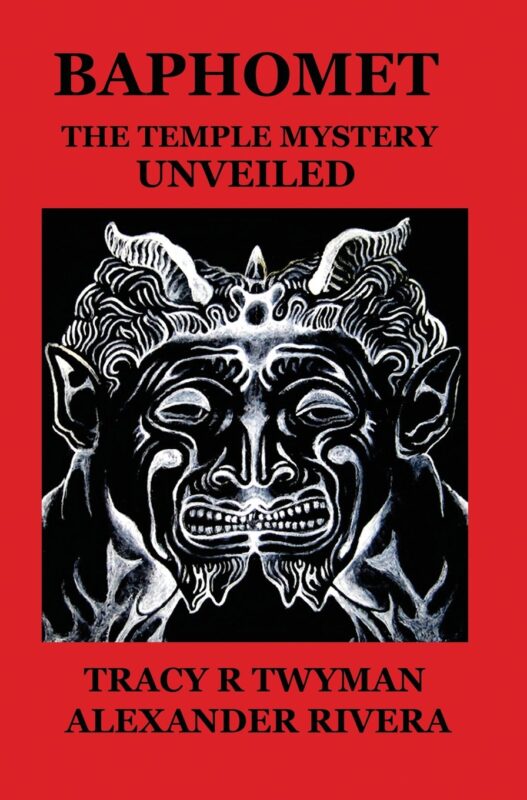
Baphomet The Temple Mystery Unveiled by Tracy Twyman and Alexander Rivera unravels the history, mythology, and symbolic complexity of Baphomet, a figure entangled with the Knights Templar and the deeper currents of Western esotericism. Through an investigative journey that navigates centuries of occult knowledge, suppressed doctrines, and cultural memory, Twyman and Rivera decode Baphomet’s enduring presence as a key to forbidden wisdom.
Origins in Accusation and Power
The narrative roots itself in the dramatic events of October 1307, when King Philip IV of France initiated a sweeping arrest of the Knights Templar, the elite military order stationed at the forefront of Christendom’s Crusades. Chroniclers record accusations that spanned apostasy, blasphemy, pederasty, sodomy, idol worship, and financial subversion. At the heart of these charges, inquisitors and chroniclers fixate on a mysterious entity: Baphomet. Templar knights, pressed by torture and inquisitorial threat, speak of a head—sometimes bearded, sometimes feminine, occasionally metallic or mummified—possessing the power to prophesy, grant wisdom, and bestow material fortune. The mythos of this head extends into legend, ritual, and secret, carrying forward a legacy shrouded in ambiguity and fascination.
From Temple to Symbol: The Metamorphosis of Baphomet
Scholarly inquiry pursues the etymology and significance of the name itself. Medieval testimony and linguistic analysis propose diverse origins: as a corruption of “Mahomet” (a Medieval variant of Muhammad), a codeword for arcane knowledge, or a composite of Greek and Latin signifiers. Philologists and historians trace connections to ancient rituals in Paphos, Cyprus, blending the veneration of goddesses and wisdom deities with Hermetic practices. The linguistic evolution of “Baphomet” threads through French, Latin, Arabic, and Hebrew traditions, linking temple, prophecy, and wisdom in a single enigmatic symbol.
Templar Legacy and Esoteric Transmission
The collapse of the Templars scattered both their tangible treasures and intangible secrets across Europe. Papal bulls and royal edicts formalized their dissolution, while legends proliferated about hidden doctrines and lost artifacts. Twyman and Rivera detail how post-Templar groups, including strands within Freemasonry and Rosicrucianism, preserve echoes of the “head” and the transformative ritual knowledge attributed to it. Artifacts discovered in former Templar sites—metal busts, inscribed heads, ritual objects—demonstrate a continuity of form and function, encoding layers of meaning lost to conventional history yet visible to those who pursue the hidden stream.
The Occult Revival: Levi, Crowley, and the Image Reinvented
The nineteenth-century occultist Eliphas Levi catalyzes a radical reinterpretation. Levi’s iconic drawing fuses goat and human, male and female, dark and light, rendering Baphomet as a composite of alchemical opposites. Levi attributes to Baphomet a function as universal mediator, a visual formula for the astral light and the synthesis of all energies—no mere devil, but the pattern for transformation. Aleister Crowley, inheritor and exponent of the occult revival, takes on “Baphomet” as his own magical name, further embedding the figure within the modern Western esoteric tradition and secret societies like Ordo Templi Orientis. These appropriations position Baphomet as the symbolic key for magical initiation, the agent of inner and outer alchemy.
Gnosis and the Tree of Knowledge
The text explores the profound relationship between Baphomet and the perennial quest for forbidden knowledge. Gnostic cosmology, Kabbalistic myth, and Hermetic science converge on themes of the fall, the division of primal androgyny, and the awakening to knowledge through transgression. In the Garden of Eden, the Tree of Knowledge offers a path to divine wisdom, mediated by the serpent and personified through archetypes such as Lilith and Samael. Baphomet emerges as a cipher for this wisdom—a synthesis of primordial opposites, a gatekeeper to gnosis, and a bridge between divine and terrestrial realms.
Hermaphroditic Origins and Alchemical Union
Mythological inquiry draws out the theme of androgyny. Ancient texts recount the creation of Adam Kadmon, the primordial human made in the image of the divine, embodying both masculine and feminine. Cabalistic sources and Gnostic scriptures elaborate on the splitting of the primal unity into Adam and Eve, or the fracturing into Lilith and Samael. The motif of the hermaphrodite reappears in Baphomet’s hybrid form: bearded yet breasted, animal yet human, expressing a unity that transcends duality. Alchemists and magicians adopt this image to symbolize the “chemical wedding,” the conjunction of spirit and matter, and the fulfillment of the Great Work.
Ritual, Power, and the Secret Rule
Templar initiation rites, as reconstructed by inquisitorial records and later esoteric authors, present a choreography of secrecy and inversion. Initiates undergo symbolic death and rebirth, participate in acts meant to sever them from orthodox Christianity, and embrace the “head” as both a totem of power and an oracle. The head speaks, instructs, and confers riches, connecting participants to a wisdom beyond mere material gain. The rituals themselves, clouded by time and secrecy, invite interpretation and debate. Twyman and Rivera parse these elements, uncovering a logic that weaves together sacrilege, transcendence, and transformation.
The Gnostic Descent and Kabbalistic Shadows
The narrative maps Baphomet onto the landscape of Gnostic myth and Jewish mysticism. Gnostic texts describe the emanations of the divine into aeons, the fall of Sophia, and the birth of the Demiurge—the artisan of the material cosmos. In this cosmology, the pursuit of wisdom marks both the source of suffering and the potential for liberation. Kabbalistic teachings on the Qlipoth, Lilith, and the exiled Shekinah echo these patterns: exile and reunion, darkness and enlightenment, the splitting and eventual reunification of the divine feminine and masculine. Baphomet stands at the axis of these mysteries, a witness to the descent and a promise of ascent.
Artifact and Memory: The Mystery Objects
British Museum discoveries, Latin treatises by Joseph von Hammer-Purgstall, and catalogues of Templar relics ground the story in physical evidence. Statues, caskets, and inscribed heads display iconography—multiple faces, chains to the heavens, serpentine forms—corresponding to textual accounts. Inscriptions invoke “Mete” or “Baphomet,” link the image to fertility, prophecy, and the powers of life and death. These objects, preserved and studied in modern times, substantiate the persistent influence of Baphomet as more than an imagined construct.
The Recurrent Theme of Wisdom Forbidden
Analysis returns persistently to the theme of forbidden wisdom. Scriptural narratives punish those who reach for divine knowledge, yet esoteric traditions celebrate the quest as the ultimate purpose of the initiate. Baphomet encapsulates this tension: feared as a heretical idol, pursued as a source of prophecy and wealth, revealed as a master symbol for the reconciliation of opposites. Occult traditions hold that the initiate must pass through trial, face the shadow, and awaken to a knowledge that reintegrates divided parts of self and cosmos.
From Heresy to Modernity: The Legacy in Culture and Conspiracy
Baphomet’s journey does not end with the Middle Ages or the occult revival. Contemporary conspiracy theories, internet subcultures, and artistic movements mobilize the symbol in myriad forms. Baphomet’s image circulates as both accusation and banner—projected onto secret societies, denounced by fundamentalists, embraced by artists and magicians. The ambiguity and potency of the symbol ensure its enduring presence within popular and esoteric imaginations.
Synthesis and Revelation
The convergence of historical fact, mythic structure, and esoteric speculation generates a portrait of Baphomet as both mystery and key. Twyman and Rivera assert the importance of recognizing Baphomet as a living synthesis—a structure embodying divine knowledge, spiritual and material conjunction, and the transformative potential at the heart of the Western initiatory tradition. The figure’s persistent reemergence across centuries signals a continuous undercurrent, drawing seekers into the labyrinth of the temple and offering, for those who dare, a vision of integration and revelation.
Enduring Power and the Horizon of Inquiry
Baphomet functions as a signpost within the landscape of Western esotericism. The historical Templars, the Gnostic sages, the Kabbalistic mystics, the modern magicians—all operate within a tradition that esteems the search for wisdom above conformity or dogma. The presence of Baphomet at the intersection of myth, artifact, and ritual points to a perennial pursuit: the recovery of what was lost, the healing of the primordial split, and the attainment of vision that dissolves the boundaries of the ordinary and the divine.
Through the synthesis achieved in this book, Twyman and Rivera provide both a map and an invitation. The enigma of Baphomet endures, not as a relic of superstition, but as a catalyst for inquiry, integration, and the persistent human longing for the unknown source of wisdom and power.