Genuflect
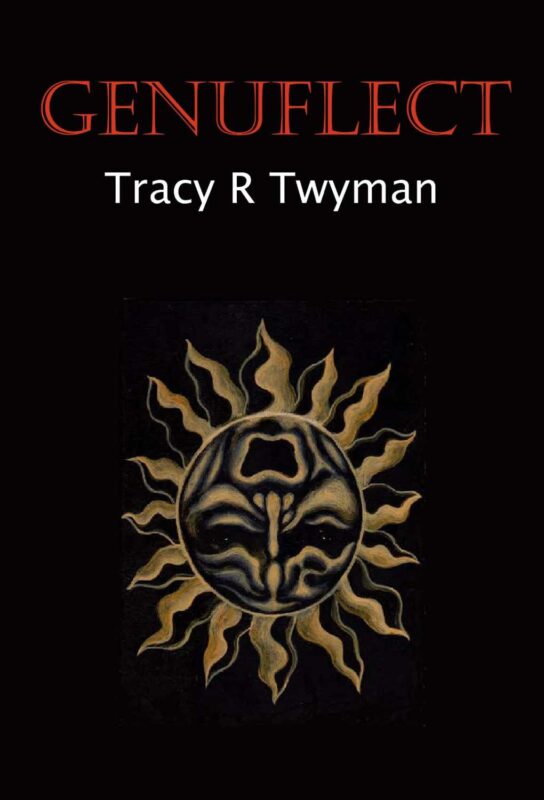
Genuflect by Tracy R. Twyman emerges as a provocative synthesis of occult investigation, modern myth, and metaphysical thriller. The narrative initiates with the arrival of an inquiry that sets the protagonist—an independent scholar of esoteric religions and forbidden histories—on a collision course with clandestine power. The offer comes from Leopold Black, Baron of Alphamstone, who tasks her with a secretive lecture on the mysterious Mete coffer, an obscure artifact long hidden within the British Museum’s reserves. As the arrangement unfolds, monetary desperation, scholarly obsession, and a compulsion to penetrate the boundaries of established reality converge, pressing the protagonist toward an unraveling series of discoveries.
The Call to Inquiry: Invitation into Esoteric London
A single commission draws the protagonist from the isolation of self-publishing and independent research into the intricate circles of British aristocracy. Leopold Black’s request, ostensibly about the history of the Mete coffer, places her at the center of the Worshipful Society of Butchers—a venerable London livery company recast here as a vessel for secret ritual and subterranean power. The Baron’s demands for secrecy and the substantial payment offer frame the assignment as both opportunity and risk, suggesting the presence of a deeper agenda. The protagonist’s expertise in forbidden religions and Gnostic heresies positions her as both witness and agent in a drama that soon eclipses the apparent scope of a mere academic lecture.
The Artifact’s Riddle: The Mete Coffer as Portal
The Mete coffer, ignored for generations, becomes the catalyst for the novel’s exploration of ancient ritual, myth, and societal control. Historical research and intuitive insight converge as the protagonist interprets the artifact’s symbolism—a narrative carved in stone, showing the hermaphrodite deity Mete, chained to the Sun and Moon, orchestrating a drama of imprisonment and possible revolt. The coffer’s iconography, described in vivid detail, animates Twyman’s method: reading history as layered code, capable of revealing secret intentions and mythic archetypes. The protagonist’s interpretation links the Knights Templar, legendary for their supposed heresies, to the cult of Mete and a cosmology where rebellion against the gods signals a path to liberation. Through this lens, the artifact becomes both evidence and invocation, drawing those who study it into the very drama it depicts.
Occult London: Societies of Power and Ritual
The Worshipful Society of Butchers, whose surface activities center on the beef trade, functions in the novel as a locus of hidden influence. The society’s arms—three winged bulls, two severed bullheads, axes—anchor the group’s public identity in the mythos of sacrifice and dominion. Beneath this exterior, Twyman constructs a web of ritual activity, occult initiation, and elite conspiracy. The protagonist’s introduction to the clubhouse, framed as a test of loyalty and knowledge, reveals the persistence of medieval structures of secrecy and the contemporary desire to access lost power through ritual reenactment. The Butchers’ full-moon gatherings, their use of the Oriental Club for clandestine meetings, and their financial resources suggest a continuity between the City of London’s ancient guilds and a much older lineage of mythic, magical authority.
Journey as Descent: Omens and Ordeals
Travel from Portland to London becomes a crucible, rich with adversity and omen. The protagonist’s journey delays, plagued by storms, missed connections, and lost luggage, foreshadows the deeper initiatory passage to come. Each logistical challenge—a flight diverted to a military base, overflowing toilets, cryptic encounters with fellow travelers—cements the sense that she enters not only another city but another reality. Houston’s empty airport, the indifference of service staff, and the symbolic presence of George W. Bush’s statue amplify the sense of fated adversity. The journey enacts the archetypal descent into the underworld, preparing the protagonist for an encounter with forces that operate beyond the boundaries of the ordinary.
Gnostic Cosmology: Archons, Sophia, and the Prison of Worlds
Within the narrative, Gnostic doctrine serves as both motif and structural principle. The Archons—planetary rulers who impose cosmic order—function as jailers in a metaphysical prison. The protagonist’s research traces the mythology of Sophia-Achamoth, Metis, and the tradition of rebellion against the world’s architects. The story of Metis, swallowed by Zeus after giving him counsel, embodies the fate of wisdom suppressed and harnessed to patriarchal rule. Athena’s emergence from Zeus’s head, armored and wise, reinforces the paradox of liberation through violence, knowledge through transgression. The Mete coffer’s imagery—chains, upside-down celestial bodies, coded banners—invites the reader to consider the mechanics by which creation’s boundaries might be dissolved and new realities inaugurated. The protagonist’s investigation leads her to theorize that the Knights Templar, accused of sacrilege and sodomy, may have consciously enacted rituals aimed at unseating the Archons and inverting the hierarchy of heaven.
Ritual Inversion: Subversion as Technology
Twyman’s narrative foregrounds the power of ritual inversion. The protagonist’s analysis of Templar rites—including urination on the cross, confessions of blasphemy, and coded messages referencing escape “through the rectum”—illuminates a worldview where the destruction of the given order represents an act of creative rebellion. The Tenebrae, the extinguishing of lights during Holy Week, finds its Gnostic counterpart in the “Upsetting of the Lamps”—a blasphemous rite designed to mimic and subvert Christian liturgy. This strategy of reversal, enacted in ritual and symbol, signals the protagonist’s conviction that reality itself can be destabilized and reordered through concerted action by initiates. Ritual becomes a technology for the alteration of the world, and those who command it wield genuine power.
Power and Paranoia: The Machinery of Suppression
Institutional forces—academia, museums, and the media—are presented as complicit in the suppression and distortion of dangerous knowledge. The protagonist’s isolation from the university system, the marginalization of her research, and her reliance on obscure primary sources dramatize the costs of refusing sanctioned narratives. The book’s London, riven by rumors of a hidden monarchy, emergency decrees, and forbidden discourse, emerges as both setting and symbol. The protagonist’s reading of censored news, whispers about the Queen’s health, and the state of perpetual emergency converge, forming a society on the cusp of radical transformation. Knowledge of the past, especially knowledge that contradicts official history, becomes a commodity fiercely policed by those who profit from amnesia.
Elite Agendas: Wealth, Ritual, and the Manipulation of Reality
Within this crucible, Twyman’s protagonist confronts the mechanisms by which elites consolidate and perpetuate their power. The Society of Butchers’ rituals, the Baron’s clandestine motives, and the network of like-minded initiates position wealth and influence as tools for the orchestration of events on both mundane and metaphysical planes. The $10,000 payment for the lecture, the club’s opulent settings, and the manipulation of historical narratives indicate an alliance of money and magic. These actors do not merely exploit power structures; they generate them, using ritual to rewrite the rules of reality itself. The protagonist’s growing awareness of her role within this system sharpens the tension: what outcome do these rituals intend, and who stands to benefit from the collapse or reconfiguration of cosmic order?
Psychic Peril: The Costs of Forbidden Knowledge
As the protagonist delves deeper, the stakes shift from intellectual curiosity to existential risk. The independent research that once brought niche acclaim and modest security now exposes her to escalating threats, both supernatural and concrete. Encounters with enigmatic strangers, cryptic warnings, and increasing isolation compound the psychological pressure. The protagonist’s intuition sharpens into a sixth sense—a mental receiver she cannot turn off. Her mind, trained by years of study and practice, acts as both divinatory instrument and site of vulnerability. The convergence of scholarly method, occult practice, and lived experience underscores Twyman’s vision: the pursuit of truth, when conducted outside approved channels, leads directly into the heart of darkness.
Narrative Convergence: Symbol, History, and Myth
The drama of Genuflect proceeds by layering incident, research, and speculation into a tapestry where myth and history coalesce. Twyman integrates references to canonical figures—Hermes Trismegistus, John Dee, Aleister Crowley, and others—linking the protagonist’s journey to a tradition of seekers who challenged the boundaries of the known. The book’s structural tension derives from the progressive unveiling of interlocking conspiracies, both ancient and contemporary. Ritual objects, encoded messages, and suppressed histories circulate as clues within a puzzle whose solution threatens the coherence of the protagonist’s world. The pursuit of the Mete coffer’s meaning, the investigation of Templar heresies, and the analysis of modern power structures yield a vision in which personal and cosmic stakes become indistinguishable.
Resolution and Aftermath: Reckoning with the Forbidden
As the novel nears its climax, the protagonist faces a reckoning with the costs and consequences of her quest. The boundaries between sanity and madness, truth and invention, dissolve. The protagonist’s discoveries demand action, but the structures arrayed against her appear insurmountable. Yet the narrative suggests that even partial revelation carries the power to disrupt, that the act of inquiry itself constitutes a form of resistance. The text refuses a simple resolution, foregrounding the enduring power of myth and the resilience of those who seek meaning in forbidden places.
Legacy and Impact: Genuflect as Modern Occult Thriller
Genuflect by Tracy R. Twyman stands as a singular contribution to the genre of esoteric fiction. The novel’s structure, grounded in rigorous research and energized by narrative invention, animates debates about the nature of history, the persistence of ritual, and the ongoing struggle for meaning in a world ruled by shadow and symbol. Twyman’s fusion of Gnostic cosmology, modern conspiracy, and personal testimony constructs a narrative that both illuminates and unsettles. Readers enter a world where questions proliferate, answers remain provisional, and the act of seeking takes on the quality of both devotion and defiance. The narrative invites consideration: how do hidden rituals shape visible realities, and what remains at stake in the quest for forbidden knowledge?