Big Mother: The Technological Body of Evil
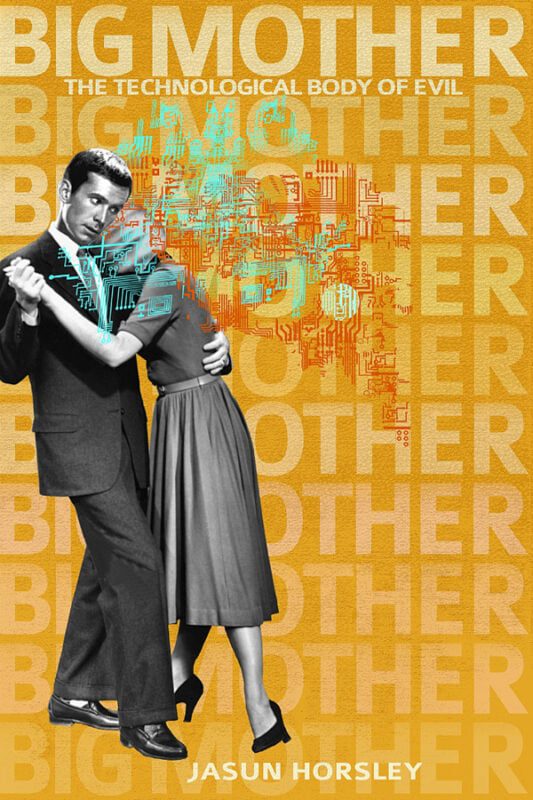
Big Mother by Jasun Horsley investigates the convergence of technology, consciousness, and metaphysical influence within modern civilization. Horsley anchors the inquiry in an audacious thesis: technological systems do not arise merely from human invention, but emerge from deeper forces that intersect with the psyche and shape collective behavior. He traces the hidden architectures of power that operate through technological mediation, suggesting that society’s embrace of digital life signals a profound shift in the human condition.
The Interface of Technology and Spirit
Horsley advances the Big Mother thesis by defining a dual movement: society engineers its own disembodiment even as external, non-human agencies exploit and accelerate this drift. He grounds this pattern in cultural history, referencing the work of Marshall McLuhan and Rudolf Steiner to frame the world’s electric information environment as a plausible host for anti-human intelligences. Through close reading of horror films, media events, and autobiographical experience, Horsley tracks how cultural products do not simply reflect human desires—they shape and discipline them, embedding new forms of possession and surveillance within the technological substrate.
The book roots its title and conceptual core in the figure of the mother. Horsley links technological immersion to the early psychic environment formed by the maternal bond, positing that unhealthy attachment produces a lifelong drive to re-enter or replicate the womb. As a result, technology serves as surrogate: digital media, virtual worlds, and artificial intelligences create a false sanctuary, promising comfort and unity while facilitating unprecedented forms of control. Horsley asserts that the technological body of “Big Mother” seduces with the offer of infinite protection and endless distraction, ultimately enforcing psychic dependency and vulnerability.
Ancestral and Demonic Possession
Horsley reframes the dynamics of history, proposing that ancestral and demonic possession function as primary motors of human development. He defines ancestral possession as the continuation of patterns inherited from previous generations, inscribed into the psyche and transmitted through family, social structure, and culture. He positions demonic possession as an even deeper phenomenon, characterizing certain destructive impulses and historical events as evidence of spiritual entities acting through human hosts. Horsley cites personal experience, psychological research, and scriptural references to sharpen his argument, treating possession as a lived, observable reality with tangible outcomes.
This framework shapes Horsley’s account of violence, pathology, and collective malaise. He argues that the refusal to acknowledge the influence of non-human intelligences produces a vacuum that technological systems rush to fill. Where society diagnoses aberrant behavior in strictly material terms, he finds evidence of entities exploiting psychological wounds and manipulating collective narratives. Horsley weaves this view into his interpretation of media spectacles and cultural myths, suggesting that they encode patterns of possession that reverberate through generations.
Neurodiversity and the Politics of Perception
Horsley foregrounds neurodiversity as both spiritual and political, refusing to reduce autism and related conditions to mere medical diagnoses. He contends that neurodiverse individuals embody modes of perception that disrupt consensus reality, posing a challenge to regimes of socialization and conformity. He recounts his own journey through the autism spectrum, emphasizing the existential stakes of difference in a world organized by rigid expectations. Through sustained engagement with the work of Joseph Chilton Pearce, Paul Collins, and other thinkers, Horsley describes autism as a mode of heightened sensitivity, marked by intense perception and a reduced capacity to filter sensory data.
He links neurodiversity to creativity, suggesting that those who perceive outside consensus boundaries often develop visionary capacities, though at the cost of social alienation. For Horsley, society’s response to neurodiverse experience exposes a broader dynamic: consensus reality depends on the suppression or elimination of perspectives that cannot be assimilated. Technology amplifies this tendency, offering both tools for connection and new mechanisms of exclusion. The digital environment, he argues, channels and amplifies certain perceptual frames while marginalizing or pathologizing others.
Language, Consensus, and Social Control
Horsley examines language as an instrument of social control, arguing that words and consensus shape the very possibility of perception. He analyzes the developmental process by which children internalize language and narrative structures, describing the shift from direct sensory experience to mediated understanding. Through references to Pearce’s research, he illustrates how language patterns become embedded in bodily movement, influencing thought at a pre-conscious level.
This process installs a filter that determines what counts as real and what falls outside permissible discourse. Horsley maintains that when a child reports an encounter with an invisible friend, parents deploy the language of “imagination” to contain and neutralize the experience, effectively erasing any reality that cannot be verified through shared constructs. He extends this analysis to the domain of culture, where the demand for consensus produces a regime in which dissenting perceptions are systematically dismissed or pathologized. He claims that the maintenance of consensus reality requires a constant, often violent, policing of boundaries—social, psychological, and metaphysical.
The Medium Shapes the Message
Drawing on McLuhan’s axiom, Horsley asserts that technological media do not simply transmit messages; they shape consciousness itself. He investigates the ways that media forms—film, television, digital networks—alter the structure of attention and identity. He sees the evolution of storytelling, from communal firelight to immersive screen experiences, as a lineage of possession: the medium absorbs the narrative function, inviting identification and projecting new forms of subjectivity.
Horsley interprets this progression as a technological annexation of the psyche. He argues that as people surrender more of their perceptual and cognitive functions to external devices, technology occupies the space once held by embodied presence and direct relationship. The artificial mind installs itself through the apparatus of entertainment and information, cultivating habits of distraction, dissociation, and compliance. Horsley views this process as the fulfillment of the Big Mother archetype, offering perpetual comfort while engendering dependency.
Receiver-Transmitters and the Spiritual Economy of Information
Horsley introduces a metaphysical model in which human beings operate as receiver-transmitters of information. He proposes that the body itself functions as a technological device, designed to channel signals from domains of consciousness that precede and exceed biology. He grounds this vision in philosophical and mythological traditions, suggesting that creation entails the installation of intelligences within material form.
This paradigm elevates the stakes of technological development: as humans extend their capacities through external devices, they create new pathways for the transmission of signals—both beneficial and malign. Horsley theorizes that the proliferation of digital networks, artificial intelligences, and virtual environments enables novel forms of influence and control, facilitating the ingress of entities that operate outside the limits of organic life. He treats the human-technology interface as a spiritual battleground, where discernment becomes essential for survival and integrity.
Technology, Disembodiment, and the Loss of Self
Horsley traces the trajectory of technological progress as a movement toward disembodiment. He identifies a pattern in which each advance in tool-making or media innovation facilitates greater abstraction from the body and from nature. He asserts that this progression carries existential consequences: as individuals invest identity and agency in external systems, they risk forfeiting the grounding and coherence that arises from direct embodiment.
He situates this pattern within the broader narrative of the Big Mother, arguing that the lure of technological immersion derives from unresolved longing for the maternal environment. Technology offers the fantasy of unlimited safety and gratification, but at the cost of autonomy and differentiation. Horsley contends that the surrender of embodied presence to artificial systems fosters a condition of infantilization, in which users accept surveillance, manipulation, and passivity in exchange for security and stimulation.
The Anti-Natural Mind and the Inversion of Values
Horsley identifies a split within the structure of human action and culture. He distinguishes between the natural mind—aligned with life, spirit, and creative potential—and the artificial or anti-natural mind, characterized by instrumental reason, technological fixation, and adversarial intent. He locates the ascendancy of the artificial mind in historical patterns of violence, domination, and nihilism, proposing that these manifestations reveal the operation of intelligences hostile to human flourishing.
He interprets modernity as the scene of an inversion, in which values rooted in the sacred, the beautiful, and the good give way to a regime of efficiency, control, and simulation. Horsley asserts that the apparent neutrality of technology conceals its function as an agent of this inversion, channeling energies away from authentic relation and toward systemic exploitation. He invites readers to recognize the symptoms of this shift in the proliferation of artificial environments, the rise of algorithmic governance, and the normalization of psychic fragmentation.
Discernment as Existential Imperative
Horsley concludes by affirming the necessity of discernment in the contemporary world. He defines discernment as the capacity to perceive the difference between natural and anti-natural influences, to recognize the operation of spiritual forces within the fabric of daily life. He urges readers to cultivate an awareness that penetrates the surfaces of technological mediation, to reclaim responsibility for attention, intention, and action.
He frames this task as both practical and spiritual: without discernment, individuals risk absorption into systems that exploit, possess, and consume their energies. He posits that only by reclaiming the agency of perception and reconnecting with embodied experience can people resist the seductive power of Big Mother. Horsley presents this challenge as the defining test of the present era, requiring vigilance, humility, and an unflinching confrontation with the realities of possession, pathology, and spiritual conflict.
The Architecture of Big Mother
Big Mother synthesizes philosophy, autobiography, cultural criticism, and spiritual inquiry to chart the emergence of a technological order that reconfigures the meaning of self, society, and the sacred. Horsley’s narrative traces converging lines: the rise of digital media, the marginalization of neurodiversity, the proliferation of artificial intelligence, and the deepening sense of existential displacement. He reveals how these phenomena interlock within a single architecture, designed to engineer dependency and mediate reality through the lens of technological control.
Throughout the book, Horsley insists that the stakes are concrete and immediate. The transformation of culture through technology produces real effects—psychological, social, and spiritual. He claims that the struggle to define, defend, and inhabit reality will determine the trajectory of the human species as it navigates the accelerating pressures of technological change and metaphysical infiltration.
Search-Optimized Key Takeaways
Big Mother by Jasun Horsley offers a profound critique of technological society, exploring how digital systems function as surrogate wombs, fostering psychic dependency and enabling new forms of social control. The book investigates the roles of ancestral and demonic possession in shaping history, asserting that spiritual entities exploit technological developments to exert influence. Horsley examines neurodiversity as a challenge to consensus reality, highlighting the political and existential implications of autistic perception. He analyzes language and consensus as mechanisms of social control, illustrating how media and technology rewire perception and behavior. The book frames discernment as a survival skill, essential for resisting the invasive architectures of Big Mother. By integrating spiritual, psychological, and cultural analysis, Big Mother delivers a compelling vision of the forces that shape the modern world and offers a roadmap for reclaiming agency in the face of accelerating technological change.
