Clock Shavings
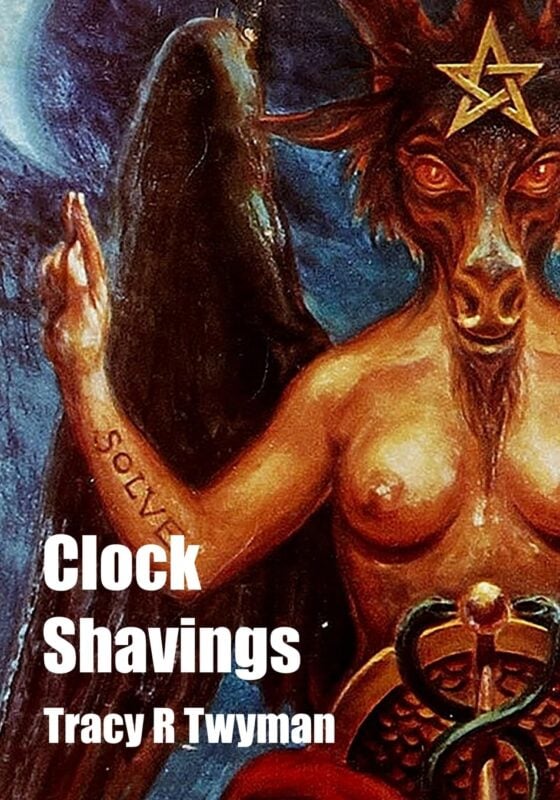
Clock Shavings by Tracy R. Twyman chronicles a relentless pursuit of the occult, beginning in Portland, Oregon in the 1990s, when Twyman, then a young college student, first encountered the tantalizing world of Western esoteric tradition. The story unfolds at the intersection of hidden history, personal obsession, and the volatile energies invoked by seeking what lies beyond the veil of ordinary experience. Driven by discoveries in books like Holy Blood, Holy Grail, Twyman senses a destiny linked to the mysteries of the Holy Grail, secret societies, and the shadowy bloodlines rumored to shape world history.
The Genesis of a Grail Quest
Twyman’s intellectual curiosity crystallizes into action through the creation of Dagobert’s Revenge, a magazine designed to attract the attention of secret initiates and those already steeped in the lore of the Grail and its hidden protectors. Assembling the magazine late into the night, she crafts it as both coded message and social experiment. This publishing project serves as the fulcrum, gathering a community of seekers, musicians, and occult researchers, while also attracting letters from self-proclaimed nobility, secret society members, and prisoners drawn by the promise of forbidden knowledge.
A Secret Order Emerges
The narrative deepens as Twyman joins forces with her close friend Brian Albert and, together, they formalize their interests into the Ordo Lapsit Exillis—a group named after the legendary stone that “fell from Heaven,” as described by Wolfram von Eschenbach. This secret order combines ritual, research, and cultural provocation, distributing the magazine and generating connections with both the mainstream and the fringe. As the order grows, so does its notoriety, placing Twyman at the crossroads of a burgeoning esoteric subculture.
The Grail Bloodline and Occult Genealogies
Twyman’s investigations draw her into the labyrinthine genealogies of Europe’s royal families, tracing supposed links from the Merovingians, Jesus, and Mary Magdalene through to modern aristocrats claiming Grail descent. The book foregrounds the idea of a “Grail bloodline,” inherently charged with occult power, capable of transforming the individual and, by implication, the world. The narrative interrogates how myths of kingship, biblical apocrypha, and ancient Sumerian legend merge, inviting the reader to consider whether such bloodlines could encode supernatural influence across history.
Contact with the Dragons
The text surges with the arrival of Nicholas de Vere von Drakenberg, a figure whose claims—of descent from a dragon lineage, magical sovereignty, and a right to confer titles—propel the story into territory where myth and reality interpenetrate. De Vere introduces the theme of the Dragon Court, asserting that the ancient god-kings of Sumer and their descendants, the Dragons, have survived persecution and clandestinely guide world events. Twyman’s correspondence and collaboration with De Vere intensifies the focus on legitimacy, spiritual authority, and the struggle over esoteric knowledge in the modern age.
Ouija Boards and the Unseen
Clock Shavings shifts into an experimental and experiential register as Twyman and her associates—most notably her husband Brian and musician Boyd Rice—commence Ouija board séances. Their goal: direct communication with supernatural entities, including the late French artist Jean Cocteau, himself rumored to be a Grand Master of the Priory of Sion. Through meticulous transcripts, the book provides a rare window into the procedural dynamics of these séances, capturing the suspense, ambiguity, and uncanny phenomena that arise when the veil between worlds thins. The transcripts often yield cryptic phrases, strange codes, and references to symbols such as the Black Sun, Cain, and the New World Order, deepening both the intrigue and the uncertainty surrounding the group’s activities.
The Black Sun and the Primordial King
As séances progress, the narrative converges on the symbolic figure of Cain, cast as the progenitor of a cursed bloodline and linked to the mythos of the Black Sun—a hidden force, both destructive and creative, that lies at the heart of esoteric traditions. Twyman synthesizes references from alchemy, Kabbalah, and Gnosticism, arguing that these traditions point to a primordial secret guarded by mystery schools and encoded in rituals, symbols, and sacred geography. The search for meaning intensifies, and with it, the risks multiply.
Collaboration and Conflict
The expanding circle of the Ordo Lapsit Exillis brings Twyman into collaboration and conflict with a diverse cast of characters: musicians drawn to the aesthetics of darkness and transgression, rival occult orders vying for recognition, and researchers whose commitment to secrecy borders on paranoia. Twyman navigates offers of nobility, threats of legal action, and warnings from those who perceive her as dangerously close to forbidden truths. Her correspondence with Boyd Rice, a controversial figure in underground music and the Church of Satan, becomes central to the group’s work, blending ritual, creative output, and spiritual experiment.
Supernatural Phenomena and Ritual Practice
The book documents moments when the ordinary world recedes and the supernatural asserts itself: planchettes move with force independent of human intention, lights flicker, and an electric charge fills ritual spaces. Twyman describes these moments in precise, almost clinical detail, avoiding sensationalism and instead conveying the reality of direct encounter with the unknown. The order’s first official ritual, a wedding conducted by Rice in a blackened basement chamber, marks the threshold at which performance, intention, and the unseen world converge. These experiences accumulate, infusing the group’s activities with a sense of mission and danger.
The Geometry of Symbols
A recurring motif involves the obsessive decoding of visual and textual symbols—Cocteau’s murals, the inverted alphabet, and the numerology of secret orders. Twyman and her collaborators map geometric shapes onto artwork, searching for patterns and messages left by initiates of earlier generations. The book argues that esoteric symbols function as keys to a hidden tradition, preserved in plain sight for those equipped to see.
Cultural Impact and Subcultural Circulation
The magazine Dagobert’s Revenge gains traction in underground culture, attracting a readership from the world of goth, industrial, and neofolk music. Musicians, artists, and writers with an interest in the esoteric contribute to its pages and cite it in interviews. Twyman appears on radio shows and internet TV, becoming a minor celebrity in the realm of alternative research. The magazine’s unique combination of conspiracy theory, sacred symbolism, and musical subculture forges a template that influences later alt-media and occult communities.
Psychological and Spiritual Toll
As the search intensifies, Twyman reveals the psychological and social costs of relentless occult pursuit. Group members experience paranoia, insomnia, and, at times, the erosion of ordinary boundaries between inner and outer reality. Harassment from rivals, unsolicited letters from claimants to secret knowledge, and the emotional volatility of key participants combine to create an atmosphere of instability. Twyman reflects on these pressures with unflinching honesty, recognizing that the pursuit of forbidden knowledge demands sacrifice.
The Convergence of Myth and Reality
The narrative synthesizes apocalyptic myth, royal intrigue, and personal destiny into a tapestry that foregrounds the persistence of mystery in modern life. Twyman positions the Grail as both a literal relic and an allegorical cipher—one whose pursuit compels the seeker through labyrinths of meaning, ritual, and self-transformation. As the Ordo Lapsit Exillis dissolves under pressure from both external antagonists and internal doubts, the story turns inward, exploring the residue left by direct encounter with the numinous.
Warning from the Threshold
Twyman closes with a direct warning to readers and future seekers. The drive to penetrate occult secrets changes the practitioner, often in ways that cannot be undone. Direct engagement with hidden forces, she asserts, produces effects—psychological, social, and spiritual—that ripple outward and cannot be managed through willpower alone. The book serves as both testament and caution, inviting reflection on the cost of enlightenment and the nature of obsession.
Legacy and Search Relevance
Clock Shavings by Tracy R. Twyman occupies a distinctive niche in occult literature, combining firsthand documentation of ritual practice with incisive analysis of Western esoteric tradition. The book’s integration of primary Ouija transcripts, genealogical speculation, and original research into subcultural networks positions it as a critical resource for those investigating the intersections of the Grail legend, secret societies, and the real-world impact of occult ideas.