Dark Victory: Ronald Reagan, MCA and the Mob
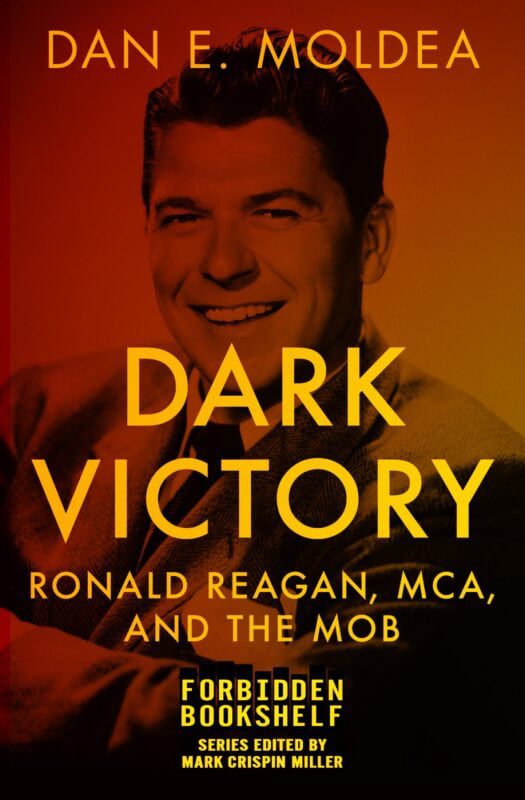
Dark Victory by Dan Moldea and Mark Crispin Miller unearths the hidden networks linking Ronald Reagan’s rise to power, the entertainment empire MCA, and the covert muscle of organized crime. From the back rooms of Hollywood to the corridors of American political power, the book exposes how institutional authority grew out of backroom negotiations, unsanctioned alliances, and calculated silences.
MCA as a Political Machine
The Music Corporation of America began as a band-booking agency in 1924 and transformed into a dominant force in film, television, and media distribution. By the 1950s, MCA controlled talent, production, and distribution, positioning itself as the industrial spine of American entertainment. Its reach extended far beyond contracts and screens. Behind every expansion stood executives like Jules Stein and Lew Wasserman, who cultivated personal relationships with union leaders, political operatives, and emerging stars like Ronald Reagan. Their control depended on a revolving door between corporate interests, legal manipulation, and labor coercion.
How did a company with a monopoly over talent also become the gatekeeper of labor peace in Hollywood? MCA secured waivers from the Screen Actors Guild (SAG), allowing it to both represent talent and produce shows, a unique legal status that cemented its hegemony. Ronald Reagan, then SAG president, facilitated these concessions. As an FBI informant and anti-communist ally, Reagan earned institutional trust, while MCA secured structural dominance.
Reagan’s Personal Trajectory Through Institutional Favor
Ronald Reagan’s ascent from B-movie actor to political titan relied on timely interventions from MCA and its executives. When Reagan’s acting career stalled, MCA rescued him with a lucrative hosting role on General Electric Theater. These jobs restored his visibility and stabilized his finances. MCA agents, especially Taft Schreiber and Lew Wasserman, acted as both business managers and political mentors. They introduced Reagan to donors, cultivated his image, and brokered strategic alliances with conservative business elites.
These interventions were not episodic—they were foundational. Reagan’s wealth accumulation and property investments stemmed from insider opportunities arranged through his MCA network. Political appointments and campaign infrastructures emerged from this same source. Personal ties merged with policy influence. When Reagan became governor of California and later president, former MCA affiliates followed him into regulatory agencies, labor boards, and executive offices.
Sidney Korshak and the Mob’s Legal Arm
Every major move in MCA’s expansion linked to the influence of Sidney Korshak, the Beverly Hills attorney known among federal investigators as organized crime’s legal gatekeeper. Korshak brokered deals between film studios, labor unions, and mafia families. His proximity to both MCA and Reagan was strategic, not incidental. Korshak protected MCA’s interests during federal antitrust investigations. He arranged settlements, silenced dissent, and directed capital flows toward compliant unions and politicians.
Where legal pressure threatened MCA’s business model, Korshak interceded. When labor disputes jeopardized production, Korshak secured peace through mafia intermediaries. His office functioned as a clearinghouse for influence, coercion, and arbitration. Reagan’s path to elected office moved through these networks of mediated control.
Federal Investigations and Withheld Evidence
The Department of Justice investigated MCA for antitrust violations in 1962. Documents obtained later through the Freedom of Information Act revealed an extensive record of collusion between SAG and MCA during Reagan’s presidency of the union. Prosecutors described SAG’s decisions as “the central fact of MCA’s whole rise to power.” Yet the case never reached court. The government settled with MCA through a consent decree that allowed the company to abandon its talent agency division in exchange for immunity. Evidence implicating Reagan and other MCA executives was sealed.
This moment marked a critical transfer of institutional accountability. Regulatory scrutiny collapsed under political pressure, shielding powerful figures and burying documentary proof. The narrative of Reagan’s clean financial history held, while the architecture of patronage remained unexamined. The episode illustrates how legal processes can serve as cover for negotiated impunity.
Labor Unions, Corruption, and Enforced Compliance
MCA’s dominance would have been impossible without control over labor. The International Alliance of Theatrical Stage Employees (IATSE) and the Screen Actors Guild functioned as gatekeepers for studio production. MCA ensured cooperation through both financial favors and implicit threats. Union presidents, including George Browne and Roy Brewer, operated within these coordinated frameworks, trading worker concessions for access and protection.
When threats surfaced from rival unions or reformist actors, the Korshak network deployed both legal action and underground force. The result was a tightly regulated system where dissent was rare, and labor peace came with embedded costs. These arrangements mirrored traditional mafia control of unions in construction and shipping, adapted for Hollywood’s unique ecosystem of visibility and narrative power.
Political Realignments and Ideological Cover
Reagan’s transition from liberal New Deal Democrat to conservative spokesman followed a clear timeline. After the antitrust case against MCA, Reagan distanced himself from regulatory politics and embraced corporate-friendly rhetoric. His speeches for Barry Goldwater’s campaign in 1964 echoed themes of limited government, private enterprise, and patriotic exceptionalism. These positions aligned with MCA’s economic interests and insulated Reagan from scrutiny over past affiliations.
Behind ideological statements stood material transactions. Stein and Wasserman orchestrated property deals and arranged speaking opportunities that stabilized Reagan’s financial base. Campaign operatives from MCA-linked circles managed media strategies, donor outreach, and messaging platforms. Korshak’s associates handled logistical support and risk containment. These convergences defined the infrastructure of Reagan’s political career.
The Expansion of MCA as Cultural Infrastructure
By the 1970s and 1980s, MCA controlled Universal Pictures, Universal Television, and a global network of subsidiaries in music, publishing, and video distribution. This expansion reflected more than business growth. MCA shaped public taste, curated national narratives, and defined the aesthetics of modern American storytelling. Its executives did not merely manage content—they influenced the frameworks of identity and aspiration.
Political control followed. With Reagan in the White House, MCA alumni occupied key positions in federal agencies overseeing labor, justice, and commerce. Deregulation campaigns advanced MCA’s commercial interests. Media consolidation policies enabled further acquisitions. National arts funding steered grants toward productions aligned with corporate sponsors. This was not an era of independent expression—it was a period of institutional convergence between capital, culture, and governance.
The Invisible Role of Fixers and Intermediaries
The architecture of this convergence depended on figures like Korshak, Wasserman, and Taft Schreiber—intermediaries who balanced legal standing with extralegal leverage. They translated corporate objectives into union concessions, campaign strategies, and narrative control. These men operated across visible and hidden domains. They did not appear on ballots, but they orchestrated elections. They did not write laws, but they shaped the conditions under which laws functioned. They avoided publicity, yet directed the careers of public figures.
Their work ensured continuity. When investigations emerged, they neutralized opposition. When scandals threatened legitimacy, they managed exits and rebranding. When rivals appeared, they negotiated or eliminated them. Their authority derived not from formal titles, but from relationships structured around loyalty, discretion, and enforcement.
The Network as Historical Actor
This book does not tell the story of an individual’s corruption. It maps the logic of a network—a system where power, legality, media, and violence converge. The actors change names and offices, but the structure remains consistent. Regulatory capture, political grooming, labor manipulation, and cultural production form an interdependent web. MCA’s rise mirrors the consolidation of American institutional power in the second half of the twentieth century.
The alliance between Reagan, MCA, and the mob was not episodic or accidental. It was foundational. These relationships shaped the rules of engagement for business, labor, and governance. They determined which stories got told, which actors received roles, and which policies advanced. They defined how American power presented itself to its own citizens and to the world.
What defines legitimacy when the arbiters of law, story, and capital operate from the same playbook? This question animates every chapter of Moldea and Miller’s investigation. By following the traces of MCA’s empire and Reagan’s career, Dark Victory reveals the scaffolding of American influence—built not only with votes and laws, but with silence, deals, and ghostwriters.