Du Pont Dynasty: Behind the Nylon Curtain
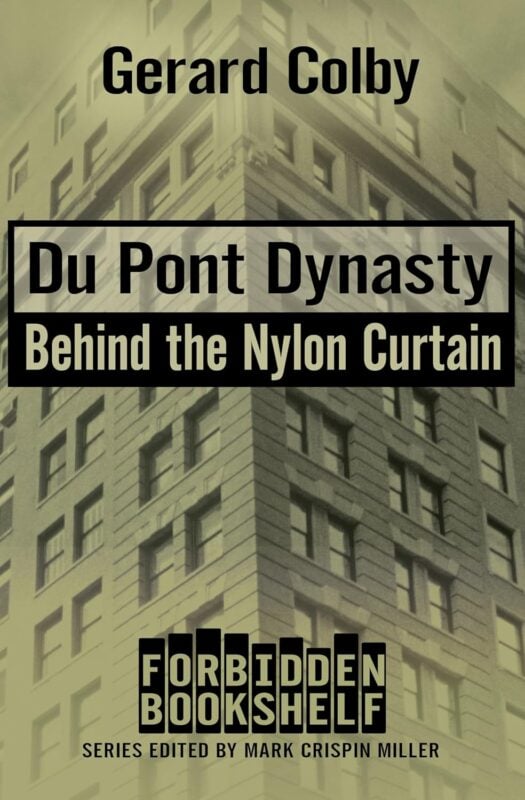
Du Pont Dynasty: Behind the Nylon Curtain by Gerard Colby exposes how a single family's wealth, corporate empire, and political reach shaped modern America across more than a century. Colby dissects the industrial, political, and environmental power the Du Pont family accumulated, their central role in shaping American capitalism, and their long-term strategic dominance over public institutions, financial systems, and the national security state.
The Machinery of Corporate Empire
The Du Pont family’s wealth began with explosives manufacturing in the early 1800s, but by the 20th century, their business empire expanded into chemicals, energy, and eventually finance and politics. Through E.I. du Pont de Nemours and Company, they controlled major arms production for World Wars I and II and positioned themselves as critical players in military-industrial alliances. Colby details how their monopoly practices enabled vast control over industry sectors including automotive (via General Motors), agriculture, and household consumer products.
Their control of DuPont Company enabled the manipulation of supply chains, labor conditions, and pricing across chemical, textile, and agricultural sectors. They embedded family members into managerial, scientific, and policy-making positions. This deliberate strategy allowed the Du Ponts to frame innovation in terms that served capital expansion, avoiding public accountability. The use of interlocking directorates, foundations, and trusts masked the concentration of power under a veneer of scientific progress and public service.
A Dynasty’s War Against the New Deal
The family’s political reach grew in parallel with its financial footprint. Colby traces a sustained campaign by the Du Ponts to dismantle Franklin Roosevelt’s New Deal. Their ideological crusade aimed to roll back economic redistribution, eliminate labor protections, and cut taxes on the wealthy. Pierre S. du Pont and his allies financed libertarian think tanks, supported anti-union legislation, and shaped corporate narratives that cast regulations as threats to freedom.
As Colby recounts, the Du Ponts funneled money through front groups and media channels to craft a free-market mythology that would influence conservative politics for decades. Their ideological offspring shaped later Republican platforms—from Reagan-era deregulation to the rise of neoliberal trade policies. Through campaign donations, foundation-funded research, and legal attacks on federal authority, they pushed the state toward privatization and financialization.
Military Contracts and Covert Alliances
Du Pont’s centrality to the war economy expanded their influence over foreign policy. The company manufactured gunpowder, munitions, and chemical agents used in conflicts from World War I to Vietnam. Colby details the company’s role as a major Pentagon contractor, participating in defense research and development through subsidiaries and research institutions under family control. The family leveraged these government contracts to fund private projects and secure tax privileges.
Colby reveals hidden partnerships with intelligence agencies, including CIA links to aircraft retrofitting firms and weapons contractors tied to Du Pont-owned entities. Planes used in covert Latin American operations in the 1980s, including the bombing of Managua airport, were traced back to Delaware-based companies connected to the family. These activities extended the family's control into covert warfare, while shielding operations behind layers of corporate insulation.
Inheritance, Tax Avoidance, and Philanthropic Control
The Du Ponts built a vast trust and foundation infrastructure to preserve generational wealth while shielding assets from taxation. Colby outlines how these structures allowed the family to exert control over companies and public institutions without direct ownership. Delaware’s corporate-friendly legal code—crafted and defended by Du Pont-aligned officials—became a model for tax havens, enabling other elites to mimic their wealth protection strategies.
Colby exposes how Du Pont foundations, such as the Longwood Foundation and the Alfred I. du Pont Testamentary Trust, functioned less as philanthropic entities and more as instruments of strategic influence. These institutions funded elite universities, public policy programs, and cultural institutions with stipulations that ensured ideological alignment and minimal scrutiny. Their influence extended into educational reform, urban planning, and environmental research—frequently displacing democratic accountability.
Environmental Crimes and Public Health
Environmental damage constitutes one of the most devastating aspects of the Du Pont legacy. Colby chronicles how Du Pont’s chemical innovations—while profitable—resulted in toxic waste, groundwater contamination, and workplace health hazards. The company routinely suppressed research about the dangers of products such as Teflon, Benlate, and PFOA (C8), exposing workers and communities to carcinogens and reproductive toxins.
The book details lawsuits from thousands of Americans suffering from exposure to these chemicals. Internal documents revealed Du Pont’s knowledge of environmental and health risks dating back decades. When settlements occurred, they often included gag orders and minimal penalties relative to the profits generated. Communities from West Virginia to Argentina continue to suffer the legacy of chemical exposure and resource extraction, long after production ceased.
Family Intrigue, Mental Illness, and Crime
The Du Pont saga includes dark episodes of psychological decline and criminal behavior. John E. du Pont, heir to one of the family’s branches, murdered Olympic wrestler Dave Schultz in 1996. Colby contextualizes this act within a broader pattern of isolation, paranoia, and wealth-induced detachment from reality. He presents John’s descent as emblematic of a family culture that prioritized secrecy, privilege, and internal hierarchy over social responsibility.
The book also follows financial scandals, including Wilmington Trust’s collapse during the 2008 financial crisis. Once a cornerstone of Du Pont family banking influence, the institution faced massive losses due to overexposure to risky real estate derivatives. The bailout that followed, along with the silent sale of family shares, further illustrates how the Du Ponts protected their own assets while transferring the costs of failure to the public.
From Industrial to Financial Power
As the Du Ponts reduced direct involvement in chemical manufacturing, they transitioned into financial investment and global asset management. Colby describes how the family dissolved holding companies like Christiana Securities and sold off legacy operations, including Conoco and DuPont Textiles, to firms such as Koch Industries and Carlyle Group. These moves diversified wealth while distancing the family from public scrutiny over environmental damage.
Their stake in global finance included board seats, private equity investments, and indirect control through foundations and venture capital. Du Pont capital now moves through structures indistinguishable from the financial elite, while its historical roots remain embedded in Delaware’s tax code, institutional philanthropy, and real estate networks. Their influence persists in corporate governance, public policy debates, and the architectural fabric of America’s industrial past.
Philanthropy as Power Consolidation
Du Pont philanthropy shapes the public narrative of legacy while strategically reinforcing private influence. Colby analyzes how gifts to hospitals, universities, and museums cloak the family in civic virtue while directing the priorities of those institutions. For instance, research funded by Du Pont foundations often aligns with chemical industry interests or downplays regulatory critiques. Board appointments further consolidate oversight and silence dissent.
The family’s control over historical archives, including restrictions on documents at the Hagley Library and Eleutherian Mills, reinforces this managed image. Access to historical truth becomes conditional, mediated through the very structures the book critiques. Colby’s struggle to access documents, photographs, and interviews reveals a pattern of obstruction rooted in legal intimidation, institutional loyalty, and the internalization of elite interests by cultural gatekeepers.
Enduring Legacy and Political Infrastructure
The Du Ponts shaped the political infrastructure of the conservative movement in the United States. From Pete du Pont’s presidential bid and GOPAC leadership to Newt Gingrich’s Contract with America, the family's ideological agenda permeated mainstream Republican policy. Their support for deregulation, privatization, and corporate tax relief originated from a strategic project to reshape American governance.
Colby documents how Du Pont-backed think tanks, lobbying groups, and media strategies laid the groundwork for modern neoliberal orthodoxy. Their descendants and institutional heirs continue to shape policy debates around education, energy, and social welfare. Du Pont ideology has become part of the intellectual DNA of the modern Right, expressed through tax codes, property laws, and privatized social services.
A Template of Elite Continuity
Du Pont Dynasty: Behind the Nylon Curtain offers more than a family biography—it maps the infrastructure of American elite continuity. Gerard Colby reveals how private capital, shielded by legal innovation and institutional capture, exerts long-term control over national development. The Du Ponts used chemical manufacturing as the foundation for a multifaceted empire encompassing finance, philanthropy, and political engineering.
The book makes clear that understanding modern capitalism requires a forensic view of families like the Du Ponts who designed its architecture. Their strategic use of trusts, nonprofits, and private banking built a fortress of influence that transcends industry cycles and democratic change. Through Colby’s account, the Du Ponts emerge not merely as industrialists, but as system builders who crafted the levers of national power.