Fingerprints of the Gods: The Evidence of Earth’s Lost Civilization
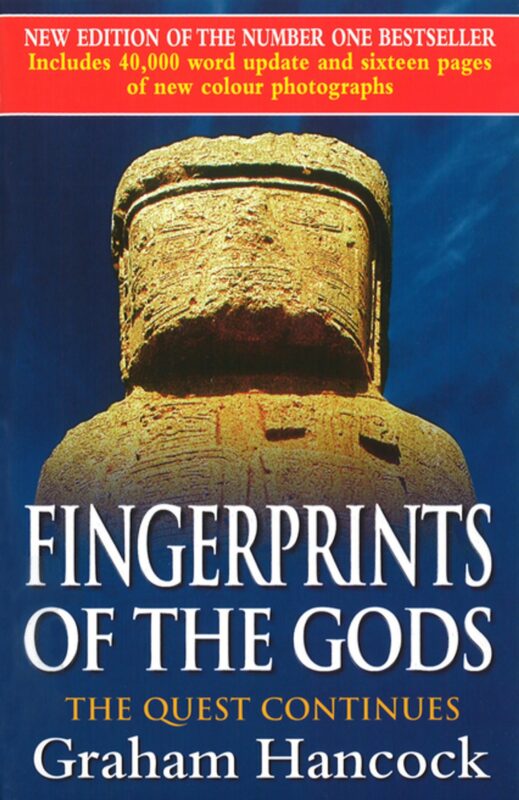
Fingerprints of the Gods by Graham Hancock investigates the case for a forgotten civilization whose traces remain embedded in ancient maps, myths, and monumental architecture. Hancock asserts the existence of a lost culture of astonishing sophistication that flourished during the last Ice Age, its achievements preserved in scattered remnants which modern archaeology often overlooks or misinterprets. This book positions itself at the intersection of scientific enigma, historical revision, and enduring mystery, raising questions about human origins and the cyclical vulnerability of civilizations to cataclysm.
The Mystery of Ancient Maps
Hancock foregrounds a series of cartographic anomalies, with the Piri Reis map of 1513 occupying the spotlight. This Ottoman mapmaker drew coastlines of South America and, more provocatively, an accurate outline of Antarctica as it would appear without its ice cap. The seismic survey data from the twentieth century validated features that cartographers of the sixteenth century could not have known through direct observation. Other maps, such as those by Oronteus Finaeus and Philippe Buache, reveal similar knowledge of the Antarctic landmass. Hancock cites technical analysis from the US Air Force and leading geographers, noting their consensus on the accuracy of subglacial details depicted centuries before Antarctica’s official discovery. He describes how ancient sources, referenced by Piri Reis and other mapmakers, claim descent from even earlier documents—some originating in antiquity or before.
Lost Technologies and Scientific Mastery
The evidence, Hancock contends, points to the mastery of advanced mathematics and surveying techniques in remote prehistory. Ancient maps often display longitudes with a precision unattainable prior to the invention of the marine chronometer in the eighteenth century. The spatial accuracy of the Mercator and Dulcert Portulano maps suggests a forgotten command of spherical trigonometry and geometry, well beyond the capacities attributed to known early cultures. Hancock details how these maps use projections that require complex calculations, indicating a working knowledge of Earth’s curvature and the principles of cartography as practiced by a global seafaring civilization.
Ice Ages, Cataclysm, and the Earth-Crust Displacement Theory
The narrative advances toward the theory that a dramatic shift in Earth’s crust—described by Charles Hapgood and endorsed by Albert Einstein—explains the geological and cartographic puzzles. According to this model, the lithosphere moves over the planet’s inner layers in rare, catastrophic events, shifting entire continents thousands of miles in relatively short periods. Hancock brings forth evidence from glacial sediment cores, which demonstrate that parts of Antarctica remained ice-free until about 4000 BC. Rivers, estuaries, and mountain ranges depicted on ancient maps coincide with periods of temperate climate, only possible before the current polar alignment. The notion of a sudden crustal displacement not only accounts for the mapping anomalies but also suggests a trigger for the destruction of advanced civilizations and the global flood myths that saturate ancient lore.
Monuments as Legacy and Evidence
Hancock surveys the world’s ancient monuments, from the Egyptian pyramids and the Sphinx to Machu Picchu and Tiwanaku, interpreting their alignments, architecture, and astronomical symbolism as deliberate messages from the past. He analyzes the precision with which the Great Pyramid encodes geodetic data, such as the Earth’s dimensions and the precessional cycle. Machu Picchu’s terraces and orientation to the solstices reinforce the idea of an ancient scientific tradition that spanned continents. The author argues that these structures served as repositories of encoded wisdom, constructed by survivors of a global cataclysm intent on preserving knowledge for future generations. The recurrence of similar motifs—bearded gods, flood myths, and the motif of civilizing strangers—across distant cultures implies a shared source or network of communication.
Global Catastrophe in Myth and Memory
The world’s great myths, Hancock proposes, memorialize actual events and encode astronomical and geological knowledge. Flood stories, ubiquitous from Mesopotamia to the Andes, preserve accounts of a planetary disaster that ended the lost civilization. The figures of civilizers—Quetzalcoatl in Mexico, Viracocha in the Andes, Osiris in Egypt—emerge in the aftermath, bearing knowledge and initiating new societies. These narratives converge on themes of destruction by water, fire from the sky, and a celestial warning system anchored in the movements of stars and planets. Hancock interprets these as encrypted histories, retold in symbolic language, intended to transmit the memory of cosmic dangers and the fragility of advanced cultures.
Suppression, Amnesia, and Academic Paradigm
The book critiques the tendency of institutional archaeology and academia to dismiss or ignore inconvenient data. Hancock catalogs instances where compelling evidence receives cursory treatment or is explained away as coincidence or forgery. He discusses how the paradigm of linear progress, rooted in the belief that civilization arose in the Fertile Crescent after 4000 BC, restricts investigation into anomalous artifacts and narratives. The fragmentation of ancient knowledge—preserved in maps, monuments, and myth—reflects not only the devastation of the cataclysm but also the long amnesia imposed by historical orthodoxy. The author calls for rigorous, open-minded inquiry into the prehistoric record, guided by evidence rather than dogma.
Cultural Connections and the Spread of Knowledge
Hancock draws connections between distant cultures through shared scientific, religious, and architectural features. He highlights similarities in pyramid building, use of sacred numbers, and alignments to solstice and stellar events across Egypt, Mesoamerica, and South America. The consistent depiction of cosmological cycles, flood traditions, and “civilizer gods” reveals a legacy that extends beyond regional evolution. He suggests that these correspondences indicate not isolated development, but the diffusion of knowledge from a common ancestral source, carried by survivors who migrated and seeded later civilizations.
The Role of Precession and Astronomical Symbolism
The book devotes considerable attention to the precessional cycle—the slow wobble of Earth’s axis over approximately 25,920 years—and its prominence in ancient myth and architecture. Hancock demonstrates that the builders of Giza, Teotihuacan, and Angkor incorporated precessional numbers into their layouts, hinting at a science of time and cosmic renewal. He interprets the reverence for particular constellations, such as Orion and Sirius, as markers for epochs and warnings of periodic catastrophe. By embedding celestial cycles in stone, the ancients sought to communicate a message about the timing and recurrence of destruction and rebirth.
Rediscovering the Past, Facing the Future
Hancock concludes that the evidence for an advanced Ice Age civilization is cumulative and persuasive. The convergence of cartographic, geological, architectural, and mythological data demands a rethinking of human history’s scope and trajectory. He warns that the fate of the lost civilization—swept away by natural forces it could foresee but not avert—serves as a cautionary tale for the modern world. He argues that our technological achievements do not exempt us from planetary cycles of upheaval and that the warnings inscribed in myth and monument must be taken seriously.
A New Paradigm of Human Origins
Fingerprints of the Gods proposes a paradigm in which civilization arises, flourishes, and falls in response to cosmic and terrestrial rhythms, leaving behind cryptic traces for future generations. The book challenges readers to reconsider assumptions about progress, amnesia, and the guardianship of knowledge. Hancock calls for a synthesis of disciplines—archaeology, geology, astronomy, mythography—to unlock the full story of humanity’s origins and destiny. His argument moves from the material—ancient maps and monuments—to the metaphysical, as he frames the past as both a warning and a guide for those willing to read the signs left by their forebears.
An Invitation to Discovery
The enduring appeal of Fingerprints of the Gods lies in its invitation to explore the enigmas of human history. Hancock weaves together hard data and narrative mystery, casting the search for the lost civilization as a journey through the world’s forgotten wisdom. He urges readers to question received history, follow the evidence wherever it leads, and recover the knowledge encoded in the legacy of those who came before. The story, once begun, unfolds with the momentum of discovery, driven by the conviction that the answers to our deepest questions may yet be found among the fingerprints of the gods.