Finite and Infinite Games
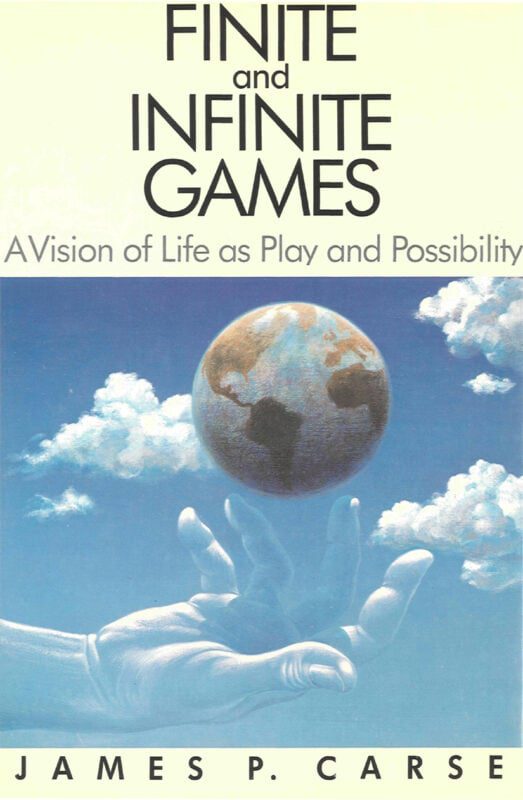
Finite and Infinite Games by James P. Carse analyzes the central structures of human action through the lens of two fundamental game forms. Carse asserts that finite games exist for the purpose of producing a winner and a conclusion, while infinite games aim at the continuation of play itself. From the moment he defines these two categories, Carse invites readers to examine the architecture of their ambitions, their participation in culture and society, and the foundations of their sense of self. He traces how these frameworks generate consequences across domains—personal, social, political, and spiritual.
Defining Finite and Infinite Play
Carse specifies that a finite game operates within boundaries. Its purpose derives from the creation of a clear victor, established through mutually agreed-upon rules, temporal limits, and spatial constraints. The finite game begins and ends. The players select themselves or are selected, and the game unfolds toward a moment of resolution, at which point titles and recognition attach to the victor. A finite game’s essence crystallizes in its observable outcome.
By contrast, the infinite game organizes itself for the sole aim of continuing play. The infinite player welcomes new participants, shifts rules to preserve possibility, and measures achievement by the extent to which play remains alive and generative. Infinite games generate horizons rather than endpoints, provoking transformation rather than stabilization. Where do we see infinite play? In art, in authentic dialogue, in open-ended creative or spiritual practice, in the pursuit of discovery. Carse presents infinite play as an approach to living—an engagement that dissolves fixed boundaries and embraces change as the condition of renewal.
The Principle of Voluntary Play
Whoever plays, plays freely. This foundational claim runs through the book. The experience of being compelled undermines the game itself, for compulsion extinguishes play. Carse insists: if a person must play, that person cannot play. The contract of the game—finite or infinite—relies on willing engagement. Even in conditions of extreme coercion or threat, Carse observes that participation remains at some level chosen, and the awareness of this freedom forms a paradoxical burden.
Finite games veil this freedom to create the seriousness and self-forgetting necessary for play to have stakes. The player must temporarily believe in the necessity of roles and outcomes, must act as if winning is the only path. Yet Carse urges recognition: every role is chosen, every contest entered freely, even if the stakes appear overwhelming. The infinite player, conscious of this paradox, embraces the playfulness at the root of existence.
Boundaries and Rules: The Structure of Action
Finite games establish boundaries—of space, time, membership, and eligibility. These boundaries allow for the determination of winners and losers. Carse gives examples from war, sports, business, and personal relationships, noting how the rules are published in advance, the participants are selected, and the event moves toward a decisive end. The presence of boundaries creates the conditions for measurement, for comparison, for ranking.
Infinite play, however, remains open to new participants, new conditions, and new rules. The infinite player changes rules to keep the game going, especially when a fixed outcome looms. Rules in the infinite game function like the grammar of a living language—evolving to preserve the capacity for meaningful interaction. In contrast, finite games adhere to a closed set of rules akin to the structure of formal debate, where adherence ensures that the contest can resolve. Carse’s analogy illustrates how flexibility signals life and change, while rigidity signals closure.
Roles, Masks, and Identity
Finite play relies on the acceptance of roles. The player adopts a mask, assumes a position, and acts with seriousness required by the contest. The act of veiling—the conscious forgetting of one’s freedom—enables the drama of finite play. Carse explores this dynamic through theater and acting, considering how the mask allows both self and audience to enter into the fiction and seriousness of the game.
Yet this veiling has its risks. The player may come to believe entirely in the role, confusing mask with self, seriousness with necessity. Carse encourages awareness: to live as a finite player means to act with seriousness, to strive for title, to desire the security of script. To live as an infinite player means to use roles playfully, recognizing them as provisional, never mistaking mask for person.
Surprise, Openness, and the Nature of Outcome
Finite games seek to eliminate surprise through mastery. The master player trains to anticipate every move, to render the future as predictable as possible. The ultimate goal is to reduce drama to inevitability, to script the outcome in advance. In the finite game, surprise threatens control; the unexpected reveals vulnerability.
The infinite player welcomes surprise, seeks openness, and invites transformation. Surprise becomes a source of delight, an invitation to renew, and an occasion for growth. Infinite play, Carse insists, finds its purpose in remaining open to the unpredictable, the unplanned, the emergence of new possibilities. Education, for Carse, means preparation for surprise, for ongoing self-discovery, rather than repetition of the past.
Power, Titles, and Recognition
The pursuit of power defines finite play. Power flows from title, and title results from victory in the bounded contest. Society maintains and celebrates titles through ritual, property, and public memory. Carse explores how power accrues through visible, memorable, and exclusive achievement—public recognition of victory transforms title into a form of social currency. Power requires an audience, depends on recognition, and reinforces boundaries.
Property serves as the emblem of title. Ownership becomes a visible signal of past victory, carrying the memory of contest and legitimizing the possessor’s claims within society. The struggle for property underpins much of social order. Carse analyzes the ritual structure of property, inheritance, and recognition, showing how they bind individuals to the memory of competition.
Strength, Openness, and Infinite Play
Infinite players reject the logic of power in favor of strength. Strength is the capacity to continue play, to hold boundaries lightly, and to transform limits into occasions for renewal. Infinite play measures itself by its generative openness, its capacity to allow others to play, and its willingness to include vulnerability, mortality, and loss within the field of play.
Carse insists that strength is available to anyone who enters into infinite play. Where power measures itself through comparison, strength emerges in the act of engaging, creating, and sustaining play. The strong person initiates actions that invite responses, that open new possibilities for engagement, and that resist the closure of the contest.
Society and Culture: Competing Forms
Society structures itself as a finite game. It preserves titles, boundaries, hierarchies, and rituals that stabilize the memory of past victory. Societies are inherently bounded—by membership, by territory, by tradition. The rules of society aim to resist change, to preserve power, and to ensure that past winners retain their recognition. Carse maps how society creates roles, enforces conformity, and suppresses deviation to sustain its structure.
Culture, in Carse’s framework, manifests as infinite play. Culture refuses fixed boundaries, opens itself to creative deviation, and perpetuates itself through transformation. Carse claims that culture lives through the originality of its members, by inviting reinterpretation of tradition, and by resisting the temptation to fix the meaning of the past. Where society preserves property, culture generates renewal. Where society cherishes repetition, culture thrives on the unrepeatable and the new.
Mortality, Immortality, and the Meaning of Death
Finite players strive for immortality. They seek to win life, to preserve title, to ensure that their achievements endure beyond their own existence. Immortality, for the finite player, means becoming unforgettable—winning a place in history, society, or the memory of others. Carse observes how rituals, monuments, and inheritance serve this aim.
Infinite players live as mortals. Death does not represent the end of play; rather, it marks a dramatic transition within an ongoing, open-ended field. The infinite player offers death as an element of continued play, for oneself and for others. Mortality becomes the condition of renewal, the ground of transformation, and the source of playfulness. Carse finds in this attitude a profound joy, an affirmation of the unpredictable, and a celebration of shared discovery.
Evil, Silence, and the End of Play
Evil, for Carse, arises when the possibility of play is terminated by force. The silencing of voices, the erasure of cultures, the imposition of recognition without contest—these acts end infinite play. Carse identifies evil as the attempt to eliminate ambiguity, to fix meaning, to ensure that only certain outcomes or histories are possible. When play ends, silence descends, and the possibility of response, renewal, or transformation disappears.
Carse notes that evil often originates from the desire to eliminate evil, to create a purified or perfected outcome. Attempts to force history to a conclusion, to eliminate the other, or to silence deviation, generate a kind of violence against the field of play itself. Infinite players recognize the likelihood of evil but respond by re-opening play wherever possible, by hearing the silences, and by seeking to sustain the possibility of renewal.
Names, Titles, and the Reciprocity of Relationship
Carse distinguishes sharply between names and titles. Titles mark achievement in a finished contest, signaling to others the closure of the game and the withdrawal from further competition in that area. Names, by contrast, gesture toward an open future, a relationship not yet determined, a possibility not yet foreclosed.
When people meet as bearers of names, they engage one another in the open, in the unplanned, and in the possibility of mutual transformation. Carse claims that naming constitutes a profound invitation to play, to relate without scripts, and to generate futures that cannot be predicted. Titles refer to the past, names to the horizon.
Implications for Human Life and Society
Carse’s framework extends beyond individual psychology or cultural critique. He proposes a lens for examining institutions, practices, and the dynamics of power in business, education, politics, and religion. Where does the pursuit of title and power limit creativity? How does the search for immortality shape institutions? What practices foster genuine play? Carse’s questions pierce the logic of compulsion and reveal the possibilities for freedom, renewal, and transformation.
The challenge he sets forth is existential. He asks: where have we mistaken necessity for freedom, script for possibility, seriousness for playfulness? He claims that the infinite game beckons beneath the surface of all contests, that the capacity to drop the veil, embrace surprise, and seek the horizon remains accessible in every moment.
Legacy and Enduring Relevance
Finite and Infinite Games by James P. Carse delivers a compelling vision of life as a field of possibility structured by the forms of play we choose. Carse’s claims reverberate across disciplines, inviting readers to examine the hidden architecture of their actions, the stakes of their ambitions, and the meaning they ascribe to roles and outcomes. By drawing the distinction between finite and infinite games, Carse opens the question: How will we play? Will we settle for the certainty of conclusion, or will we embrace the vulnerability, creativity, and generativity of infinite play? The answer shapes not only individual destinies, but the unfolding drama of human culture itself.