Jimmy Carter, Jimmy Carter
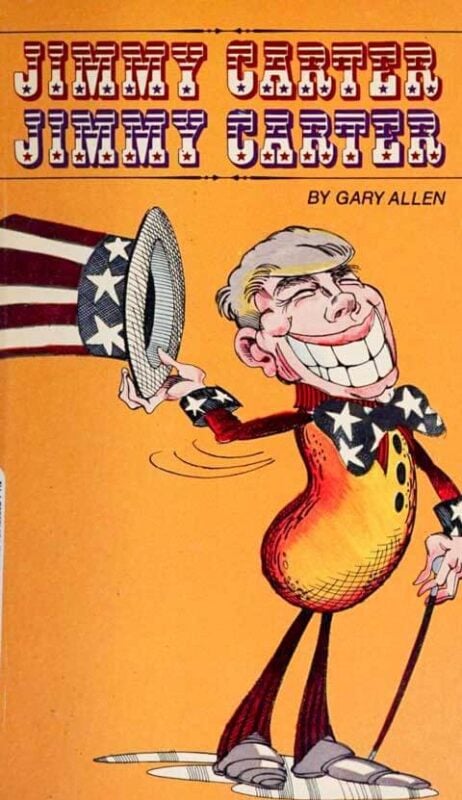
Jimmy Carter, Jimmy Carter by Gary Allen offers a forensic account of how James Earl Carter, Jr. moved from the obscurity of rural Georgia to the national spotlight as the Democratic nominee for President in 1976. Gary Allen uncovers the operational machinery behind Carter’s meteoric ascent, dissecting the methods, strategies, and calculated image management that propelled the peanut farmer to the edge of the Oval Office. The book’s narrative dissects the mechanics of modern political campaigns, the evolution of a candidate’s public persona, and the interplay between ambition, media, and power.
The Democratic Convention and the Birth of a Political Phenomenon
New York City’s Democratic Convention in July 1976 unfolded as a tightly controlled spectacle. The turbulence that defined previous conventions gave way to orchestration and composure. Gary Allen positions Carter’s nomination as a foregone conclusion, the result of methodical preparation and relentless advance work rather than dramatic last-minute deals. Delegates, long resigned to Carter’s candidacy, gathered more in celebration than in contest, their optimism rooted in polling data and a sense of historical correction after the party’s disastrous 1972 showing. Carter’s unveiling of Walter Mondale as running mate delivered the only genuine surprise, instantly repositioning the Democratic ticket as pollsters’ favorites against the Republican field.
Allen portrays the convention as the culmination of a meticulously executed plan. Carter emerged as the “royal flush” candidate, orchestrating his victory so thoroughly that even seasoned political powerhouses like Hubert Humphrey and Ted Kennedy remained bystanders. The author’s on-the-ground reporting captures a mood of euphoria and discipline among delegates, their determination reinforced by the promise of recouped losses in Congress and a shot at national redemption. Gary Allen identifies a deeper current of unease beneath the surface, as delegates repeatedly asked: What will Jimmy Carter do when he wins?
The Making of a Candidate: Strategic Reinvention
Gary Allen traces Carter’s political origins to Georgia, where ambition catalyzed an early move from business to politics. Carter’s initial foray—his campaign for State Senate—introduced a pattern of doggedness and strategic intervention. Confronted with evidence of electoral fraud, Carter demanded investigations and secured victory by exposing irregularities. The narrative emphasizes Carter’s relentless drive and refusal to concede defeat, a character trait that Allen deems foundational for his later success.
Carter’s 1966 gubernatorial campaign crystallized the emerging candidate’s readiness to calibrate his message to his audience. He adopted the persona of a “redneck” and professed conservative values to court segregationist voters, promising invitations to George Wallace and aligning himself with figures like Roy Harris. In the 1970 race, Carter’s media team crafted imagery of rural authenticity, deploying television ads that depicted Carter as a peanut farmer shoveling in the sun while attacking his opponent as an elite “Cuff Links Carl.” Gary Allen documents the tactical use of negative campaigning, including anonymous leaflets designed to manipulate racial tensions and undercut rivals.
Carter’s campaign apparatus honed its expertise in media manipulation, deploying targeted TV spots, mailers, and public relations maneuvers. Allen asserts that these early campaigns revealed Carter’s willingness to pivot, adapt, and exploit available tactics—qualities that would shape his national bid. After winning the governorship, Carter executed a dramatic transformation, advocating for civil rights and adopting the language of racial reconciliation, actions that shocked both allies and adversaries.
Strategic Alliances and the Pursuit of National Power
Allen explores the significance of Carter’s relationships with political figures like Lester Maddox, Carl Sanders, and George Wallace, illustrating how Carter leveraged alliances and distanced himself when expedient. The book investigates Carter’s ambiguous positioning on unionization, school busing, and civil rights, revealing a pattern of calculated flexibility. Statements on right-to-work laws and school integration reveal a candidate unafraid to recalibrate his stance in pursuit of higher office.
The author charts Carter’s integration into the Democratic Party’s national machinery. Carter’s work with the Democratic National Committee, as well as his presence at the 1972 Miami convention, provided a stage for national exposure and strategic IOUs. Allen recounts Carter’s opportunistic approach—agreeing to nominate Henry Jackson for president, rebuffing Wallace’s request for support, and making overtures for the vice presidency—actions that generated both resentment and lasting alliances. The episode with Chicago’s Mayor Daley, who would later deliver crucial support in 1976, underscores Carter’s eye for long-term political gains.
Allen foregrounds the role of Carter’s key advisers, particularly Hamilton Jordan and Jody Powell. Jordan’s “Trojan peanut” operation embedded Carter within the party apparatus, allowing him to accrue intelligence and favor. Powell, Carter’s combative press secretary, defended the candidate with a mix of loyalty and belligerence, sometimes running afoul of both the press and party insiders. Together, Carter’s team built a campaign infrastructure capable of sustaining the long, grueling national primary schedule.
Constructing a Public Image: Media, Myth, and Political Persona
Gary Allen devotes significant attention to Carter’s media strategy and public persona. Carter’s campaign cultivated the image of an “everyman” outsider, emphasizing his roots in rural Georgia and his experience as a peanut farmer. Allen details how Carter’s team meticulously managed biographical narratives, downplaying business wealth and embellishing tales of hardship. The author interviews both supporters and skeptics, illuminating how Carter’s persona allowed voters from diverse backgrounds to see their values reflected in the candidate.
Rhetorical discipline and ambiguity formed the backbone of Carter’s communication strategy. Carter’s speeches, according to Allen, leaned on broad appeals and assurances of trustworthiness rather than detailed policy commitments. Audiences responded to Carter’s sincerity and humility, often professing faith in his character without concrete knowledge of his positions. The book interrogates this phenomenon, citing polling data that show most Carter supporters based their loyalty on “personal qualities” rather than specific issues.
The book questions whether Carter’s capacity to appeal to disparate constituencies—blacks and whites, labor and business, liberals and conservatives—represents an authentic convergence or an engineered performance. Allen finds evidence for the latter in Carter’s own campaign record, highlighting the candidate’s proficiency at avoiding antagonism and sidestepping controversy.
The Record Versus the Rhetoric: Policy, Reform, and Campaign Claims
Allen analyzes Carter’s record as governor, scrutinizing claims of government reorganization, fiscal discipline, and welfare reform. Carter’s narrative foregrounded a “revolution in government,” touting the abolition of hundreds of agencies and the achievement of massive budget surpluses. Allen dissects these assertions, revealing that the so-called abolished agencies were dormant, that state spending and payroll increased, and that the budget surplus owed as much to inherited reserves as to Carter’s fiscal policy. The author presents testimony from state officials and auditors who challenge Carter’s version of events, emphasizing discrepancies between campaign rhetoric and verifiable outcomes.
The book evaluates Carter’s celebrated welfare reforms, exposing the myth of welfare mothers staffing daycare centers as a fabrication unsupported by state officials. Allen’s fact-checking extends to Carter’s handling of labor laws, where shifts in support for unionization and right-to-work legislation align closely with the candidate’s changing political ambitions.
Religious Rhetoric and the Politics of Faith
Jimmy Carter’s invocation of faith and the language of “born-again” Christianity played a pivotal role in his national campaign. Allen navigates Carter’s religious biography, exploring his ties to the Southern Baptist tradition, his public professions of faith, and the careful calibration of religious messaging. The book considers the role of Carter’s mother, Miss Lillian, whose activism and statements amplified the campaign’s themes of service and tolerance.
Allen identifies contradictions between Carter’s theological preferences and Baptist orthodoxy, citing Carter’s admiration for theologian Reinhold Niebuhr and his nuanced approach to Biblical authority. The narrative raises the question of whether Carter’s religious identity functioned as a core conviction or a campaign device. Allen scrutinizes the deployment of religious publishing networks to promote Carter’s autobiography, probing the convergence of political and spiritual marketing.
The Campaign in Action: Momentum, Charisma, and Grassroots Mobilization
Gary Allen reconstructs the 1976 primary campaign, documenting Carter’s relentless pace and tactical focus on early states. Carter’s team mapped out a multi-year plan, targeting Iowa, New Hampshire, and Florida as critical launching pads. The campaign’s “miracle” status arose from Carter’s ability to build momentum through retail politics, intensive travel, and personal outreach. Carter’s skill at connecting with voters in small settings, his storytelling prowess, and his emotional appeals delivered victories that confounded political insiders.
Allen explores the logistical rigor underpinning Carter’s campaign. Field organizations, data analysis, and early investment in delegate strategy established structural advantages. The narrative tracks Carter’s capacity for personal charisma, recounting anecdotes where Carter’s performances inspired devotion and trust, even among skeptical or uninformed audiences. The campaign’s relentless schedule and pervasive media presence generated a snowball effect, drawing in support from across the party and sidelining former doubters.
Ambition, Pragmatism, and the Architecture of Political Success
Throughout the book, Gary Allen interrogates the architecture of Carter’s political ambition. He uncovers a personality defined by precision, discipline, and adaptability, willing to shift tactics and messages to fit the evolving demands of national politics. Carter’s campaign reflects a convergence of personal charisma, strategic planning, and the harnessing of media technologies. Allen foregrounds the role of pragmatism in Carter’s choices, positioning the candidate as a figure capable of recalibrating positions and relationships to sustain momentum and secure power.
The book offers an incisive case study of modern campaign operations, demonstrating how a well-resourced, disciplined candidate can transform biography, media, and personal outreach into electoral success. Allen’s investigation into the gaps between Carter’s record and his narrative exposes the complexities and tensions that accompany the pursuit of the presidency.
The Legacy of a “Miracle” Campaign
Jimmy Carter, Jimmy Carter concludes by framing Carter’s rise as both a singular achievement and a template for the contemporary American political campaign. The book leaves the question of Carter’s future leadership unresolved, focusing instead on the observable methods that secured the nomination: relentless self-promotion, strategic ambiguity, and operational discipline. Allen invites readers to consider what the Carter campaign reveals about the evolving structure of political success in the United States.
What does Carter’s trajectory teach about the interaction between media, personality, and public trust? How does a candidate’s ability to inhabit multiple roles and adapt to conflicting demands shape the outcome of national elections? Gary Allen’s portrait of Carter asserts that modern presidential politics rewards those who can unify diverse constituencies, manufacture authenticity, and outmaneuver rivals through a combination of vision, calculation, and organizational skill.
In tracing the ascent of a candidate from Plains, Georgia to the threshold of the White House, Gary Allen locates the engine of political transformation in the convergence of preparation, flexibility, and image management. The campaign’s “miracle” lies not in accident, but in design. Readers seeking to understand the machinery behind American presidential campaigns will find in this book a detailed, critical anatomy of strategy, image, and ambition in action.