Logos Rising: A History of Ultimate Reality
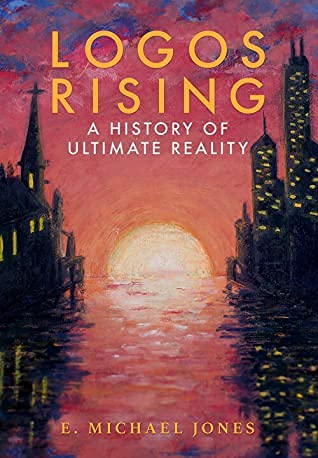
Logos Rising: A History of Ultimate Reality by E. Michael Jones traces the historical trajectory of Logos as the principle of divine reason and order underlying creation, culture, and human history. The narrative begins with classical metaphysics and traverses through philosophical, religious, scientific, and ideological epochs to reveal how the concept of Logos has structured civilizations and responded to cultural revolutions. Jones presents Logos as the source of coherence, intelligibility, and moral structure, arguing that its recognition or rejection determines the fate of entire societies.
The Foundational Role of Logos in Creation
Jones identifies Logos as the fundamental principle that binds the universe to divine rationality. He asserts that existence itself emerges from this intelligible order, and that denying causality or seeking origins in randomness severs human understanding from its metaphysical root. Through an anecdote of his travels in India, he juxtaposes the metaphysical confusion of syncretic Hindu cosmology with the clarity provided by Aristotelian and Thomistic principles. Jones explains that the failure to acknowledge a First Cause leads to a cultural vacuum where both science and religion collapse into irrationality.
Philosophy and the Metaphysical Argument
Drawing on the classical tradition from Aristotle to Aquinas, the book establishes that contingent beings cannot explain their own existence. Jones explores how metaphysical clarity enables the formulation of rational proofs for God’s existence. He emphasizes the necessity of a being whose essence is existence itself—what Aquinas called ipsum esse subsistens. The book anchors this ontological reality in the Judeo-Christian tradition, particularly in God's revelation to Moses as "I am who am," which for Jones represents the clearest articulation of being as Logos.
The Failure of Materialism and the Atomist Delusion
Jones critiques Bertrand Russell’s logical atomism as philosophically incoherent and scientifically outdated. He explains that 20th-century physics, through quantum mechanics and the collapse of atomism, undermined the empirical basis for Russell’s worldview. Russell’s denial of metaphysical causality and his reduction of reality to physical motion and electric charges, Jones argues, leads to moral relativism and the disintegration of ethical structures. The book ties Russell’s rejection of metaphysics to his personal libertinism and ideological motives, portraying his philosophy as a rationalization of moral license.
History as the Unfolding of Logos
The second part of the book interprets history as a battleground between the affirmation and rejection of Logos. Jones highlights pivotal figures like Vico, Hegel, and Maritain who saw history as teleological, ordered toward the realization of divine reason. He contrasts them with Nietzsche, who launched a philosophical revolt against Logos by embracing irrationality and the will to power. Through this lens, Jones interprets the rise of secular ideologies, cultural revolutions, and scientific developments as symptoms of the West’s relationship with Logos.
Islamic and Eastern Encounters with Logos
Jones recounts dialogues with Islamic scholars and clerics in Iran to expose the tension between revelation and reason within Islamic thought. He argues that philosophies rooted in Ash'arite theology or Sufi mysticism fail to uphold the distinction between contingent and necessary being. This theological imbalance, according to Jones, explains why Islamic cultures historically failed to develop science as a rational inquiry rooted in metaphysical abstraction. He sees in Islamic fideism a mirror image of Western materialist atheism—both rejecting the integration of reason and revelation that Logos makes possible.
The Rise of the New Atheism and the Denial of Being
Jones analyzes the cultural moment of the early 21st century that gave rise to the New Atheists—Hitchens, Dawkins, Dennett, and Harris—as a popularized campaign against Logos. He portrays their arguments as philosophically inept, especially when attempting to address the metaphysical questions of existence and causality. Dennett’s assertion that the universe created itself ex nihilo is singled out as a paradigmatic error: to create itself, something must exist before it exists, a logical impossibility. Jones insists that only by grounding cosmology in being, as articulated in classical metaphysics, can one preserve rational coherence.
Technology, Warfare, and the Perception of Ultimate Reality
The book examines how military technology has historically symbolized a civilization's claim to truth and power. Jones describes how ancient conquests—from chariots to gunpowder—reflected a deeper cultural understanding of Logos or its distortion. He traces how the West’s technological dominance arose from its metaphysical convictions, particularly Christianity’s synthesis of Greek reason and Jewish revelation. Victories, he claims, stem from spiritual alignment with Logos more than technical superiority.
The Interplay of Theology and Technology
Jones explores how religious understanding influenced technological development. He argues that societies which viewed God as rational and transcendent developed tools and institutions that mirrored divine order. Conversely, cultures governed by fatalism, irrational mysticism, or mythological confusion remained stagnant or regressed. The failure to philosophically explain tools like the wheel, in Jones’s narrative, symbolizes deeper cognitive limitations rooted in theological misconceptions.
The Legacy of Greek Thought and Christian Revelation
The fusion of Greek philosophy with Hebrew revelation finds its apex in the Gospel of John. “In the beginning was the Logos” unites temporal creation with eternal reason. This synthesis, Jones explains, empowered Western civilization to develop coherent theology, moral law, science, and social institutions. He shows how early Christian thinkers such as Augustine and Aquinas extended this vision, constructing a worldview that saw all truth as participation in the Logos.
Modernity’s Estrangement from Logos
Jones presents modernity as a sustained departure from Logos. He critiques Enlightenment rationalism for severing reason from faith, and Romanticism for elevating subjectivity over objective reality. The scientific revolution, initially rooted in a Christian metaphysics, devolved into positivism and utilitarianism. Jones interprets cultural phenomena like sexual liberation and identity politics as manifestations of the anti-Logos spirit. For him, the ultimate crisis of the West lies in its attempt to build a civilization without metaphysical foundations.
Logos as the Key to Cultural Renewal
The book closes by asserting that recovery of Logos is essential for personal integrity, scientific coherence, and cultural survival. Jones calls for an intellectual return to metaphysical realism grounded in classical philosophy and Christian theology. He affirms that Logos provides the only framework capable of integrating reason, faith, science, and moral law into a unified vision of reality. Societies that reject Logos, he warns, drift into incoherence, tyranny, and spiritual death.
Why Logos Determines the Destiny of Civilizations
Who governs the moral imagination? What defines the meaning of causality, time, and purpose? Where do reason and revelation meet? Logos Rising answers these questions by showing that the structure of reality is rational, intelligible, and good. Jones argues that the crisis of the West is not epistemological but ontological. Denial of Logos fractures human understanding at its source, cripples science, distorts politics, and corrupts culture. The way back, he insists, requires metaphysical courage and theological clarity. The book asserts that Logos, far from being an abstract doctrine, is the living structure of creation, history, and the human soul.

About the Book