Memoirs by David Rockefeller
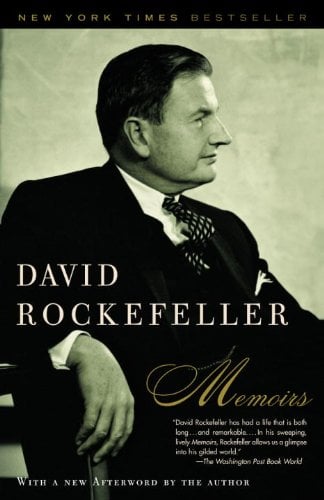
Memoirs by David Rockefeller delivers a singular account of twentieth-century power, ambition, and legacy as witnessed and shaped by the last patriarch of America’s most storied dynasty. The Rockefeller name invokes both vast fortune and enduring controversy. David Rockefeller claims his inheritance—responsibility as much as wealth—and exposes the inner mechanics of global finance, family tension, and public mythmaking. Who governs the arc of history: the men who shape events or the invisible structures they inherit? Rockefeller answers through narrative, argument, and confession.
Family Origins and the Architecture of Wealth
Born in 1915 into privilege, David Rockefeller emerges as the grandson of John D. Rockefeller, founder of Standard Oil. The legacy includes not only wealth but a framework of stewardship: the notion that to possess is to owe. Rockefeller narrates his childhood in New York and at the family’s Westchester estate, Pocantico, where architecture and landscape encode generational values. His parents—John D. Rockefeller Jr. and Abby Aldrich Rockefeller—personify the convergence of rigorous Baptist morality and refined cultural sensibility. The house pulses with art, music, and intellectual debate, orchestrated by a mother who co-founds the Museum of Modern Art and a father who expands the scope of philanthropy.
The Standard Oil Model and Its Lessons
Rockefeller’s account of his grandfather’s career is not a hagiography. He defines Standard Oil as the archetype of the modern corporation, integrating production, refining, and distribution. The company dominates the domestic oil industry, driving technological innovation and efficiency. Legal challenges, government scrutiny, and eventual dissolution by the Supreme Court in 1911 forge a culture of resilience and adaptation. Rockefeller recounts the family’s nuanced response to allegations of monopoly and greed, attributing John D. Rockefeller’s fortitude to a deep religious faith and an unwavering belief in stewardship. Here, power and conscience converge: he insists that wealth is a charge to improve society.
Education, Identity, and Preparation for Power
David Rockefeller’s formative years unfold amid the crosscurrents of tradition and experimentation. He attends the Lincoln School, an experimental institution inspired by John Dewey’s progressive pedagogy, followed by Harvard and postgraduate work at the London School of Economics. These experiences cultivate an intellectual restlessness, a capacity for synthesis, and a growing awareness of public scrutiny. He credits his mother for nurturing an appreciation for art, aesthetics, and creative risk, shaping his later patronage. His dyslexia—undiagnosed but persistent—demands adaptation, fostering resilience. The family expectation is clear: every action, achievement, and mistake reflects upon the Rockefeller name.
The Emergence of Modern Philanthropy
Philanthropy does not serve as afterthought or apology. Rockefeller frames it as a parallel enterprise, as systematic and innovative as Standard Oil. He chronicles the founding of the University of Chicago, the Rockefeller Institute for Medical Research, and the Rockefeller Foundation. Each entity deploys the family fortune to address public health, education, and global welfare. The “doctrine of stewardship” demands not mere generosity but strategic investment, scientific rigor, and an orientation toward root causes. He credits family advisers such as Frederick T. Gates and subsequent directors for transforming charity into a mechanism for social engineering.
Crisis and Transformation: The Ludlow Massacre
Rockefeller’s memoir confronts the family’s entanglement in the Ludlow Massacre of 1914—a coal miners’ strike in Colorado that escalated into deadly violence and national outrage. John D. Rockefeller Jr., implicated as a principal owner, must defend the family’s reputation before Congress and the press. The episode forces a reckoning with labor, capital, and responsibility. Ivy Lee, the pioneering public relations consultant, engineers a new approach to image management and conflict resolution. David Rockefeller views this moment as a crucible, marking a transition from paternalism to partnership with labor, and catalyzing reforms in industrial relations.
Personal Trajectory: From World War II to Global Finance
The coming of World War II interrupts David Rockefeller’s academic pursuits and propels him into military intelligence, where he gains practical experience in administration and diplomacy. After the war, he joins Chase National Bank (later Chase Manhattan Bank), navigating a rapidly changing financial landscape. Rockefeller’s ascent to chairman and chief executive transforms Chase into a global institution, pioneering international banking, currency exchange, and sovereign lending. He forges relationships with heads of state, central bankers, and industrialists, serving as a private emissary in geopolitically sensitive negotiations. The bank’s reach extends from Latin America to the Middle East, from Western Europe to East Asia, shaping global markets and sometimes state destinies.
Engagement with Power and Influence
Rockefeller’s access to presidents, kings, and prime ministers frames his reflection on power and legitimacy. He participates in the Council on Foreign Relations, the Trilateral Commission, and the Bilderberg Group, institutions often cited by critics as engines of a hidden world order. He discloses the operational details of high-level diplomacy, financial crisis management, and the choreography of elite gatherings. Rockefeller responds directly to conspiracy theories, affirming in the book: “Some even believe we are part of a secret cabal working against the best interests of the United States, characterizing my family and me as ‘internationalists’ and of conspiring with others around the world to build a more integrated global political and economic structure—one world, if you will. If that’s the charge, I stand guilty, and I am proud of it.” The admission reframes accusation as ethos: integration, he asserts, is both aim and accomplishment.
Family Dynamics and the Challenge of Legacy
The narrative dwells on the friction and affection among Rockefeller siblings—Nelson, Laurance, Winthrop, John, and David—each shaped by inheritance and expectation. Family meetings, business ventures, and philanthropic projects serve as sites of negotiation and rivalry. Rockefeller describes the pressure of dynastic identity, the balancing act between public persona and private desire, and the challenge of maintaining unity amid divergent ambitions. He details his relationship with his wife Peggy and their children, reflecting on the transmission of values and the transformation of family wealth into institutional legacy.
Art, Culture, and Public Life
The Rockefeller family’s patronage of art and culture emerges as a formative force in twentieth-century America. David Rockefeller and his mother spearhead the founding and expansion of the Museum of Modern Art. He narrates the acquisition of paintings, tapestries, and porcelain; the cultivation of artists and curators; and the aesthetic principles that guide collection and display. Art is not an ornament to wealth but a civic project—a means to democratize access, elevate public taste, and invest in creative innovation. Rockefeller’s engagement extends to urban planning, preservation, and public space, exemplified by Rockefeller Center and other New York landmarks.
The Evolution of Globalization
Rockefeller claims the mantle of “proud internationalist,” championing cross-border cooperation, open markets, and institutional integration. He traces the genealogy of globalization from the postwar Bretton Woods system to the proliferation of multinational corporations, transnational policy forums, and regulatory harmonization. Financial crises—debt, inflation, currency shocks—test the capacity of global governance and the resilience of interconnected markets. Rockefeller interprets these events not as failures of design but as invitations to further integration, transparency, and coordination. His advocacy for liberalization, development aid, and technology transfer signals a belief in progress through cooperation.
Ethics, Accountability, and Public Perception
David Rockefeller acknowledges the persistent tension between private wealth and public scrutiny. He interrogates the motives and outcomes of philanthropic investment, industrial innovation, and international advocacy. The family’s preference for discretion—declining to attach its name to many donations and institutions—reflects a conviction that substance outranks spectacle. He confronts charges of self-interest and manipulation, arguing that the family’s most consequential legacy lies in its institutional architecture and sustained commitment to public good. The memoir’s candor about family discord, professional setbacks, and historical controversy strengthens its claim to credibility.
Late Life Reflections and Enduring Questions
Rockefeller concludes his memoir with meditations on mortality, satisfaction, and the unfinished project of stewardship. The narrative returns to the Pocantico estate, the site of family gatherings, personal milestones, and generational change. He reflects on the erosion of privacy in a world of mass media, the burden and privilege of inheritance, and the transformation of American capitalism. The memoir invites readers to consider: What remains when power recedes? How do the legacies of wealth, family, and ambition persist across generations? Rockefeller affirms his faith in reasoned engagement, incremental reform, and the dignity of work.
The Book’s Enduring Value and Influence
Memoirs by David Rockefeller stands as both a primary document and a structured meditation on power, wealth, and public responsibility. The book’s detailed accounts of business strategy, diplomacy, and philanthropy serve as reference points for students of history, economics, and political science. Rockefeller’s voice—at once personal and institutional—illuminates the ethical dilemmas and practical calculations of an era defined by complexity and change. As the last Rockefeller patriarch, he seals his own interpretation of a family saga that shaped the contours of modern America and global society. The book remains indispensable for understanding the hidden architecture of twentieth-century power, the transformation of capital into institution, and the conscience of the world’s most famous dynasty.
