On Killing: The Psychological Cost of Learning to Kill in War and Society
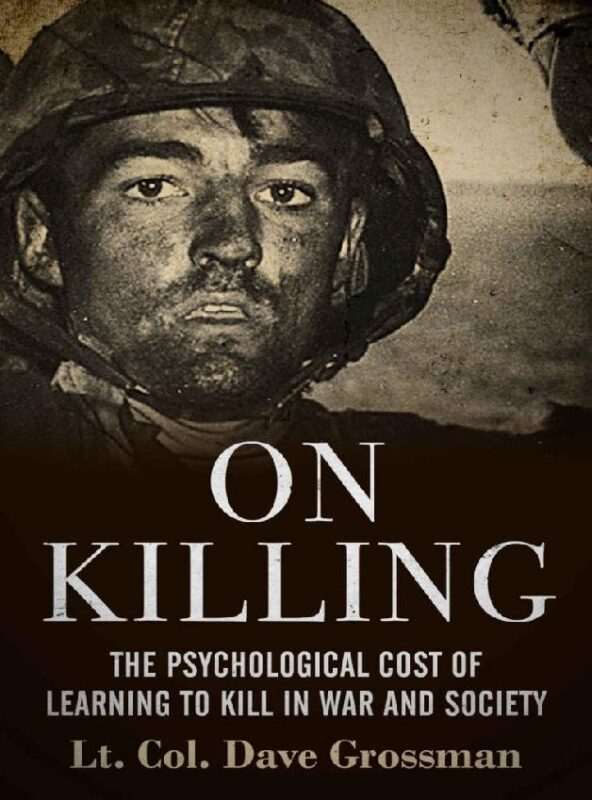
On Killing: The Psychological Cost of Learning to Kill in War and Society by Dave Grossman examines the act of killing as a core human experience in the context of war and modern society, dissecting the mechanisms by which soldiers and civilians alike confront, resist, and ultimately rationalize the use of lethal force. Grossman draws from history, psychology, personal testimony, and cultural analysis to illuminate the hidden structures and consequences of violence.
Human Resistance and the Inhibition to Kill
Across time, militaries have confronted a profound and often invisible obstacle: the innate resistance humans exhibit toward killing their own kind. Grossman exposes this reality through military studies, notably S.L.A. Marshall’s research during World War II, revealing that the majority of soldiers in direct combat did not fire their weapons. This pattern appears across centuries, geographies, and armed conflicts. Biological and psychological factors intertwine as soldiers, when faced with an enemy, experience an overwhelming reluctance to pull the trigger. This resistance does not arise from cowardice, but from deeply embedded survival mechanisms that protect the species from self-annihilation.
The Anatomy of Combat Behavior
The body’s response to lethal threat extends beyond fight or flight. Grossman integrates the ethological insights of intraspecies conflict, observing that humans, like other social animals, engage in posturing and submission as alternatives to direct violence. Soldiers may display aggression through ritualized behaviors—yelling, firing above the enemy, or adopting intimidating postures—without intent to kill. These behaviors diffuse tension and signal dominance while preserving life. Grossman traces the historical use of colorful uniforms, war cries, and other nonlethal displays as strategic forms of posturing that influence battlefield outcomes.
Overcoming Resistance: Conditioning and Modern Training
The advent of organized militaries and industrialized warfare demanded a solution to the problem of nonfiring soldiers. Military leaders introduced conditioning techniques that circumvent the natural inhibitions against killing. By transforming training environments—shifting from bull’s-eye targets to realistic human silhouettes and immersive combat simulations—armies systematically raised firing rates. Grossman details how operant conditioning rewires the soldier’s response to threat, enabling lethal force under stress. The conditioning process ensures immediate action in combat, reducing hesitation and increasing mission success, but embeds lasting psychological consequences.
The Price of Killing: Psychological Trauma and Moral Injury
Training soldiers to kill does not erase the psychic toll exacted by the act. Grossman contends that the aftermath of killing manifests in psychiatric casualties, guilt, and persistent trauma. The experience of taking life, even in justified circumstances, often results in emotional wounds. The mechanisms of post-traumatic stress disorder link directly to the violation of ingrained moral boundaries. Soldiers return from battle carrying memories that resist resolution, sometimes reliving their actions through nightmares, flashbacks, or numbing detachment. The trauma deepens when society offers no rituals or support to acknowledge their burden.
The Ritual of Killing and Societal Transformation
Traditional societies developed rituals to contextualize killing and death, fostering collective understanding and offering avenues for emotional recovery. Ritual slaughter of animals, preparation of the dead, and communal mourning served to integrate death into daily life. Grossman argues that the rise of modernity and technology has insulated people from these rituals. Death and killing moved from the public and domestic sphere to slaughterhouses, hospitals, and distant battlefields, leaving individuals unprepared to process the reality of mortality. This separation breeds both denial and fascination, as evidenced by contemporary obsessions with violent entertainment.
Media, Conditioning, and the “Virus of Violence”
Grossman extends the discussion beyond the battlefield, implicating mass media and video games in the erosion of resistance to violence. Citing major medical and psychological studies, he demonstrates that repeated exposure to media violence conditions children and adolescents to accept aggression as normative and effective. This process, he asserts, functions as a form of operant conditioning nearly identical to military training—without the moral safeguards and context of necessity. The consequence is a generation increasingly desensitized to violence, more willing to engage in aggression when provoked or frightened.
Societal Consequences and the Spread of Violence
Society faces a cascade of effects as the mechanisms of conditioning expand beyond the military to the general population. Grossman asserts that the rise in violent crime, particularly among youth, correlates with widespread access to violent imagery and entertainment. He points to studies showing that communities with high exposure to violent media experience higher rates of aggression, school shootings, and other violent acts. The analogy to an immune system breakdown becomes clear: the psychological “safety catch” that once inhibited violence now fails, leaving individuals susceptible to lethal impulses.
Vietnam and the Breakdown of Ritual Purification
Grossman analyzes the Vietnam War as a turning point in military conditioning and its consequences. Soldiers received training that maximized their capacity for lethal action but returned home to a society that withheld ritual purification, acknowledgment, or understanding. Deprived of collective validation or meaningful closure, many Vietnam veterans suffered acute psychological distress. The absence of communal support exacerbated feelings of guilt, alienation, and despair, demonstrating the critical role of cultural context in healing after combat.
Authority, Group Dynamics, and the Logic of Atrocity
The architecture of authority and group identity exerts powerful influence over the decision to kill. Grossman synthesizes findings from the Milgram obedience experiments, historical case studies, and military psychology to show how hierarchical structures and peer dynamics enable individuals to act against personal moral codes. The process of group absolution distributes responsibility, allowing actions that individuals might otherwise resist. In the crucible of combat, the transformation from individual to collective actor shapes behavior, decision-making, and subsequent rationalizations.
Reintegrating Knowledge: Toward a Science of Killology
Grossman advocates for a new field—killology—that approaches the act of killing with scientific rigor and ethical clarity. He contends that society must confront the realities of violence directly, study the psychological mechanisms involved, and develop strategies to support those affected. By integrating research from history, psychology, neurology, and cultural studies, killology seeks to provide frameworks for prevention, intervention, and recovery. Grossman’s project demands that leaders, educators, and communities take active roles in understanding and shaping the conditions under which individuals learn to kill.
Family Structure, Community, and the Limits of the “Off Switch”
Grossman critiques solutions that rely solely on individual agency, such as the suggestion to “just turn it off” when confronted with violent media. He argues that such responses ignore structural realities—economic pressures, broken family systems, and the pervasive nature of media exposure. Protecting one’s own children does little if neighboring families lack the resources or capacity to do the same. Grossman underscores that collective, policy-driven responses must address systemic inequities and the concentration of violence in vulnerable communities.
Ethics, Social Responsibility, and the Future
The trajectory of technological development and media proliferation intensifies the need for ethical vigilance. As society grapples with the consequences of conditioning, the imperative to set boundaries, regulate access, and foster resilience grows. Grossman insists that educators, policymakers, and media producers bear responsibility for the psychological health of communities. The stakes involve not only the prevention of crime, but the preservation of the human capacity for empathy, restraint, and moral reflection.
Healing, Dialogue, and Catharsis
The path to healing for those who have killed, and for communities wounded by violence, passes through dialogue and catharsis. Grossman emphasizes the value of testimony—veterans sharing their stories with peers, families, and counselors. Such exchanges reduce isolation, foster understanding, and distribute the emotional weight that can otherwise become unbearable. He champions environments where trauma can be acknowledged and processed, arguing that pain shared is pain divided.
The Convergence of Knowledge and Compassion
Research, empathy, and public conversation intersect as necessary components of social progress. Grossman envisions a society that neither glamorizes nor denies violence, but confronts it as an inescapable aspect of the human condition. Through education, policy reform, and ritual, communities can support those affected by killing, reduce the spread of conditioned violence, and cultivate ethical resilience in the face of technological and cultural change.
Call to Action: Rethinking Preparation, Prevention, and Recovery
Grossman calls for a comprehensive approach to violence that integrates understanding, prevention, and healing. Leaders must prioritize realistic training for those charged with defense and law enforcement, balanced by robust systems for psychological support. Media creators and distributors should recognize their influence and develop content with awareness of its conditioning effects. Communities must renew rituals and collective practices that acknowledge death, process loss, and support those returning from violence.
The Stakes of Denial and the Necessity of Knowledge
Denying the psychological realities of killing exposes individuals and societies to cycles of trauma, aggression, and alienation. Grossman’s work asserts that only through deep study, candid conversation, and responsible action can societies hope to reduce violence and repair its wounds. The science of killology emerges as a crucial tool for navigating the complexities of modern warfare, media, and morality. The convergence of historical experience, scientific inquiry, and ethical engagement forms the path forward. By facing the realities of killing—its causes, mechanisms, and aftermath—communities can claim agency over their fate and sustain the values that anchor civilization.