Operation Hollywood: How the Pentagon Shapes and Censors the Movie
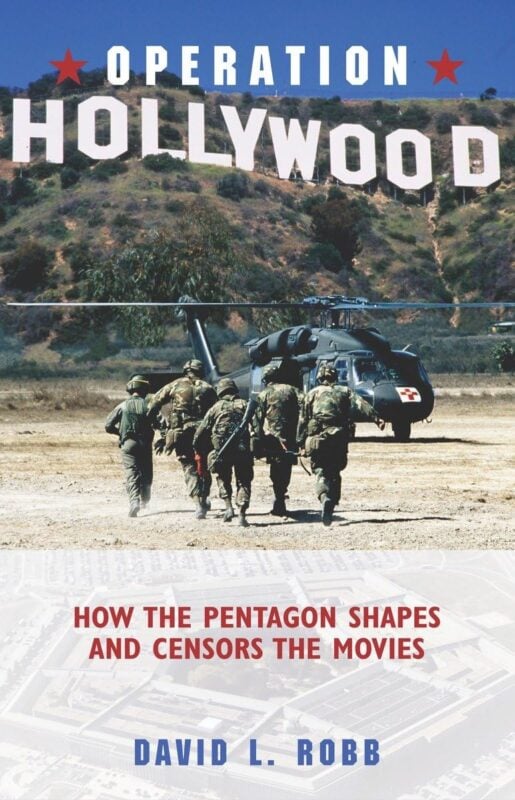
Operation Hollywood: How the Pentagon Shapes and Censors the Movies by David L. Robb opens with a direct challenge to the conventional image of Hollywood as a bastion of free expression. Robb establishes a clear and startling premise: the Department of Defense has maintained a formal, decades-long system of script control over major film productions, conditioning access to military resources on adherence to Pentagon-approved narratives.
The Hidden Bargain Between Filmmakers and the Pentagon
Hollywood producers routinely submit scripts to Pentagon officials in exchange for access to military hardware, personnel, and locations. The arrangement benefits studios financially, significantly reducing production costs by providing access to tanks, aircraft carriers, submarines, and trained service members. The military benefits by shaping its public image through the world’s most influential storytelling platform. This transactional relationship pivots on submission: five scripts sent to the Pentagon, changes implemented as required, adherence to the approved version, and a prescreening before public release.
Censorship as Contractual Power
The Pentagon does not request changes. It imposes conditions. If filmmakers want access to its assets, they must revise their scripts to reflect the military’s interests. This influence includes the removal of historically accurate content, sanitization of wartime behavior, and the insertion of recruitment-friendly portrayals. The process operates outside the legal definitions of censorship or propaganda but achieves identical outcomes through economic leverage.
Phil Strub and the Mechanism of Script Control
Phil Strub, head of the Pentagon’s film liaison office for decades, serves as the gatekeeper. Strub evaluates scripts based on three criteria: feasibility and authenticity of military depiction, contribution to public understanding, and alignment with recruiting and retention goals. These standards mask a broader operational intent—to shape public perception by excising material that portrays military figures as corrupt, incompetent, or brutal.
Cases of Enforced Revisions
Strub’s edits target critical moments in major films. In Tomorrow Never Dies, a joke about the Vietnam War disappears at the Pentagon’s insistence. In Goldeneye, a U.S. admiral compromised by espionage becomes a Canadian to preserve military honor. Clear and Present Danger undergoes extensive revisions, including the deletion of a presidential line threatening South America, transforming the character from vengeful to diplomatic. In Windtalkers, historical acts like the removal of gold teeth from corpses vanish from the screenplay, despite documented evidence.
Suppression of True Events and Historical Memory
The Pentagon’s edits frequently erase real incidents. In Thirteen Days, officials demand the removal of scenes depicting the military's aggressive posture during the Cuban Missile Crisis. They reject the portrayal of General Curtis LeMay as bellicose, despite historical consensus. Even the verified shooting down of a U2 pilot during the crisis is denied, forcing producers to reconstruct sets abroad when they refuse to comply.
Propaganda Through Children’s Media
The influence extends to youth-oriented content. Episodes of Lassie and The Mickey Mouse Club were rewritten under Pentagon guidance to cast the military in a positive light. Robb documents how this early exposure fosters favorable impressions, targeting children as future recruits. By embedding military themes in entertainment, the Pentagon cultivates long-term ideological alignment.
Self-Censorship and Industry Compliance
Producers internalize the Pentagon’s expectations, often preemptively adjusting scripts to ensure approval. Robb exposes how this dynamic transforms filmmakers into de facto partners in message control. Directors who reject military interference, such as Oliver Stone, lose access to essential production resources and face increased costs. This deterrent discourages dissent and narrows the range of permissible narratives.
Economic Leverage as a Form of Control
The Pentagon does not need to ban films. It simply denies support. Without access to ships, aircraft, or troops, realistic military films become prohibitively expensive. This economic gatekeeping creates a de facto censorship regime, where only compliant narratives proceed with full visual realism. Strub’s office enforces this boundary, withholding public resources to shape private expression.
Undisclosed Influence on Public Perception
Audiences rarely realize that films have been altered at the Pentagon’s request. Studios do not disclose the terms of military cooperation. This lack of transparency masks the institutional presence embedded in entertainment. Viewers consume sanitized versions of history, unaware that key scenes were deleted, altered, or never filmed.
Legal Ambiguity and Constitutional Challenge
Robb draws attention to the legal implications. The Supreme Court has ruled that government benefits cannot be conditioned on the content of private speech. Yet the Pentagon’s practices remain unchallenged in court. Legal scholars cited in the book argue that the selective provision of military support constitutes viewpoint discrimination and violates First Amendment protections.
The Structural Role of Propaganda
Robb defines propaganda not as overt lies, but as the systematic promotion of a preferred worldview through selective storytelling. The military’s liaison offices function as propaganda engines, embedding favorable depictions into mainstream narratives. By doing so, they shape cultural memory, historical understanding, and public attitudes toward military action.
Narrative Engineering and Political Power
The Pentagon’s involvement in film production reveals a broader strategy. Movies reach millions and influence perceptions more effectively than policy briefings or news reports. Robb uncovers how Pentagon officials use this reach to build political capital, secure funding, and manage domestic consent for foreign engagements. They direct portrayals of military action not to reflect reality, but to cultivate legitimacy.
Unproduced and Suppressed Films
Several projects never make it past the Pentagon’s scrutiny. Scripts that expose misconduct, question authority, or reveal unpopular truths lose access and often collapse. Robb details unmade films like Countermeasures, which investigated the Iran-Contra affair, and others that explore chemical warfare or war crimes. The Pentagon ensures these stories remain untold.
Hollywood’s Strategic Silence
Major studios defend the relationship. Robb documents how Jack Valenti of the Motion Picture Association of America lobbied to save Strub’s job during a Pentagon budget cut. Studios value the savings and scale that military cooperation provides. Their executives choose profitability over narrative integrity, preserving access even as they forfeit autonomy.
Audience Manipulation as Military Strategy
Shaping public opinion through entertainment becomes a strategic tool. The military does not rely solely on press briefings or recruitment ads. It engineers stories that embed emotional loyalty and ideological support within blockbuster films. These stories bypass conscious resistance and lodge themselves as cultural assumptions.
Congressional Complicity and Institutional Endurance
Robb concludes with a call to action. Despite decades of influence, Congress has never investigated the Pentagon’s control over film content. The military uses public resources to advance institutional interests without oversight or accountability. Only public awareness can challenge this covert alliance and demand transparency in cultural production.
The Stakes of Storytelling
Robb asserts that narrative determines understanding. By shaping how wars are remembered, how soldiers are portrayed, and how enemies are defined, the Pentagon influences more than cinema. It writes the emotional and political script of American identity. Films become tools of memory management, not just entertainment.
Public Trust and the Illusion of Independence
Viewers trust films to reflect historical insight or emotional truth. Pentagon involvement transforms that trust into a vehicle for influence. By filtering what can be shown and shaping how it appears, the military gains a hand in defining reality itself. The cost is democratic clarity. The reward is ideological control.
From Behind the Scenes to the Front of the Screen
Operation Hollywood reveals the mechanics of that control. Robb follows the trail from script revisions to on-set surveillance, from deleted dialogue to political objectives. He exposes how image-makers collaborate with power brokers, how fictional characters serve real-world agendas, and how military might extends into the cultural domain. The Pentagon does not merely assist. It commands the narrative.