Secret Affairs: Britain’s Collusion with Radical Islam
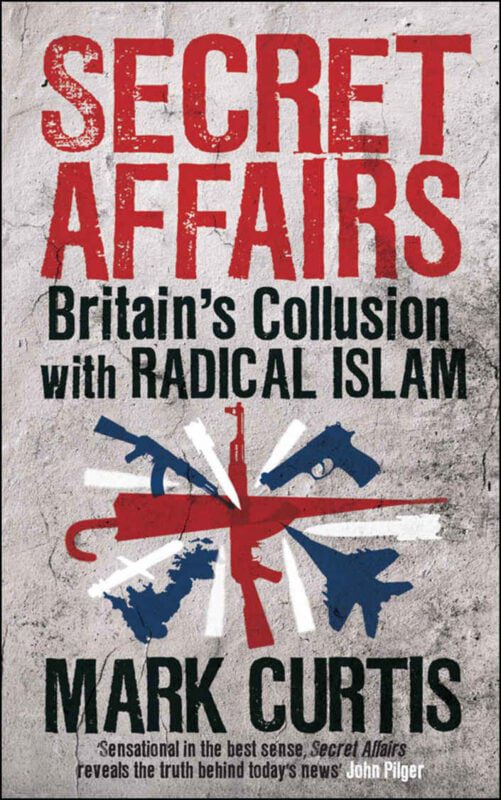
Secret Affairs: Britain’s Collusion with Radical Islam by Mark Curtis advances a challenging argument: British foreign policy for over a century has deliberately partnered with radical Islamic actors to shape world events, protect strategic interests, and project power. The evidence leads from imperial India to post-9/11 London, revealing a pattern of clandestine support, calculated alliances, and consequences that continue to shape global security today.
A Century of Covert Collaboration
Mark Curtis tracks the roots of Britain’s entanglement with radical Islam to the colonial era. British administrators, from Bengal to Cairo, systematically exploited religious difference to undermine resistance. In India, policy architects engineered Hindu-Muslim rivalry, institutionalizing communal divisions in law and administration. The architects of empire viewed sectarian fragmentation as a lever to restrain nationalist movements and cement British control. Strategic support extended to influential Muslim leaders, who received patronage and recognition in exchange for cooperation.
In the Middle East, British officials reshaped the region’s fate as the Ottoman Empire declined. They promised the restoration of the Caliphate to local leaders such as Sherif Hussein of Mecca, advancing the hope of an Islamic revival under British influence. The design of the modern Middle East depended on a complex interplay of promises, betrayals, and covert deals. British planners carved the map, installed monarchs, and shaped the rise of Saudi Arabia through arms, subsidies, and diplomatic guarantees. Oil, the new currency of imperial power, raised the stakes. British leaders framed control of energy resources as essential to national survival.
Partition and the Creation of New States
The collapse of empire forced Britain to confront new realities after the Second World War. Strategic withdrawal demanded creative management of independence movements, often with explosive consequences. The partition of India produced Pakistan, a state born of religious division, whose future role as a key British ally emerged rapidly. In Palestine, Britain balanced promises to Jewish and Arab leaders, managing communal conflict as part of a broader strategy to secure influence and maintain regional footholds.
Britain’s hand in the creation of Saudi Arabia stands out. By channeling money and weapons to Abdul Aziz Ibn Saud, British policymakers enabled the rise of a state governed by Wahhabism. The fusion of religious fundamentalism and royal authority provided the foundation for a future alliance that extended far beyond the Arabian Peninsula. British strategists recognized the utility of Saudi influence for shaping the direction of Islam globally and for counterbalancing nationalist or socialist movements elsewhere.
The Cold War: Islam as a Strategic Asset
As the Cold War began, British planners faced new adversaries: secular nationalism and Soviet communism. Arab nationalist leaders such as Gamal Abdel Nasser of Egypt threatened Western access to resources and challenged the dominance of Western-backed monarchies. British officials assessed that Islamist movements offered a valuable counterweight to nationalist forces. The Muslim Brotherhood, Jamaat-i-Islami, and similar organizations appeared as useful partners in the contest to shape the postwar Middle East and South Asia.
Britain provided covert support, sometimes directly, often through proxies or allied regimes. Financial, military, and diplomatic backing flowed toward groups or states willing to oppose communists, nationalists, or rivals deemed unfriendly to British interests. The doctrine of expediency guided these operations. British intelligence collaborated with Islamist organizations to undermine leftist regimes, orchestrate coups, or disrupt popular movements.
Proxy Wars and the Birth of Modern Jihadism
In the 1980s, Afghanistan became the epicenter of a new kind of conflict. British and American planners, in alliance with Saudi Arabia and Pakistan, armed and trained mujahideen fighters to resist the Soviet invasion. These networks of militants later formed the nucleus of al-Qaida and other transnational jihadist movements. British special operations supported insurgent groups, helped funnel resources, and provided training and sanctuary for selected leaders.
The war in Afghanistan did not end with the Soviet withdrawal. Veterans of the jihad, skilled in guerrilla warfare and inspired by the idea of a global struggle, redeployed to conflicts in Bosnia, Kosovo, Libya, and Chechnya. British officials, focused on the goal of containing Russia and protecting energy corridors, enabled the continued mobilization of radical fighters. Covert action extended to diplomatic protection, political asylum, and support through intelligence channels.
Londonistan: Asylum, Informants, and Foreign Policy
London emerged as a hub for exiled and radical Islamists. British authorities provided political asylum to individuals wanted elsewhere for involvement in terrorism or armed struggle. The official rationale emphasized the value of intelligence, the possibility of controlling extremist activity, and the utility of informants for foreign policy purposes. The phenomenon known as “Londonistan” reflected a strategic decision to tolerate, and sometimes cultivate, the presence of Islamist militants on British soil.
The calculation proved double-edged. Islamist groups established operational bases, raised funds, and recruited fighters while under the protection of British law. British security agencies balanced competing imperatives—gathering intelligence, protecting the domestic population, and leveraging Islamist groups as instruments of influence in the Middle East and beyond. Mark Curtis identifies evidence that, at times, authorities prioritized the foreign policy utility of these networks over domestic security concerns.
Financial Power, Oil, and Anglo-Saudi Pact
The special relationship between Britain and Saudi Arabia extended far beyond politics and security. The flow of Saudi oil money into the British economy reinforced an enduring financial alliance. British and American policymakers forged tacit agreements with Saudi leaders: Western support for the regime in exchange for oil supply stability and reinvestment of petrodollars in Western markets. Saudi funding for Islamic movements, charities, and educational institutions spread fundamentalist ideology globally.
British planners assessed the risks and benefits. They viewed the preservation of the financial relationship as paramount. Evidence points to a conscious willingness to overlook or understate the implications of Saudi sponsorship of Islamist causes—including groups engaged in violence or terrorism—so long as core economic and strategic interests remained protected.
From the Balkans to the Gulf: Islamist Proxies in Action
Britain’s reliance on Islamist proxy forces reemerged in the Balkan wars of the 1990s. British intelligence, sometimes independently and sometimes in collaboration with the United States, facilitated the movement of fighters, weapons, and funds to Muslim forces in Bosnia and Kosovo. The pattern echoed earlier Cold War tactics: align with Islamist militants to achieve geopolitical aims such as containing hostile regimes or breaking up unfriendly states. The experience of Afghanistan provided a model for supporting irregular warfare through surrogates.
Elsewhere, in North Africa and Central Asia, British covert actions aided groups fighting against socialist, nationalist, or rival Islamist regimes. Mark Curtis documents British support or protection for organizations such as the Libyan Islamic Fighting Group and other factions linked to al-Qaida. These actions formed part of a broader strategy to maintain leverage, sow instability among adversaries, and position Britain as an indispensable actor in regional affairs.
Consequences: The Roots of Contemporary Terrorism
Mark Curtis traces the long-term consequences of British policy. The infrastructure, skills, and ideology cultivated through decades of collusion with radical Islam became the foundations for modern transnational jihadism. Networks created to serve immediate British interests later turned their attention to new targets, including Western civilians and institutions. The “blowback” effect, where state-supported actors pursue their own agendas beyond state control, emerges as a recurring theme.
The British public experiences the outcome as a domestic security challenge: terrorist attacks, plots, and the rise of home-grown extremism. Mark Curtis asserts that understanding the roots of these threats demands honest engagement with the history of British foreign policy. The story of “collusion,” in this view, forms a critical missing link in mainstream narratives about terrorism and security.
Secrecy, Silence, and Official Memory
Official discourse and media accounts in Britain rarely address the extent or history of collaboration with radical Islam. Government leaders present terrorism as an external threat, the product of alien ideology or hostile states. Yet the historical record, as Curtis shows, points to repeated decisions by policymakers to employ radical Islam as an instrument of power and influence.
The absence of public reckoning perpetuates strategic blindness. The infrastructure supporting global jihadism, including financial networks, recruitment pipelines, and ideological centers, remains resilient in part because it has roots in relationships cultivated and protected by the British state. Mark Curtis urges a reexamination of official memory and public understanding, warning that without clarity, policy will continue to stumble in the dark.
Patterns of Utility: Islamism as Policy Tool
Secret Affairs presents a detailed typology of how British planners used radical Islamic actors. Islamists served as a counterforce to secular nationalism and communism, as enforcers of conservative social order within states, as “shock troops” in conflicts, as proxy fighters in wars, and as levers to influence the policies of foreign governments. The pattern converges on one insight: Britain’s engagement with radical Islam did not stem from shared ideology, but from the pursuit of strategic utility.
The book makes a structural claim. British policymakers repeatedly assessed the landscape, calculated their own limitations, and chose alliances that provided leverage, regardless of the long-term risks. As a result, the infrastructure of radical Islam often advanced British objectives—until it turned to new goals, producing crises that Britain struggled to contain.
Strategic Outcomes: Legacy and Future Risks
The legacy of Britain’s collusion with radical Islam unfolds in multiple dimensions. Alliances forged for expedience produced unintended effects. Strategic decisions set in motion the rise of movements and states that now shape global security. Saudi Arabia and Pakistan, states built or sustained with British support, act as epicenters for the propagation of Islamist ideology. Movements empowered through covert action continue to operate transnationally, sometimes targeting the very states that once sheltered or subsidized them.
Mark Curtis argues that addressing present and future risks demands structural honesty about the past. Policymakers and the public must trace the genealogy of contemporary threats to the decisions, alliances, and covert strategies that shaped the modern world. Without this reckoning, Britain remains vulnerable to cycles of reaction, improvisation, and unintended consequence.
Why Does the Story Matter?
What does it mean for a state to construct, enable, and then confront movements that defy control? The book raises the question: how do societies balance short-term advantage against long-term security? As the world faces ongoing instability, energy insecurity, and ideological conflict, Secret Affairs exposes the hidden architecture beneath the headlines. Mark Curtis’s research demands critical engagement, structural insight, and the courage to follow the evidence wherever it leads. The stakes extend beyond history; they define the terms of current policy, the boundaries of public debate, and the possibilities for future peace.