The American Surveillance State: How the U.S. Spies on Dissent
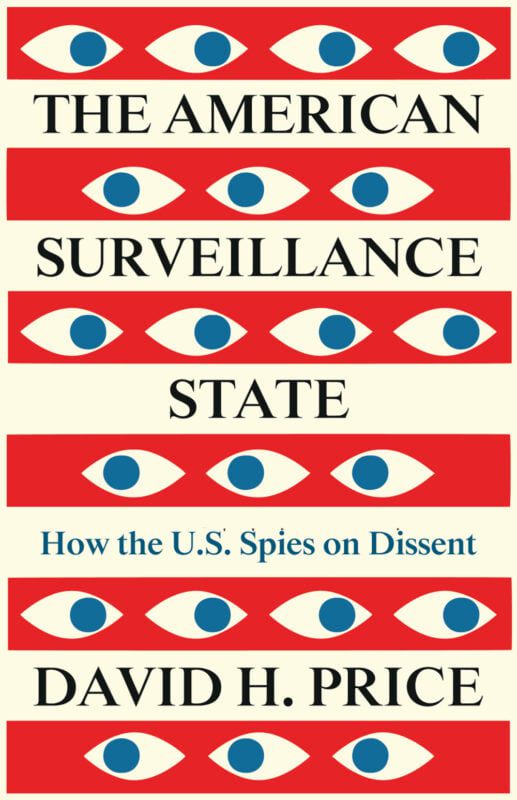
The American Surveillance State by David H. Price uncovers how United States intelligence agencies embedded surveillance into the nation’s political and cultural DNA, focusing on power, secrecy, and the historical trajectories that brought government monitoring into the lives of millions. Price wields decades of Freedom of Information Act research to trace the entwined paths of the FBI, CIA, NSA, and corporate interests as they tracked, cataloged, and disrupted activists, intellectuals, and ordinary citizens who challenged American power structures.
Surveillance as American Institution
Surveillance operates as a core function of the modern American state. J. Edgar Hoover’s vision and administration of the FBI set the template for institutionalizing surveillance across generations. The Bureau’s early work—tracking radicals, compiling vast files, and using informers—established the model of collecting and cross-referencing information not just to solve crimes, but to shape political order. The emergence of surveillance as a governing strategy stemmed from political necessity: maintaining inequalities, controlling dissent, and defending the interests of the elite demanded more than legal enforcement. It required proactive, covert intelligence gathering, and narrative control.
Anthropological Roots of Control
States construct surveillance cultures not by accident, but by systematic cultivation. Price connects the evolution of American intelligence to anthropological frameworks: bureaucracy demands legibility, legibility requires identification, and identification facilitates monitoring. The drive for control rests on a chain of administrative logics. Karl Wittfogel’s study of ancient irrigation states showed how centralized power arose from a need to monitor and direct populations. James Scott’s theories on legibility—where states render their citizens “readable”—clarify how surveillance transforms governance from negotiation to management. By the 20th century, American authorities fused these impulses with technological prowess, refining databases and classification systems that mirrored, in form if not always in scale, the ambitions of the Stasi and KGB.
The Hoover Legacy: Files as Power
J. Edgar Hoover shaped the FBI into an agency that thrived on secrets. His personal management style—obsessive, meticulous, paranoid—reflected and reinforced the Bureau’s priorities. Hoover assembled one of the world’s most comprehensive pre-digital surveillance systems. His files included rumor, innuendo, personal history, and public actions, woven together to construct profiles used to intimidate, control, and direct both enemies and allies. Hoover’s lists reached across society: activists, unionists, civil rights leaders, journalists, and even fellow government officials. Secrecy, for Hoover, functioned as both shield and weapon, protecting the institution from scrutiny and providing leverage against political opponents.
Normalization of Surveillance
American acceptance of surveillance developed through campaigns that shaped public opinion, legislative change, and technological evolution. Post-9/11, the United States experienced a dramatic expansion in the normalization of electronic monitoring. The USA PATRIOT Act swept aside older legal boundaries, granting agencies vast new powers to collect data, track communications, and demand compliance from corporations and public institutions. Price details how the combination of national crisis, public fear, and political will converged to routinize forms of oversight that previous generations would have resisted. As library records, internet activity, and phone metadata became objects of state scrutiny, Americans absorbed surveillance into the fabric of daily life, sometimes questioning, often acquiescing, and frequently internalizing its logic.
Targeting Dissent and Progressivism
Surveillance does not operate in a vacuum; it follows the contours of power and opposition. Price demonstrates that state monitoring has systematically targeted individuals and groups whose ideas or activities threatened dominant economic, racial, and political hierarchies. The COINTELPRO program, one of the FBI’s most notorious operations, exemplifies this pattern. Agents surveilled, infiltrated, and undermined civil rights leaders, anti-war protestors, socialists, and progressive academics. Through anonymous threats, rumor campaigns, and manufactured legal troubles, authorities aimed to delegitimize dissent, disrupt organization, and induce paranoia. Even as technology advanced, the foundational goal remained unchanged: preserve the status quo by making examples of those who dared to challenge it.
Corporate Surveillance and State Synergy
The convergence of government and corporate interests marked a new era in surveillance. Price exposes how the private sector’s appetite for consumer data, coupled with the government’s intelligence needs, generated a partnership with unprecedented reach. The National Security Agency’s PRISM program relied on cooperation from major internet service providers to collect email, browsing, and messaging data. Corporate surveillance—driven by the desire to predict and influence consumer behavior—provided the infrastructure and justification for government to expand its own operations. As companies tracked purchasing habits, reading choices, and social networks, agencies found in this data a rich resource for mapping potential threats and monitoring the boundaries of acceptable discourse.
The Historical Arc: From Palmer Raids to Snowden
Tracing the trajectory of American surveillance demands a long view. The post-World War I Palmer Raids launched Hoover’s career and introduced the United States to mass state monitoring as a means of political control. During the Red Scare, the government equated radical political beliefs with criminal conspiracy, targeting leftists and labor organizers for arrest and deportation. The Cold War institutionalized surveillance, creating a culture of suspicion that shaped academia, media, and daily social relations. Technological advances—from wiretapping to internet data mining—expanded capacity, but the fundamental motivation persisted: intelligence served power by identifying, isolating, and weakening those seen as subversive. Edward Snowden’s revelations did not so much inaugurate a new era as expose the logical culmination of a century-long project.
Case Studies: Personal Lives, Public Impact
Price grounds his analysis in vivid case studies, using FOIA documents to reconstruct the effects of surveillance on real individuals. Gene Weltfish, a peace activist and anthropologist, faced FBI attention for attending a conference considered subversive. The Bureau’s files on public intellectuals such as Edward Said and Seymour Melman reveal how surveillance extended to those whose scholarship challenged militarism, racism, and economic exploitation. The book details how the FBI sought to deport Alexander Cockburn, monitor the phone “phreaking” subculture, and undermine the work of economists like André Gunder Frank and Walt Rostow, whose conflicting theories about global development both posed challenges to the prevailing order. These stories illustrate the human cost of abstract policy—how fear, stigma, and institutional pressure can reshape lives, reputations, and the course of movements.
Political Economy and Surveillance
The architecture of surveillance aligns with the imperatives of American capitalism. Price asserts that intelligence agencies function as guardians of economic hierarchy, intervening to maintain conditions favorable to capital accumulation. Hoover’s FBI, for example, largely ignored organized crime’s infiltration of legitimate business and labor unless those interests clashed with elite priorities. The state’s pursuit of “public order” often masked a defense of private privilege. Surveillance targeted not only those who committed crimes, but those whose activism exposed or opposed the inequalities on which the system rested. By framing dissent as a threat to “public good,” agencies justified interventions that protected established interests and limited the range of permissible debate.
Cultural Memory and Forgetting
Public attitudes toward surveillance have fluctuated over time, shaped by crises, propaganda, and the slow erosion of privacy norms. Historical memory plays a crucial role in these shifts. After Watergate, the Church and Pike Committees temporarily exposed the extent of secret intelligence operations, fostering a moment of reform and skepticism. However, subsequent administrations, aided by shifting political winds and evolving technologies, restored and expanded surveillance powers. Price documents the gradual fading of resistance, replaced by new generations who internalize surveillance as the default condition. This process of forgetting enables the state to perpetuate and enlarge its intelligence apparatus with minimal opposition.
Surveillance, Democracy, and the Limits of Reform
The American Surveillance State interrogates the relationship between intelligence, power, and democracy. Price contends that surveillance does not merely monitor threats; it actively shapes the boundaries of political possibility. By criminalizing protest, stigmatizing radicalism, and undermining legal defense strategies, agencies limit the scope of democratic engagement. Legislative reforms, such as those following Watergate, rarely outlast political expediency. Efforts to constrain surveillance through oversight, transparency, or judicial review encounter entrenched institutional interests and the enduring logic of security over liberty. Price emphasizes that democratic societies must contend with the inherent tension between governance and autonomy, between collective security and individual freedom.
Contemporary Relevance and Ongoing Threats
Digital technology accelerates the velocity and scale of surveillance. Americans live within a lattice of monitoring—smartphones, online searches, financial transactions, location data, and social networks all contribute to a constantly updated dossier of personal and collective life. The logic of surveillance now extends into predictive policing, algorithmic profiling, and behavioral targeting. As Price observes, the normalization of these practices often outpaces public understanding or resistance. New forms of activism and dissent adapt to this reality, but the state’s capacity to observe, anticipate, and disrupt has never been greater.
Pathways Forward: Memory, Transparency, and Resistance
Price concludes that the future of American surveillance depends on conscious engagement with the lessons of history. Transparency, public memory, and democratic oversight form the best defenses against unchecked intelligence power. Societies can dismantle surveillance regimes, as seen with the release of Stasi files after German reunification. Price identifies brief moments—such as the post-Watergate era—when American institutions attempted to confront their own abuses. These episodes remain rare, contingent, and vulnerable to reversal, but they demonstrate that collective action and political will can challenge entrenched surveillance cultures. The stakes extend beyond privacy: they encompass the integrity of democratic life, the capacity for dissent, and the possibility of social transformation.
The American Surveillance State by David H. Price stands as a definitive account of how intelligence agencies, political structures, and economic interests have converged to create a surveillance culture that shapes the boundaries of American democracy. By illuminating the hidden histories and daily realities of monitoring, Price invites readers to question what kind of society they inhabit and what future they wish to build. What does a society lose when it sacrifices privacy for security? What forms of political possibility emerge when the watchers themselves come under scrutiny? The answers lie in the ongoing struggle to remember, to resist, and to hold power accountable.

