The Babylonian Talmud
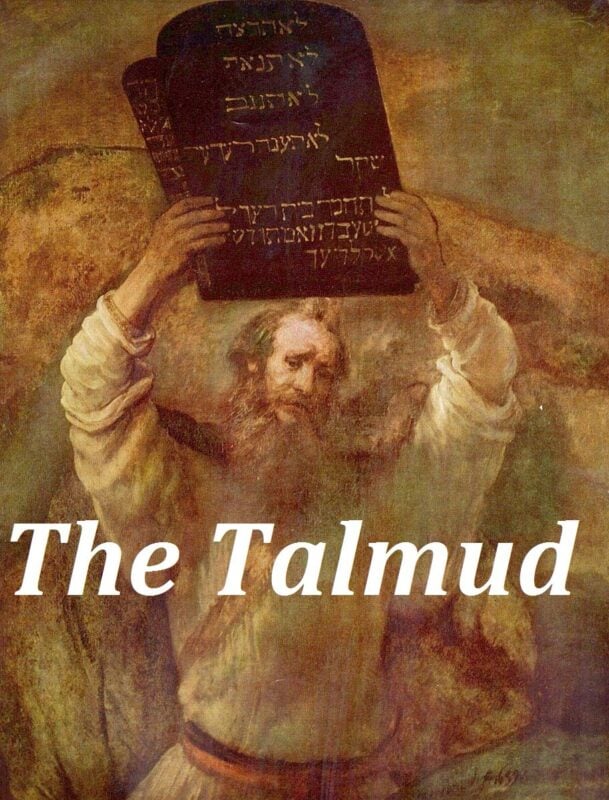
The Babylonian Talmud by Michael L. Rodkinson renders the foundational text of Jewish law into English, sustaining the force of its dialectic, the clarity of its legal reasoning, and the vitality of its moral structure. Rodkinson enters the Talmud through Tractate Sabbath, where he sharpens the link between legal code and sacred time, presenting halakha not as doctrine but as a living system grounded in language, intention, and action.
Legal Architecture and Editorial Strategy
The Talmud binds two layers of authority: the Mishna, a compilation of oral laws redacted around 200 CE by Rabbi Judah the Prince, and the Gemara, a sustained interrogation of the Mishnaic rulings conducted over three centuries in the Babylonian academies. Together, these layers form the structure of halakha—binding Jewish law that defines obligations not as isolated decrees but as interwoven duties shaped by circumstance and reason.
Rodkinson organizes this structure with careful fidelity. He removes interpolations that entered the text through centuries of manuscript copying, retaining the original debate between sages across generations. His editing does not simplify the Talmud; it restores its coherence. Each question, citation, and response appears in a clean arc of development. Argument follows from assertion, not from interruption.
He avoids the distortion of summary. He presents each case, each objection, and each conclusion as a complete unit. By following the rhythm of rabbinic speech, he recovers the logic of a legal system built through repetition, precision, and verbal rigor.
Sabbath as a Mechanism of Identity
The laws of the Sabbath, as laid out in Tractate Shabbat, define holiness not through abstraction but through restriction. The Talmud names thirty-nine categories of labor forbidden on the Sabbath. These include sowing, baking, writing, kindling fire, and carrying between domains. Rodkinson translates these prohibitions with direct clarity, showing how each law governs physical interaction with space, material, and intent.
These restrictions do more than delineate permissible behavior. They construct a zone of sanctified time. The rabbis created these boundaries during periods of national vulnerability. Under foreign rule and cultural assimilation, they codified Sabbath law to insulate Jewish life. Rodkinson presents the political logic of these rules without commentary, relying on the structure of the text to reveal the function of boundaries.
Carrying between public and private domains, for example, becomes a legal issue that defines who controls space and what constitutes shared identity. The act of restraint forms the core of observance. Rodkinson highlights the way legal acts build ritual meaning: to cease from action is to enact covenant.
Theology Through Legal Sequence
The Talmud does not separate law from theology. It embeds divine presence in behavior. Rodkinson conveys this integration by showing how legal rulings enact metaphysical commitments. The Sabbath recalls divine rest on the seventh day. The restriction against work mirrors the cessation of creation. Rodkinson does not speculate on symbolism; he reveals causality through structure. The law reenacts theology through repetition and enactment.
Every rule connects to time. Lighting candles before sunset, refraining from writing, preserving food in advance—each element depends on sequence. Rodkinson preserves this temporality. He ensures that each action derives its meaning from its order. Law here reflects a cosmology where rhythm shapes reality.
Case Law and Moral Judgment
Rodkinson presents the Talmud’s use of narrative as integral to legal reasoning. He includes stories where sages must apply principle to fact. A man who rides a horse on the Sabbath receives capital punishment—not because of malice, but because enforcement of law sustains communal coherence. Another case records a sage who finds luxury in a poor man’s household but increases charity rather than judge it, because dignity demands continuity with past status.
These narratives do not soften law. They expose its inner structure. Rodkinson places them where the original text inserts them—alongside statutes and debates—to show how law must account for behavior, memory, and social consequence.
He translates story as judgment. He aligns legal consequences with narrative development. Each case presents a test. The sage must decide, not by precedent alone, but by integrating rule with human complexity. Rodkinson maintains this legal realism by preserving the shape of deliberation. He gives the reader access to the process, not only the result.
Disagreement as Intellectual Method
The Talmud grows through debate. Rodkinson honors the system of dissent that structures its reasoning. He presents arguments between the schools of Hillel and Shammai, between Rava and Abaye, between generations of Babylonian scholars and Palestinian teachers. He retains each view, even when the law follows one side. The record of dissent becomes part of the law’s authority.
Rodkinson never reduces argument to summary. He shows how conflict produces clarification. Each disagreement forces the law to define its boundaries. When one sage says that placing food in a warm oven constitutes prohibited work and another permits it under certain conditions, the resulting debate generates categories, exceptions, and measurement.
He arranges these debates with architectural precision. He connects premise to objection, rejoinder to resolution. The reader encounters the law as a living argument. The integrity of halakha depends on its responsiveness to pressure. Rodkinson translates this responsiveness as structure.
Domains and Boundaries
Tractate Shabbat defines domains—public, private, neutral—and places legal value on transitions between them. Rodkinson translates these spatial categories into English without metaphor. He shows how space becomes legal territory. A house may count as private, a street as public, and a courtyard as a third domain. Moving an object between domains becomes subject to prohibition or allowance depending on intent, method, and preparation.
The legal structure maps physical space to communal identity. Rodkinson explains this mapping through example. He includes cases where carrying a needle, placing a jug, or dragging a chair implicates legal status. He shows how law measures not only distance and mass, but consequence. The act does not exist outside its context. Rodkinson embeds that context in each sentence.
Intention and Obligation
Law responds to intention. Rodkinson translates this responsiveness by clarifying the difference between intentional and unintentional violation. A man who lights a fire unknowingly incurs a different judgment than one who plans it. The law distinguishes between error and defiance. Rodkinson tracks these distinctions with exact language. He defines knowledge, warning, and forethought as categories of judgment.
He presents the role of witnesses, warnings, and prior rulings as part of the legal chain. Judgment emerges not from fixed rule but from a sequence of knowledge, action, and interpretation. Rodkinson maintains this procedural logic. He avoids flattening law into decree. He follows how the Talmud moves from event to verdict.
Transmission and Defense
Rodkinson frames his edition as a response to misrepresentation. He documents historical efforts to distort, censor, or denounce the Talmud. He answers these attacks not with polemic but with structure. He presents the text as argument, not assertion. By translating the law in its full development, he allows the Talmud to defend itself.
He locates the translation within the project of Jewish survival. The Talmud functioned as a legal constitution across centuries of exile, statelessness, and cultural pressure. It preserved coherence through interpretation, memory, and action. Rodkinson aligns his work with that continuity. He translates to preserve, not to explain. He renders halakha as the system it is: responsive, exact, and cumulative.
Language and Motion
Rodkinson understands that the Talmud speaks through its language. He avoids nominalizations and abstracts. He chooses verbs that reflect action. He does not describe the law. He lets it move. A ruling begins with a question. The response cites a principle. The principle provokes objection. The objection demands refinement. This sequence shapes the law’s force. Rodkinson tracks it with clean syntax.
He uses subordination to show how ideas depend on one another. A rule does not float. It rests on a case. The case includes conditions. The condition responds to time. Rodkinson writes each sentence with internal logic. He uses clause structure to display the flow of thought.
Memory, Law, and Structure
The Talmud preserves memory through law. Rodkinson restores this function. He presents rules on Sabbath boundaries, preparation of food, lighting of fire, travel distance, and speech with equal detail. He shows how behavior encodes collective memory. He translates action as structure.
He avoids speculation. He lets convergence emerge from sequence. When a prohibition links to a command, and the command to a verse, and the verse to a story, the pattern builds clarity. Rodkinson tracks this motion. He respects the way the Talmud organizes knowledge.
Conclusion: Argument as Witness
Rodkinson ends not with resolution but with continuity. He allows the Talmud to remain open. Its questions do not close. Its law does not ossify. It moves forward through interpretation. Rodkinson translates that movement.
What sustains identity across time? The Talmud answers with argument. What builds covenant into daily action? Law applied to behavior. Rodkinson translates the Babylonian Talmud with a singular goal: to make visible the structure that carries memory through law. He does not explain the Talmud. He restores its voice. Through that voice, the law speaks again.

