The Chimp and the River: How AIDS Emerged from an African Forest
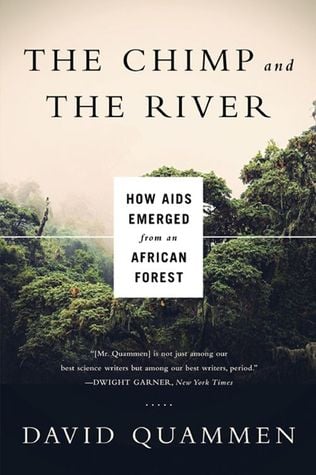
The Chimp and the River: How AIDS Emerged by David Quammen traces the origins of the AIDS pandemic to its ecological roots, detailing the scientific investigation into how HIV crossed from chimpanzees into humans and reshaped global health. Quammen establishes the narrative as an ecological detective story, focusing on the convergence of animal reservoirs, viral mutation, and human behavior. The work explores how zoonotic spillovers unfold, the historical and genetic evidence behind the pandemic’s start, and the implications for understanding present and future threats from emerging diseases.
Defining the Pandemic’s Source
Scientists identify HIV-1 group M as the pandemic strain of the AIDS virus. Molecular research pinpoints its origin to a specific event around 1908 in southeastern Cameroon, where a single chimpanzee’s virus crossed into a human during a bloody encounter. This transfer occurred near a minor tributary of the Congo River, setting in motion a chain of events that would later spark a global health crisis. Researchers Beatrice Hahn and Michael Worobey apply molecular genetic analysis to reconstruct the evolutionary timeline, clarifying how the virus mutated and diversified as it passed through generations of human hosts.
The initial crossover from chimpanzee to human required precise conditions. The chimpanzee, carrying simian immunodeficiency virus (SIVcpz), likely sustained an injury or was hunted, creating a moment where viral particles entered the bloodstream of a human hunter or butcher. This singular event marks the inception of HIV-1 group M in humans. The virus adapted to its new host, quietly circulating within local populations for decades before detection.
Zoonosis and the Ecology of Disease Emergence
Zoonosis defines diseases that transmit from nonhuman animals to humans. In the case of AIDS, the reservoir host is the chimpanzee, whose own SIV infection rarely causes serious illness but can transform into a global pandemic when conditions enable cross-species transmission. Scientists use the term spillover to describe this transfer. The dynamic between reservoir species, viral agents, and human populations shapes the trajectory of such diseases.
Human encroachment into wild habitats intensifies contact between people and animal reservoirs. As hunting, deforestation, and settlement fragment ecosystems, opportunities for viruses to cross into human populations increase. The AIDS pandemic illustrates this pattern with chilling clarity. The early 20th-century colonial expansion in central Africa brought hunters and villagers into closer contact with chimpanzees, creating the ecological interface that allowed HIV’s emergence.
Unraveling the Timeline: From Silent Circulation to Global Crisis
HIV circulated undetected in human populations for decades after the initial spillover. Only in the early 1980s did clinicians in Los Angeles and New York begin to recognize patterns of immune deficiency in patients, primarily gay men and Haitian immigrants, marked by rare infections and cancers such as Pneumocystis pneumonia and Kaposi’s sarcoma. Michael Gottlieb, an immunologist, documented clusters of these cases and reported them in the CDC’s Morbidity and Mortality Weekly Report, signaling the start of formal medical recognition.
Epidemiologists traced sexual networks and intravenous drug use as transmission routes, proposing an infectious agent spread through blood and bodily fluids. The identification of a novel retrovirus, later named HIV, confirmed these suspicions. Researchers worldwide raced to characterize the virus, competing for recognition and resources. The French team led by Luc Montagnier and the American laboratory of Robert Gallo both isolated variants of the virus, sparking scientific disputes and patent battles. Ultimately, a distinguished committee standardized the nomenclature: Human Immunodeficiency Virus.
Multiple Cross-Species Events: HIV’s Complex Family Tree
HIV’s lineage reveals a pattern of repeated cross-species transmissions. Scientists distinguish between HIV-1 and HIV-2, each with multiple subgroups (M, N, O, P for HIV-1; A–H for HIV-2). Genetic analysis shows that these subgroups arose from at least a dozen independent spillover events from primates to humans. Only HIV-1 group M achieved pandemic status. Others, such as HIV-2, remain largely confined to West Africa or fail to spread efficiently among humans.
Tracing the origins of these subgroups leads researchers to different primate species. HIV-2 derives from the sooty mangabey, a terrestrial monkey native to West Africa. SIVsm, the mangabey’s version of the virus, crossed into humans during hunting and butchering activities, creating several distinct HIV-2 lineages. HIV-1 group M, however, shares its closest genetic affinity with SIVcpz, found in chimpanzees.
Genetic Clues and Archival Evidence
Key evidence for the timeline and origin of HIV comes from archival biological samples. A 1959 blood plasma sample from a man in Léopoldville (now Kinshasa) tested positive for HIV-1. Genetic sequencing of this sample, named ZR59, revealed it as an ancient form of the virus, bridging the evolutionary gap between the original spillover and later pandemic strains. Another sample, DRC60, taken from a lymph node biopsy in 1960, provided further genetic material for reconstructing the virus’s early diversification.
By analyzing the molecular clock—the rate at which HIV’s genetic code mutates—scientists estimate the cross-species transmission occurred around 1908. This precision results from comparing the genetic sequences of historical and contemporary HIV strains, observing the pace of evolutionary change, and correlating genetic divergence with known events.
Ecological Patterns: Human Behavior as Catalyst
Patterns of human movement, behavior, and social organization shaped the trajectory of HIV after its entry into the population. Colonial expansion in central Africa fostered urban growth, migration, and the proliferation of transportation networks along rivers and railways. Léopoldville emerged as a regional hub, drawing rural migrants and fostering dense social and sexual networks. Medical practices, including the reuse of unsterilized needles and syringes, contributed to viral amplification.
Commercial sex work, migration for labor, and changes in social structures created dense contact networks, providing the virus with opportunities to propagate. Each transmission event, influenced by social and ecological context, increased the likelihood of the virus mutating and adapting for more efficient human-to-human spread. The interplay between environmental disturbance, economic development, and health systems generated conditions for a simmering epidemic to ignite into a pandemic.
Scientific Breakthroughs: Identifying the Viral Reservoir
The search for HIV’s reservoir prompted researchers to examine wild primate populations. Early hypotheses focused on various monkeys, but only with the identification of SIVcpz in chimpanzees did the link to HIV-1 become clear. Researchers like Martine Peeters and her colleagues isolated SIVcpz from wild-born chimps, confirming a close genetic match to HIV-1 group M.
Captive and wild chimpanzee populations show varying rates of SIVcpz infection. The virus in chimpanzees causes little apparent illness, suggesting a long co-evolutionary history. When the virus crosses into humans, its effects change dramatically, leading to the profound immunodeficiency of AIDS. The identification of SIVcpz in the region where the initial human case likely occurred confirms the geographical and biological connection.
Myths, Misconceptions, and Scientific Clarity
Popular narratives often center on dramatic individuals or events, such as “Patient Zero” or speculative vaccine contamination. Quammen addresses these stories by focusing on rigorous scientific investigation. Epidemiological reconstructions demonstrate that the virus circulated widely before being noticed by clinicians in the West. Genetic and archival evidence firmly establish the African origins and evolutionary path.
Researchers dispel the theory that contaminated polio vaccines sparked the epidemic. Detailed analysis of viral genomes and the timeline of vaccine production refute the plausibility of such claims. Instead, the record points to the ecological and social realities of central Africa in the early 20th century, where hunting, butchering, and shifting social landscapes fostered the conditions for HIV’s emergence.
Emerging Patterns: The Broader Context of Zoonotic Disease
AIDS belongs to a larger class of emerging infectious diseases, many of which result from zoonotic spillovers. Roughly sixty percent of human infectious diseases originate in animals. As human societies expand, transform landscapes, and increase contact with wildlife, the risk of new spillovers grows. Quammen situates AIDS among other recent and historical outbreaks, such as Ebola, SARS, and Nipah, each demonstrating the ecological interconnectedness of human and animal health.
Spillover events depend on both the biological properties of viruses and the behaviors of human communities. Viral adaptation, host susceptibility, and social patterns interact to determine which spillovers remain isolated and which explode into pandemics. In the case of AIDS, only one among many cross-species transmissions—HIV-1 group M—achieved the confluence of factors required for global spread.
The Future Threat: Lessons and Warnings
Quammen’s narrative builds toward an ecological warning. The emergence of AIDS is neither an anomaly nor a closed chapter. Patterns of deforestation, bushmeat hunting, and urbanization persist in many parts of the world. Each incursion into wild habitats multiplies the opportunities for viral spillover. Globalization accelerates the spread of new pathogens, turning local outbreaks into international crises.
Medical and scientific advances have improved detection, treatment, and prevention, but the fundamental drivers of zoonotic emergence remain unaddressed. The story of AIDS demonstrates the consequences of ecological disturbance and unregulated interaction with wildlife. Surveillance, public health infrastructure, and ecological stewardship form the core of future pandemic prevention.
The Path Forward: Integration of Science and Society
AIDS challenges societies to integrate ecological, medical, and social knowledge. The pandemic’s origins and trajectory reveal the need for interdisciplinary collaboration, combining field research, molecular genetics, epidemiology, and anthropology. As scientists reconstruct the pathways of viral emergence, policymakers and communities must apply these insights to minimize risk.
Investments in health systems, education, and ecological protection increase resilience against future outbreaks. International cooperation and information sharing support rapid response and containment. Scientific understanding of past pandemics guides strategies for the future.
Conclusion: Convergence and Responsibility
The convergence of ecological disturbance, viral adaptation, and human society produced the AIDS pandemic. Scientific investigation reconstructs the pathway from a single spillover event in Cameroon to a global health crisis, providing both explanation and warning. The lessons of this history extend beyond AIDS, illuminating the persistent risk posed by zoonotic diseases in a rapidly changing world. Recognition of our interdependence with the natural environment—and the viruses that inhabit it—defines the challenge and responsibility of global health in the 21st century.