The Gnostics and Their Remains
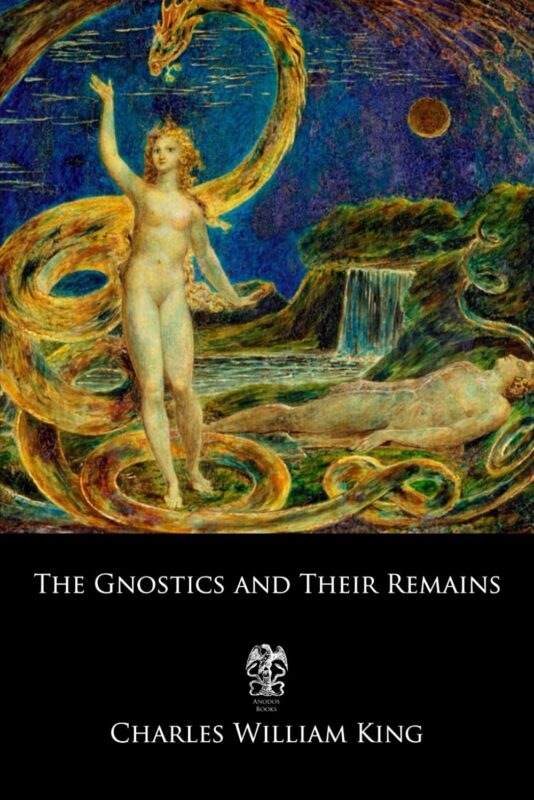
The Gnostics and Their Remains by Charles William King stands as a monumental inquiry into the secret religions, mystical artifacts, and philosophical systems that shaped late antiquity. King, a Cambridge scholar of extraordinary range, approached Gnosticism as both archaeologist and theologian, tracing its transmission through ancient talismans, inscribed gems, and the survival of esoteric symbols into later mystic orders. His study, published in 1887, draws together archaeology, theology, and comparative religion to expose the living current of Gnostic thought beneath Christian, Persian, and Egyptian traditions.
The Scholar and His Historical Moment
Charles William King wrote at a time when archaeology and theology rarely intersected. A Fellow of Trinity College, he applied philological precision to artifacts long dismissed as curiosities. His erudition in Greek, Hebrew, and Coptic allowed him to translate obscure inscriptions and identify the cultural strata embedded in engraved stones. His friendship with Rabbi Dr. Schiller-Szinessy of Cambridge deepened his understanding of the Kabbala and the Zohar, which he regarded as a Jewish continuation of the ancient Gnosis. King’s learning placed him among the foremost antiquarians of his century, and his work bridged philology with metaphysical history.
Mapping the Hidden Religion of Knowledge
The book opens with the premise that Gnosticism defined a universal movement toward knowledge of divine reality. King interprets “gnosis” as direct insight into spiritual truth, a science of divine order communicated through symbols and initiation. He situates this movement within the cosmopolitan world of Alexandria, Ephesus, and Antioch, where Greek philosophy met Persian dualism and Jewish mysticism. In his analysis, the Gnostics stand not as rebels against Christianity but as heirs to a chain of revelation extending from India through Persia and Egypt into the Hellenistic mind.
Origins in the East
King grounds the beginnings of the Gnosis in the religious upheavals of the East. He draws lines of descent from Indian Buddhism, Zoroastrian cosmology, and the Kabbalistic speculation of post-exilic Judaism. From the Zendavesta, he traces the dual principle of Light and Darkness; from the Upanishads and Buddhist metaphysics, the idea of liberation through enlightenment; and from the Kabbala, the structure of emanations, the Sephiroth, that mirror the Gnostic chain of Æons. King identifies these doctrines as spiritual technologies—systems for the purification of the soul and its ascent toward the uncreated source.
The Alexandrian Crucible
In Alexandria, the religious chemistry of the ancient world produced the Gnostic synthesis. King shows how Jewish philosophers such as Philo and Aristobulus translated Hebrew revelation into Platonic terms, paving the way for teachers like Basilides, Valentinus, and Carpocrates. He argues that Alexandria’s libraries and temples functioned as a single intellectual organism in which theology, magic, and geometry coexisted. The blending of Egyptian ritual with Greek metaphysics created a language of symbols that survived in talismanic art. King devotes entire sections to the Egyptian pantheon—Serapis, Isis, Horus, and Anubis—whose forms the Gnostics reinterpreted as metaphors of divine emanation and cosmic hierarchy.
The Text of Revelation: Pistis Sophia
At the heart of King’s argument lies his analysis of the Pistis Sophia, the only complete Gnostic scripture to survive antiquity. Written in Coptic and interspersed with Greek, the text recounts the descent of the soul, its imprisonment in the material world, and its gradual restoration through divine knowledge. King translated key passages and treated them as the theological blueprint of the Gnostic cosmos. In his summary, Pistis Sophia is both myth and metaphysics: a narrative of the soul’s exile told through the language of celestial geography. He observes that the drama of the fallen Sophia mirrors the human condition, revealing a doctrine of redemption by understanding rather than faith.
The Archaeology of Faith: Gems and Talismans
King’s most original contribution lies in his interpretation of Gnostic engraved stones. He catalogues hundreds of gems—jasper, hematite, carnelian—bearing names like IAO, ABRASAX, and SABAOTH. Each name represents a vibration of divine power. The image of Abraxas, a composite deity with a rooster’s head, serpent legs, and a whip of fire, becomes for King the emblem of universal energy. He classifies these artifacts into three families: true Abraxas gems, Abraxoids borrowing Gnostic types, and Abraxasters that mimic them for astrological use. By decoding their inscriptions, King transforms what had been dismissed as superstition into a symbolic scripture carved in stone.
The Cult of Mithras and the Solar Mysteries
King devotes an entire section to the worship of Mithras, the Persian solar savior whose rites spread across the Roman Empire. He demonstrates that the Mithraic initiation, divided into grades of ascent, paralleled the Gnostic path of illumination. The Mithraic cave, representing the cosmos, served as a temple of rebirth where initiates reenacted the journey of the soul through planetary spheres. King argues that these rituals influenced early Christian liturgy through their sacraments of bread, wine, and purification. He treats the Mithraic tauroctony—the god slaying the bull—as a visual allegory of the soul liberating light from matter, a theme shared by both Gnostic and Christian symbolism.
Serapis and the Egyptian Continuum
In his discussion of Serapis, King explores how Egyptian theology absorbed Greek and Semitic elements under the Ptolemies. Serapis represented the union of Osiris and Zeus, a god of resurrection and cosmic law. King identifies in Serapis the immediate ancestor of the Gnostic savior figures, the mediator between heaven and earth. The temples of Serapis in Alexandria preserved rituals that blended astronomy, alchemy, and sacred geometry. King argues that when Christianity reached Egypt, it encountered an environment already trained to interpret divine mysteries through symbolism and allegory, allowing Gnostic Christianity to flourish.
The Language of Symbols
Gnostic monuments teem with sigils, monograms, and mystical numerals. King decodes the recurring names—IAO, Abrasax, Michael, Gabriel, Sabaoth—and the configurations of stars and serpents that accompany them. He describes the Chnuphis Serpent, a symbol of the solar Logos, whose coiled body encircles the divine name. He analyzes magic squares and leaden scrolls inscribed with complex numerical patterns, interpreting them as diagrams of divine order. Through these symbols, the Gnostics expressed their conviction that numbers and letters embody the structure of reality.
The Gnostic Hierarchy of Being
King reconstructs the cosmological ladder of the Gnostics with scholarly precision. At the summit stands the Unknown Father, the source of all emanations. From him proceed the Æons, paired male and female powers such as Bythos and Ennoia, Nous and Aletheia, Logos and Zoe. These pairs populate the Pleroma, the fullness of divine light. Beyond the Pleroma stretches the realm of Sophia, whose fall gives rise to the material universe and its ruler, the Demiurge. King details this structure not as mythology but as metaphysical anatomy—the map of consciousness itself.
The Kabbalistic Continuation
In later chapters, King aligns Gnosticism with the Jewish Kabbala. Through the teachings of Rabbi Schiller-Szinessy, he identifies the Sephiroth as a reorganization of the Gnostic Æons, and the Zohar as their medieval commentary. He argues that the Kabbalists preserved the ancient method of symbolic interpretation and the doctrine of emanation. The Gnostic concern with divine names reappears in the Kabbalistic manipulation of Hebrew radicals, each letter a vessel of creative force. King’s philological training allowed him to read these correlations directly in the inscriptions on ancient gems.
Manes and the Synthesis of the Gnosis
The final evolution of Gnosticism appears in the religion of Manes, founder of Manichaeism. King interprets Manes as the last great architect of the ancient wisdom, combining Persian dualism, Christian ethics, and Buddhist asceticism. The Manichaean vision of a world divided between Light and Darkness, governed by cosmic combat, represents for King the closing harmony of Eastern and Western revelation. He traces the persistence of these ideas into medieval heresies and the secret doctrines of later mystic fraternities.
The Transmission into the West
King follows the symbolic legacy of the Gnosis through the Templars, Rosicrucians, and Freemasons. He contends that Masonic emblems—the compass, the all-seeing eye, the letter G—derive from the same reservoir of Gnostic imagery. His argument provoked controversy among Masons who resisted any implication of ancient origin. King’s study of Masons’ marks, engraved symbols on medieval buildings, connects them with older sigla on Gnostic stones. He tracks this tradition from Greek and Etruscan artisans through Gothic cathedrals to the craft guilds of England, establishing an unbroken lineage of sacred geometry.
The Role of Art and the Decline of Beauty
In a striking passage, King contrasts the exquisite art of classical Greece with the deliberate roughness of Gnostic engravings. The value of these talismans lay in the type, not the execution. Their beauty was internal—the power of the sign itself. He describes the Gnostic craftsman as a spiritual technician working under divine inspiration rather than aesthetic ambition. The decay of form expressed the shift from visible harmony to hidden meaning. For King, this movement marks the transformation of ancient art into a vehicle of metaphysical transmission.
The Historian as Initiate
King writes with the precision of a cataloguer and the passion of an initiate. His narrative moves between analysis and revelation. He regards the Gnostic systems not as aberrations but as expressions of humanity’s constant desire for immediate knowledge of the divine. He treats every relic—gem, papyrus, hymn—as evidence of a unified spiritual science that once spanned continents. His method weaves textual study with visual evidence, giving material form to ideas often confined to speculation.
Legacy and Intellectual Reach
The Gnostics and Their Remains continues to influence scholars of esotericism, archaeology, and comparative religion. Its synthesis of material culture and metaphysical interpretation laid groundwork for twentieth-century studies of Hermeticism and the occult revival. King’s typology of Abraxas gems remains a reference point for museum catalogues and private collections. His translation of the Pistis Sophia introduced English readers to a scripture that had shaped centuries of mystical thought. Beyond scholarship, the book invites reflection on the human drive toward hidden wisdom.
The Enduring Question of Gnosis
What does it mean to seek knowledge beyond faith? King’s research turns this question into a historical force. Through Gnostic scriptures and symbols, he demonstrates how civilizations built entire systems around the conviction that enlightenment is attainable through disciplined insight. His study affirms that spiritual knowledge manifests in artifacts, language, and ritual continuity. The Gnostics, in his portrayal, represent humanity’s enduring aspiration to understand the architecture of the divine world and the soul’s place within it.
The Measure of King’s Achievement
King united rigorous scholarship with visionary scope. His command of ancient languages, his attention to archaeological detail, and his philosophical sensitivity produced a book that remains foundational for understanding the intellectual history of religion. The Gnostics and Their Remains stands as both archive and revelation, an atlas of forgotten symbols and a testament to the persistence of sacred inquiry. Through his work, the hidden history of spiritual science becomes visible, engraved in stone and preserved in the words of a scholar who sought knowledge as the ancients defined it—Gnosis as the measure of truth.