The Great Game in Cuba: How the CIA Sabotaged Its Own Plot to Unseat Fidel Castro
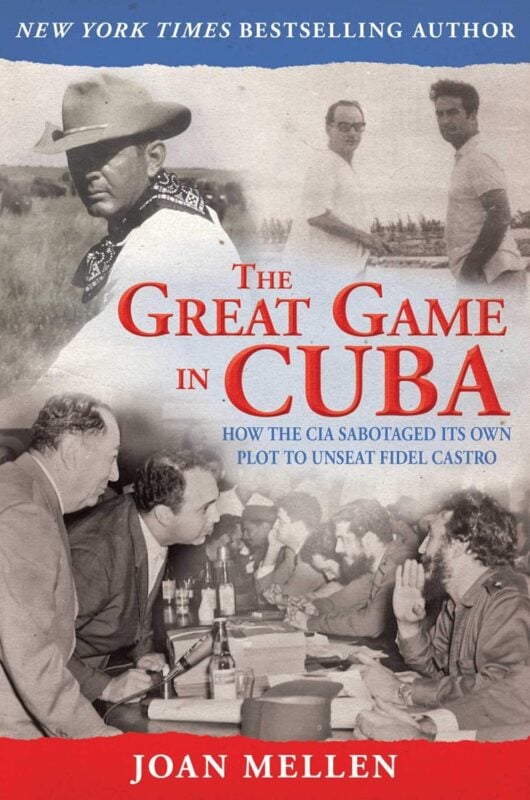
The Great Game in Cuba by Joan Mellen reveals how powerful American elites collaborated with the CIA in a failed campaign to overthrow Fidel Castro and reclaim lost influence in Cuba. Anchored in archival research and personal interviews, the book uncovers covert relationships between sugar magnates, cattle barons, CIA operatives, and exiled Cuban opposition figures who staged complex plots to destabilize Castro’s government. Mellen constructs a narrative of concealed alliances, institutional manipulation, and internal sabotage within the intelligence community itself.
A Vast Network of Power Brokers
The story revolves around a constellation of influential figures, with Robert J. Kleberg Jr., the president of the massive King Ranch, acting as a central hub of economic and political power. He cultivated direct access to CIA Director Allen Dulles and FBI Director J. Edgar Hoover. Alongside George A. Braga of the Czarnikow-Rionda sugar brokerage and CIA asset Michael J. P. Malone, Kleberg funneled resources and logistical support to counter-revolutionary operatives, many of whom had deep familial and business ties in Cuba.
Kleberg’s business empire extended to Compañía Ganadera Becerra in Cuba, a sprawling ranching enterprise strategically positioned within the island’s economic infrastructure. Malone managed this site, embedding CIA intelligence operations within its commercial framework. This physical and operational proximity to revolutionary change transformed Becerra into a crucible for anti-Castro planning, where agents disguised as ranch hands collected intelligence and prepared for future insurgency.
Cuban Elites and Their CIA Handlers
Alberto Fernández de Hechavarría, a wealthy Cuban landowner and CIA operative, emerged as a pivotal character whose loyalty to the United States merged with disillusionment in Castro’s post-revolutionary Cuba. Fernández initially supported the revolution and was appointed by Castro to oversee aspects of the sugar industry. But as Castro consolidated power, Fernández withdrew, exiled himself, and turned into a chief liaison between the Cuban exile community and the CIA.
Fernández’s relationship with CIA handler Robert Wall documented a shift in operational tactics from hopeful collaboration to orchestrated insurgency. With boats, weapon shipments, and covert sea routes, Fernández engineered armed infiltrations into Cuba. He helped run Unidad Revolucionaria, a movement that rejected both Batista and Castro, aiming instead for a third way—restoring private property and free enterprise through clandestine revolt. Each voyage from Key Biscayne into Cuban waters multiplied the risk but deepened his commitment to the mission.
The CIA’s Conflicted Strategy
The CIA’s own role—ostensibly supportive of anti-Castro efforts—fractured under the weight of conflicting objectives. On one hand, the Agency funded and equipped exiles to incite rebellion. On the other, it undermined the very operations it had authorized. Joan Mellen reveals that internal sabotage was not the exception but a patterned behavior among the Agency’s upper ranks. The Bruce-Lovett Report, a suppressed and still-unavailable document commissioned by President Eisenhower, reportedly detailed the dysfunction and corruption in CIA’s clandestine services.
This duplicity paralyzed operatives like Fernández and his allies, who encountered contradictory orders and opaque objectives. CIA’s station in Miami, JMWAVE, became a bureaucratic maze of competing ambitions. Operatives pushed forward amphibious assaults, psychological warfare, and sabotage missions—only to find their efforts abruptly defunded or derailed by CIA brass in Langley.
Power, Land, and Ideology
King Ranch’s involvement extended far beyond cattle. Its global footprint made it a proxy for American agricultural and corporate imperialism. By aligning with sugar interests and CIA-linked business magnates like Braga and Malone, King Ranch turned Cuba into a battleground for recovering economic dominance. Castro’s land reforms, which expropriated large estates including Becerra, turned former partners into sworn enemies.
These grievances escalated into paramilitary activity. Kleberg and his allies lobbied powerful clerics like Cardinal Spellman, media outlets like the New York Times, and politicians in Washington to support a regime change narrative. What began as private indignation morphed into a public campaign, masked by the language of democracy but driven by economic restitution.
The Tejana and the Tides of Invasion
The boat Tejana became a symbol of counter-revolutionary defiance. Captained by Fernández’s American allies, including Lawrence Laborde, it executed multiple covert missions, delivering arms and retrieving operatives. These clandestine trips sustained internal resistance movements and sowed chaos behind enemy lines. Fernández relied on sea routes when air access was impossible and when the Cuban shoreline offered small windows for entry.
The risk increased after Castro’s intelligence services intensified surveillance. By 1961, CIA-backed infiltration efforts reached a climax with the ill-fated Bay of Pigs invasion. Alberto Fernández’s close associate, Humberto Sorí Marín, infiltrated Cuba days before the landing, carrying with him a detailed plan for nationwide uprising. Cuban security forces captured and executed him almost immediately. The CIA’s reluctance to adjust their timetable and respond to field intelligence sealed the operation’s failure.
After the Bay of Pigs: Fracture and Abandonment
The aftermath fractured trust between the CIA and its field operatives. Mellen documents how CIA officers like David Atlee Phillips continued to project confidence in the exile mission while methodically cutting ties with their Cuban contacts. Fernández faced sudden abandonment. By 1967, orders from Langley mandated that all connections to him be severed. CIA filed termination documents and shut down his maritime operations.
This withdrawal did not reflect a shift in policy as much as a consolidation of agency control. By removing autonomous operatives, CIA centralized its command, reducing unpredictability and liability. Fernández, once celebrated as the “man of the boats,” faded into political obscurity, his exile network disbanded by the same agency that once armed him.
The Erased Archives and Vanishing Evidence
Mellen’s research reveals how the CIA erased paper trails. Entire archives disappeared. Braga’s personal papers vanished from his home before they could reach the University of Florida. Files related to King Ranch, McCombs, and other affiliated figures were sanitized or destroyed. Even the Bruce-Lovett Report, widely known in intelligence circles, remains missing from public and presidential archives.
This culture of concealment protected institutional reputations but distorted historical record. By controlling the narrative, CIA shielded itself from scrutiny and rewrote the legacy of its operations. The agency did not merely act in the shadows—it pulled the shadows in behind it to erase the path.
The Human Cost of the Great Game
At the core of the story are individuals who gave their lives to a cause that the institutions funding them had already forsaken. Sorí Marín died believing CIA would support a coordinated rebellion. Dionisio Pastrana, another close associate of Fernández, barely survived his final mission. Others faced imprisonment, torture, or exile.
Their sacrifices contrast sharply with the strategic calculus of CIA operatives in Washington. For those on the ground, the mission was existential. For Langley, it was a field experiment—modular, replaceable, expendable. Mellen’s account forces the question: who bore the burden of risk, and who claimed the privilege of control?
Conclusion: An Empire Turned Inward
The Great Game in Cuba documents how institutions designed to project American power abroad turned inward to sabotage their own operatives. Joan Mellen shows that the failure to unseat Fidel Castro stemmed not from Cuban resistance alone but from fractures inside the United States intelligence community. The alliance between land barons, sugar brokers, and spy handlers collapsed under the weight of diverging interests and concealed motives.
What emerges is not a story of triumph or defeat, but of erosion—of trust, of power, of coherence. As the waves closed over the Tejana’s final voyage and the ranches of Cuba returned to the state, the great game drew to an end. The pieces remain, scattered in archives, redacted pages, and the memories of those who played and lost.

