The Modern World-System II: Mercantilism and the Consolidation of the European World-Economy, 1600–1750
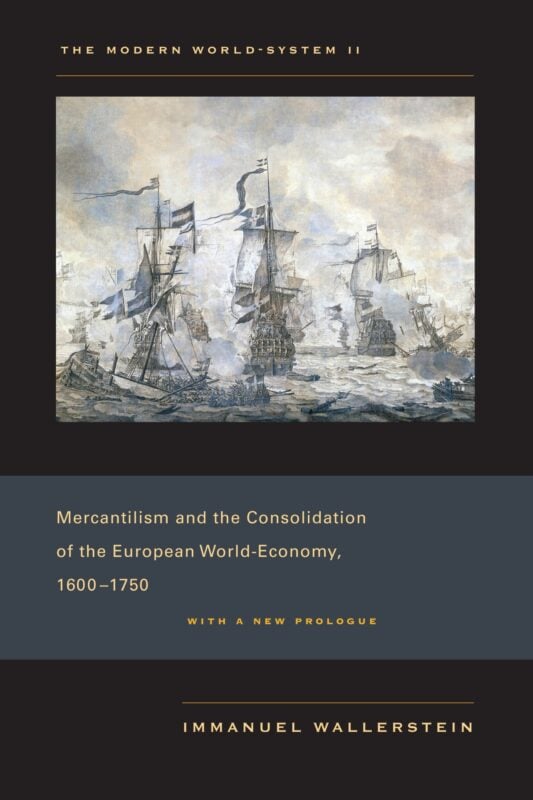
The Modern World-System II by Immanuel Wallerstein reframes the history of early modern Europe as a single, evolving world-economy. Wallerstein situates the years 1600 to 1750 at the core of his argument, positing a period in which Europe consolidated a capitalist system that radiated economic, political, and cultural influence across continents. The emergence of mercantilism, the Dutch hegemony, and the structured interplay between core, semi-periphery, and periphery territories set the framework for centuries of global change. He establishes Europe as a singular economic entity, governed by cycles of expansion and contraction, and governed by rules that shaped the future of capitalism.
Mercantilism and the Genesis of a World-Economy
Wallerstein traces the transition from feudal fragmentation to capitalist integration by dissecting the mechanics of mercantilism. European states built fiscal and military capacity, extracted surplus through trade monopolies, and enforced commercial regulations that privileged national interest. Mercantilist policy, more than a doctrine, acted as an engine that shaped the European division of labor, forcing raw material production into the peripheries and concentrating higher value-added activities in the core. The Dutch Republic, England, and France engineered systems that allowed them to dominate world trade, with state actors and merchant capitalists working in tandem to channel global flows of goods and bullion.
Economic Cycles: The Rhythms of Expansion and Contraction
Wallerstein anchors his analysis in the long cycles of economic growth and slowdown that structure capitalist history. He identifies an “A-phase” of expansion—marked by rising prices, population growth, and increasing productivity—followed by a “B-phase” of contraction or stagnation. Between 1450 and 1600, Europe accelerated into the A-phase, incorporating the Americas, exploiting new resources, and extending its economic boundaries. From 1600 to 1750, a period of lower growth took hold, but the underlying structure of the world-economy persisted. The cycles themselves reflect structural features of capitalism, not random fluctuations, with each phase yielding specific changes in labor systems, class formation, and state power.
Core, Periphery, and Semi-Periphery: The Structure of Global Hierarchy
Wallerstein delineates three zones—core, semi-periphery, and periphery—that form the backbone of the world-system. Core regions, anchored by states like the Dutch Republic and England, achieved technological superiority, extracted surpluses, and enforced advantageous terms of trade. Peripheries, including eastern Europe and the Caribbean, specialized in coerced, labor-intensive commodity production for export. Semi-peripheral areas, such as parts of southern and central Europe, mediated between core and periphery, often exhibiting hybrid labor systems and mixed economic structures. The division drove unequal exchange, with core zones appropriating surplus and driving upward mobility, while peripheral regions bore the burden of forced transformation and social restructuring.
The Rise of Dutch Hegemony
The Dutch Republic occupies the center of Wallerstein’s analysis of seventeenth-century hegemony. Dutch merchants built the world’s most advanced shipping fleet, secured dominance in finance, and controlled key trade routes. Amsterdam became the nucleus of international commerce, with its Exchange serving as the clearinghouse for bills, contracts, and bullion. The Dutch East India Company and West India Company extended Dutch influence across Asia, Africa, and the Americas, reshaping global commodity flows. This commercial supremacy rested on a dense web of social institutions, technical innovations, and state backing, creating a platform for both domestic prosperity and far-reaching geopolitical influence.
State Formation, Bureaucracy, and the Interstate System
Wallerstein describes the transformation of European states as a pivot from manorial, local rule to centralized, bureaucratic governance. Monarchs built standing armies, professionalized tax systems, and expanded administrative apparatuses. States now relied less on direct landholdings and more on their capacity to tax, regulate, and shape markets. The emergence of the interstate system, formalized by the Treaty of Westphalia in 1648, institutionalized the notion of sovereignty, but real power followed economic capability. Strong states in the core exerted outsized influence, dictating the rules of trade and war. The bureaucratization of power also made possible the coordination required to sustain a capitalist world-economy.
Agricultural and Industrial Reorganization
Within the world-system, agricultural and industrial shifts reconfigured European societies. Core regions embraced convertible husbandry, mixing arable and pastoral farming to increase yields and efficiency. The periphery underwent the growth of plantations and large estates, employing coerced labor—serfdom in eastern Europe, slavery and indenture in the Americas. Proto-industrialization emerged in rural areas, particularly during the B-phase, as industries sought lower labor costs outside urban guild controls. The increasing specialization and scale of production in both agriculture and industry reinforced hierarchical relations and expanded market dependence.
Labor Systems and Social Relations
The organization of labor under capitalism fragmented the old order. In the core, wage labor expanded, pushing peasant proprietors and yeoman farmers to the margins. Peripheral areas, subjected to global market imperatives, intensified forms of labor coercion, tying serfs, slaves, or indigenous workers to cash crop production. Semi-peripheral regions blended elements of both, using sharecropping or flexible arrangements that reflected their intermediary position. These divisions produced new class structures, with bourgeois elites consolidating power in the core, while landowners and merchant intermediaries shaped outcomes elsewhere. Patterns of exploitation, mobility, and resistance emerged in step with the cycles of economic expansion and contraction.
Cultural and Religious Differentiation
Wallerstein highlights the role of culture in reinforcing the divisions of the world-system. The Reformation and the spread of Protestantism intersected with economic development, as northern Europe’s core adopted religious forms aligned with emerging capitalist values—work ethic, individual responsibility, and disciplined accumulation. The Catholic south and east followed different trajectories, rooted in older forms of authority and social cohesion. Intellectual and artistic ferment in the core paralleled the growth of universities, scientific societies, and new philosophies. Cultural and religious boundaries hardened in response to economic interests, shaping collective identities and ideological rivalries.
The Hegemonic Cycle: Sequence and Succession
Hegemony unfolds in stages—ascendancy, slow decline, struggle, crisis, and renewal. Wallerstein maps this process with precision. The Dutch Republic’s dominance gave way to challenges from England and France, precipitating a series of wars and economic rivalries. As Dutch productivity and commercial advantage waned, England rose to challenge for primacy. The transition involved financial investment by declining powers in the industries and infrastructures of rising contenders, creating alliances that reflected strategic self-interest. Periods of “balance of power” often bred instability, culminating in “Thirty Years’ Wars”—generalized crises that reordered the interstate system and established new hegemonic leaders.
Crises and Transformations of the Seventeenth Century
Historians have long debated the character of the seventeenth century: Was it a crisis, a period of stagnation, or a phase of transition? Wallerstein asserts that the period between 1600 and 1750 constituted a cyclical downturn within an ongoing process of capitalist development. Price deflation, population stagnation, and slowing economic growth reshaped the allocation of resources, shifting the boundaries between core and periphery, and forcing adaptation across social and political structures. This period saw the strengthening of state mechanisms in the core and increasing exploitation in the periphery. The crisis sharpened class divisions, intensified geopolitical rivalry, and reconfigured labor systems, laying the groundwork for the next cycle of expansion.
Continuity, Expansion, and Structural Persistence
Wallerstein insists that the world-system did not fundamentally shift boundaries during this period. The system’s expansion into the Caribbean and the Americas increased the volume and value of essential commodities entering European markets, but the underlying logic of unequal exchange persisted. Patterns of trade, production, and surplus appropriation endured. The institutional innovations, state formations, and economic hierarchies built between 1450 and 1750 continued to shape global capitalism into the eighteenth century and beyond. The structural persistence of the core–periphery dynamic set the conditions for subsequent industrial revolutions, imperial expansion, and recurring crises.
Theory and Historical Synthesis
At the heart of Wallerstein’s work lies a theory of capitalist development grounded in empirical evidence and rigorous structural analysis. Capitalism, for Wallerstein, operates as a world-system defined by cycles, hierarchies, and mechanisms of surplus extraction. The integration of economic, political, and cultural processes produces recurrent patterns of hegemony, crisis, and transformation. The world-system is not merely an economic order but a civilization—a totality that shapes and is shaped by its constituent parts. Understanding the consolidation of the European world-economy demands attention to the interplay between structure and agency, between historical contingency and systemic logic.
Implications for Understanding Modern Capitalism
The framework established by Wallerstein enables a structural reading of modern history. The dynamics that shaped early modern Europe—cycles of expansion and contraction, core–periphery relations, state formation, hegemonic succession—continue to define global capitalism. The periodic rise and decline of leading powers reflect the structural constraints of the system, not the idiosyncrasies of individual nations. The persistence of economic polarization, cultural differentiation, and political rivalry follows patterns set in motion centuries ago. To interrogate the future of capitalism, Wallerstein’s analysis urges attention to cycles, hierarchies, and the mechanisms by which power, wealth, and legitimacy circulate.
Toward a Global Historical Consciousness
Wallerstein’s analysis calls for a shift in perspective, away from national histories and toward the interconnected totality of the world-system. The European world-economy did not merely conquer or assimilate other regions; it created structural relations that bind distant societies into a single, dynamic order. The legacies of mercantilism, the logic of core–periphery exploitation, and the cycles of hegemonic change shape contemporary crises and opportunities. To act with historical consciousness requires understanding the underlying architecture of capitalism and the forces that drive its recurrent transformations.
The Modern World-System II by Immanuel Wallerstein offers an authoritative, conceptually unified explanation of the emergence, structure, and evolution of the European world-economy between 1600 and 1750. Through mercantilism, hegemonic rivalry, and the structuring of core and periphery, Wallerstein demonstrates how capitalism forged new patterns of power and wealth, establishing the foundational architecture for the modern global order. The book’s synthesis of economic, political, and cultural analysis equips readers to interpret past transformations and anticipate the challenges of future cycles within a continually evolving world-system.
