The Modern World-System III: The Second Era of Great Expansion of the Capitalist World-Economy, 1730s-1840s
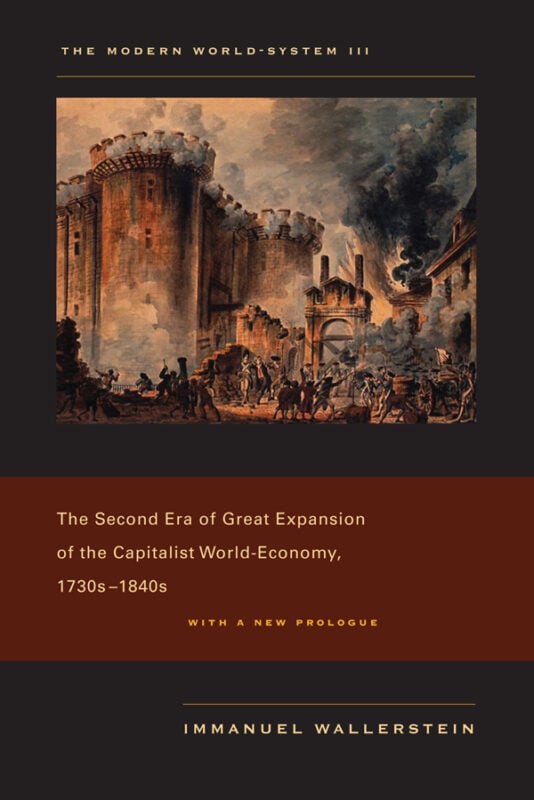
The Modern World-System III by Immanuel Wallerstein situates the years 1730 to the 1840s as the second great era of expansion for the capitalist world-economy, tracing the mechanisms that powered transformation across continents. Wallerstein advances a tightly argued thesis: the era’s significance emerges not from sudden rupture, but from the relentless logic of capital accumulation, systemic incorporation of new zones, and the cycles of profit and stagnation that shape global history.
Prologue to a Systemic Expansion
Wallerstein’s analysis opens by framing the era’s key debates. Many analysts claim the late eighteenth and early nineteenth centuries deliver modernity’s “great turning point”—the era when capitalism or industrial society emerges fully. Wallerstein locates the pivotal origin instead in the “long sixteenth century,” identifying the capitalist world-system’s birth as a structure oriented toward endless capital accumulation. The mechanisms sustaining this order demand axial division of labor, state systems calibrated to the requirements of accumulation, and cyclical patterns that periodically re-center economic power.
Turning Points and Structural Logic
Within this framework, the period from 1730 to the 1840s reveals itself through structural tensions rather than isolated events. The capitalist world-economy expands, integrating new regions not through abrupt conquest, but through processes that generate both resistance and eventual restructuring. Zones previously situated outside the system undergo incorporation, which proceeds not as a singular moment but as a drawn-out sequence, pulling them into the core-periphery dynamics that define the world-system. Russia, India, the Ottoman Empire, and West Africa offer concrete case studies: their diverse initial conditions yield to homogenizing pressures as the world-economy adapts state structures, labor systems, and productive relations to its own imperatives.
Core, Periphery, and the Dynamics of Incorporation
Incorporation shifts regions from external interaction—where exchanges of luxury goods occur under relative equality—to a new mode, where essential goods and labor become entangled in patterns of unequal exchange. This structural transformation redistributes surplus value from periphery to core, generating economic polarization. The world-system exerts pressure to peripheralize new territories, extracting raw materials and agricultural goods while exporting manufactured items and quasi-monopolized technologies. Resistance shapes the pace and nature of incorporation, yet technological and military advances in the core strengthen its leverage, making integration increasingly one-sided and binding.
Kondratieff Waves and the Rhythm of Capital
Wallerstein identifies cyclical economic patterns as an intrinsic feature of capitalism. The Kondratieff long wave—alternating periods of expansion (A-phase) and contraction (B-phase)—results from the pursuit and subsequent dissolution of monopolies. Significant profits accrue when enterprises command leading sectors, shielded from competition. Over time, competitors breach these monopolies, eroding profits, driving down prices, and initiating stagnation until a new set of innovations restarts the expansionary cycle. This cyclical process governs the distribution of wealth, opportunities for advancement, and even the geography of global power, ensuring the world-system remains in motion.
Industry, Bourgeoisie, and the Ideology of Revolution
Historical imagination anchors itself in images of industrial and bourgeois revolutions. Great Britain’s industrialization, paired with the rise of the French bourgeoisie, occupies a mythic place in narratives of modernity. Wallerstein interrogates the assumptions beneath this narrative. Industrial revolution, in common telling, consists of the application of mechanical principles to manufacturing, the rise of the factory, the proletarianization of labor, and the explosive growth of output. Standard accounts attribute the process to a cluster of innovations—spinning jennies, steam engines, and mechanized looms—unleashing a chain reaction of economic and social transformation.
Drivers of Industrial Change: Demand, Capital, Demography
Explanations for this transformation proliferate. Some theorists prioritize rising demand, both from foreign trade and a burgeoning home market. Others emphasize the availability and flow of capital, which enables mechanization and innovation. Still others trace the origin to demographic growth, which supplies labor and creates new markets, or to shifts in land tenure and agricultural productivity, which release rural labor for urban industry. Intellectual currents often circle back to the “entrepreneurial spirit,” positing a cultural disposition toward risk-taking and innovation as a decisive factor.
Rethinking Agricultural Revolution and Social Relations
The narrative of industrial revolution intertwines with claims of an agricultural revolution. The expansion of arable land, the introduction of fodder crops, and the enclosure movement reconfigure rural economies and social hierarchies. The enclosure process consolidates holdings, ends traditional rights, and increases the efficiency of agricultural production, often at the cost of smallholders and commoners. Landlords pursue increased rents through technical improvements and larger units, transforming the countryside into a reservoir of industrial labor.
Some analyses question whether yield per capita or per unit of input increased dramatically in this period, proposing instead a gradual accumulation of gains. Innovations in crop rotation and animal husbandry spread across western Europe, not only in Britain, broadening the base for demographic expansion and urban migration. Political institutions, especially the role of the state and Parliament in Britain, facilitate this transformation through direct intervention, legislative support, and fiscal realignment.
Factories, Technology, and the Shifting Structure of Work
The emergence of factories does not simply reflect technological change, but marks a new phase in the organization of labor and capital. Concentration of workers under a single roof, the rise of wage labor, and increased specialization define the contours of modern industrial society. Innovations in cotton textiles and iron production open new frontiers of productivity, with cotton textiles serving as the archetype of labor-saving mechanization, and iron forging connections to energy production, railways, and machinery.
The logic of this industrial expansion depends on market control and political power. Britain’s dominance in textiles and iron production hinges on securing access to raw materials, controlling export markets, and suppressing rivals—both within Europe and in colonial settings such as India. The rise of coal as a primary energy source, linked to forest depletion and innovations in smelting, enables further leaps in scale and efficiency.
Demography, Urbanization, and Social Mobility
Population dynamics interact with economic transformation in complex ways. Declining mortality rates, improved food supply, and urban migration reshape society. The survival of more children, especially among middle and lower-middle classes, supports the expansion of skilled labor and technical expertise. Fertility patterns, age of marriage, and rural-to-urban transfers reinforce the growth of industrial populations, while changing marriage practices and household structures enable new forms of resource allocation.
Urbanization accelerates as industrial opportunities concentrate people in towns and cities, intensifying demands for infrastructure, services, and governance. Social mobility expands in some sectors, as skilled workers and entrepreneurs seize new opportunities, yet the process also generates new inequalities, with laborers encountering precarious employment and harsh working conditions.
State Power, Taxation, and the Political Economy
Wallerstein examines the evolving role of the state in shaping the conditions for capitalist expansion. The British state intervenes decisively—enforcing enclosures, fostering credit, managing taxes, and deploying protectionism to shield emergent industries. The narrative of laissez-faire yields to evidence of systematic regulation, fiscal innovation, and legislative activism. British tax burdens rise rapidly in the late eighteenth century, outpacing France, challenging conventional wisdom about fiscal restraint and governmental neutrality.
State intervention supports the restructuring of land, labor, and markets. Bureaucratic thinness, taxation modes, and regulatory reach reflect historical contingencies rather than immutable characteristics. The interplay of central government authority, local administration, and legislative initiative forms the institutional matrix for capitalist development.
Critiques of “Revolution” and Gradualism
Wallerstein probes the conceptual boundaries of “revolution.” The search for a singular, decisive break with the past yields to a recognition of gradual, cumulative change. Protoindustrialization describes a prelude—market-oriented rural industry paving the way for factory-based production. Innovations arise at different times, in diverse contexts, and with variable impact. The concept of a tightly delimited “first industrial revolution” dissolves as historical data reveal overlapping phases, incremental advances, and multiple trajectories.
Quantitative research into French industry, taxation, and population patterns demonstrates convergence and divergence without recourse to backwardness or anomaly. The logic of systemic expansion, rather than exceptional events or unique cultural attributes, explains the observable transformations in economic and social structures.
Narrative Synthesis: The World-System in Motion
Causality in Wallerstein’s narrative proceeds from structural imperatives to concrete outcomes. The capitalist world-system expands not as an accident of British genius or continental backwardness, but as a consequence of the system’s requirements for accumulation, surplus extraction, and profit renewal. Core regions innovate, establish monopolies, and leverage state power to maintain advantage, while peripheries supply labor, raw materials, and new markets.
Incorporation, peripheralization, and polarization result from this logic. Social relations shift, with landless workers, urban proletarians, and enterprising bourgeoisie emerging as new actors. The world-system’s expansion transforms old societies, undermines established hierarchies, and integrates distant territories into a single economic logic. The system’s own contradictions—polarization, resistance, and cyclical crisis—drive further waves of change, keeping the narrative in constant motion.
Conclusion: Historical Understanding and Structural Clarity
The Modern World-System III builds a compelling account of the capitalist world-economy’s expansion during the second great era, situating industrial, agricultural, and demographic changes within a tightly organized analytic framework. Wallerstein asserts that world-system dynamics—rather than discrete national histories or technological revolutions—explain the transformative power of the age. His synthesis establishes a new standard for analyzing global history: focus on systemic logic, track the processes of incorporation and peripheralization, and attend to the cycles that drive the rhythm of change. In this narrative, modernity emerges as the cumulative product of structural forces, lived experience, and relentless pursuit of accumulation, not as a contingent achievement or a series of isolated breakthroughs. Who gains, who loses, and how power circulates across the world-system—these questions animate the historical trajectory, linking local events to the deepest patterns of global change.
