The Politics of Nonviolent Action
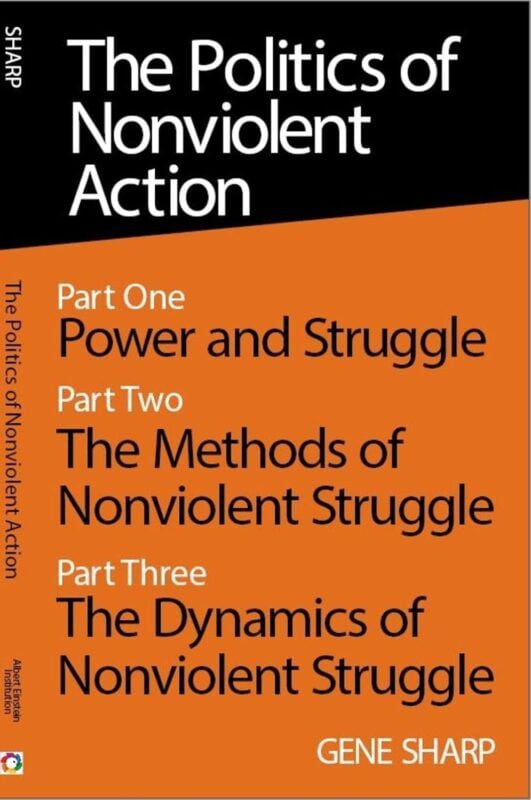
Gene Sharp presents a detailed analysis of nonviolent action in his landmark work The Politics of Nonviolent Action, articulating a strategic and operational approach to political conflict without physical violence. Drawing from diverse historical episodes and extensive theoretical frameworks, Sharp demonstrates how nonviolent struggle functions as a powerful technique of social and political change rooted in the dynamics of power and consent.
The Foundation of Political Power
Power originates from identifiable, renewable sources: authority, human cooperation, skills, knowledge, resources, and sanctions. Each of these elements depends on the active consent of individuals and institutions within a society. Sharp argues that rulers do not possess power intrinsically; they wield power only as long as they maintain access to these sources. When citizens withdraw their cooperation, the structural integrity of a regime deteriorates. Authority collapses when people refuse to recognize it. Institutions stall when personnel disengage from their roles. Power depletes when its social fuel is withheld.
Obedience as a Strategic Lever
Obedience emerges from a constellation of motives—habit, fear, moral duty, interest, identification with rulers, or apathy. Nonviolent action exploits this structure by disrupting the routine of submission. Sharp traces how this interruption triggers systemic dislocation in political authority. When participants disengage—whether through strikes, boycotts, or civil disobedience—they force governing systems to confront their dependence on popular compliance. This strategy does not rely on persuasion but on coordinated disengagement. The aim is not to appeal to power but to negate its functional mechanisms.
Classification of Methods
Sharp categorizes nonviolent methods into protest and persuasion, noncooperation, and intervention. Protest includes symbolic actions such as marches, vigils, and displays. Noncooperation encompasses social, economic, and political withdrawal—from boycotts to strikes to refusal of allegiance. Intervention targets systemic disruption, using fasts, sit-ins, or alternative institutions to forcibly insert new realities into old structures. These methods span nearly 200 specific techniques, offering a comprehensive arsenal to resisters.
Historical Patterns and Strategic Insight
Sharp excavates historical examples from diverse geopolitical and temporal contexts to extract strategic insight. The 1905 Russian Revolution, Berlin's 1920 general strike, the Norwegian teachers’ resistance to Nazification, the Montgomery bus boycott, and the Prague Spring in 1968 provide case studies that reveal how nonviolent movements operate under pressure. These episodes display the capacity of ordinary people, through strategic defiance and endurance, to destabilize entrenched authority.
Mechanisms of Political Jiu-Jitsu
Repression often strengthens nonviolent movements. Sharp identifies a dynamic he calls “political jiu-jitsu,” where violent crackdowns backfire. When the state responds brutally to disciplined, unarmed defiance, observers—domestic and international—shift allegiance. This reaction undermines the legitimacy of the regime and fosters broader participation in resistance. Through this dynamic, repression fuels resilience, and the suffering of protesters becomes a rallying force.
The Process of Success
Sharp outlines three mechanisms of success: conversion, accommodation, and nonviolent coercion. Conversion occurs when opponents undergo genuine change in perspective. Accommodation involves compromise, often prompted by inconvenience or risk. Nonviolent coercion results when rulers find themselves unable to function, compelled to concede by sheer disintegration of control. These outcomes are not mutually exclusive. In successful campaigns, they often intersect.
Power Redistribution Through Action
Nonviolent struggle does more than dismantle power—it redistributes it. Participants gain self-confidence, organizational skills, and political insight. They develop collective identity and internal cohesion. This transformation redefines societal relationships, embedding a more decentralized model of power. Rather than relying on centralized enforcement, nonviolent systems cultivate distributed agency and civic responsibility. Participants do not simply win concessions; they redefine the locus of authority.
Preparation and Strategic Discipline
Victory in nonviolent struggle depends on preparation. Sharp emphasizes training, leadership, discipline, planning, and communication. Nonviolent campaigns require more than spontaneous outrage. They demand strategic focus, resource coordination, and tactical flexibility. Successful movements identify leverage points, develop phased escalation, and maintain internal coherence. Defeating repression requires discipline under provocation. Avoiding escalation into violence preserves legitimacy and strategic advantage.
Third-Party Dynamics and Internal Defections
Third-party perceptions shape outcomes. International observers, media, foreign governments, and neutral populations respond to how a struggle is conducted and suppressed. When repression intensifies, defections within the regime can emerge. Soldiers refuse orders. Bureaucrats stall. Civil servants disengage. These cracks weaken the ruling structure from within. Sharp shows that defection is not accidental—it grows when regimes lose credibility and resisters maintain moral discipline.
Applications in Defense and Governance
Nonviolent action offers a model not only for protest but for national defense and democratic governance. Sharp proposes civilian-based defense systems where populations resist occupation through noncooperation. He envisions institutions trained to undermine coups, deter dictatorship, and neutralize external aggression without armed conflict. This concept reconceives security in terms of societal resilience rather than military deterrence.
Toward a Constructive Program
Beyond protest, nonviolent action includes building parallel institutions. These constructive efforts create alternative economic systems, communication networks, educational bodies, and civic platforms. They do not wait for power to concede—they generate independent spaces of legitimacy. In doing so, they reduce reliance on the dominant system and increase autonomy. Sharp emphasizes that enduring change requires both resistance and construction.
Training for Struggle
Nonviolent effectiveness depends on preparation. Sharp urges investment in education, scenario planning, leadership development, and strategic foresight. Activists must understand the terrain of conflict, the psychology of obedience, and the principles of group dynamics. Skillful campaigns build networks before confrontation, maintain cohesion during repression, and consolidate gains after victory. Preparation distinguishes fleeting protest from durable transformation.
The Theory of Consent
Underlying the entire framework is Sharp’s theory of consent. Power derives from cooperation. Withdrawal of that cooperation destabilizes authority. This theory explains how unarmed populations dissolve regimes that appear invincible. It reveals how political power, when deprived of its social inputs, collapses under its own weight. Sharp provides not just a tactic, but a theory of governance rooted in participation and mutual accountability.
Discipline as Power
Discipline is the operational core of nonviolent action. Sharp insists that disciplined behavior in the face of provocation generates legitimacy, solidarity, and strategic leverage. Movements that fracture under pressure surrender their narrative. Movements that maintain coherence resist being defined by opponents. Discipline transforms vulnerability into strength, especially when the adversary relies on coercion.
Suffering as Mobilization
Self-inflicted suffering, including imprisonment, hunger strikes, and public exposure to brutality, can mobilize support. Sharp views suffering not as martyrdom but as communication. It sends a signal to observers about the injustice of the system and the integrity of the resister. This strategy carries risk and demands careful calibration. When deployed strategically, it accelerates legitimacy loss for the regime and galvanizes action from others.
Parallel Government as Strategic Apex
In its most advanced form, nonviolent action constructs dual sovereignty. When alternative institutions assume practical authority, the legitimacy of the regime erodes. Sharp presents cases where strikes, boycotts, and civil disobedience created vacuums filled by local councils, worker committees, or citizen assemblies. These parallel structures convert resistance into governance, and disobedience into reconstruction.
Reconceptualizing Conflict
Sharp’s work transforms how we understand conflict. He replaces destruction with disruption, dominance with diffusion, subjugation with strategy. Conflict, in this framework, becomes a contest of legitimacy, consent, and system dependence. Nonviolent struggle does not circumvent conflict—it engages it with precision and purpose.
Building Durable Power
Nonviolent action cultivates capacity, awareness, and agency among participants. Its legacy endures beyond specific campaigns. Movements that engage in this form of struggle often produce new civic leaders, organizations, and norms. These outcomes alter the political landscape, embedding participatory structures into the culture.
Strategic Relevance Today
In contexts of authoritarianism, occupation, and systemic injustice, Sharp’s framework provides a roadmap. It does not offer guarantees. It requires commitment, intelligence, and fortitude. But it equips resisters with tools to challenge domination through organized, constructive defiance. As movements across the world seek alternatives to armed conflict, this work remains foundational.
