The Secret Archives of the Vatican
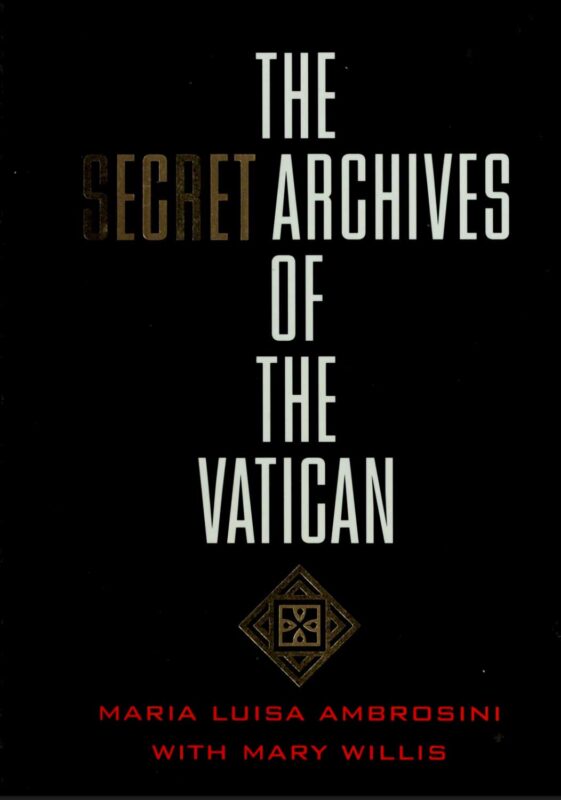
The Secret Archives of the Vatican by Maria Luisa Ambrosini and Mary Willis unveils the hidden architecture of one of history’s most enigmatic repositories of power, knowledge, and clerical memory. Situated deep within the fortified heart of Vatican City, these archives span over twenty-five miles of manuscripts, letters, decrees, and registers—each one a thread in the fabric of Western civilization.
The Architecture of Memory
Within these archives, structure encodes purpose. The classification system, divided by fondi—discrete archival bodies—reflects the operational domains of the Church and its diplomatic, doctrinal, and judicial arms. Registers of papal bulls, correspondence, council records, and trial transcripts align with the evolution of the Curia and the geopolitical shape of Europe. The architecture supports access only through layered permissions. Access begins not with a name or subject, but with comprehension of function: where did a particular ecclesiastic serve, what office issued the decree, which congregation reviewed the case?
The Secret Archives do not present themselves to the curious. They yield to the informed. Scholars cannot browse; they must know what to ask. This design, enforced through a gatekeeping system that includes a personal letter to the Pope and scrutiny by the archivist prefect, ensures that only serious researchers breach the corridors of classified knowledge.
The Origins Beneath the Obelisk
The roots of the archive run through Trastevere and the palaces of pagan Rome. As Ambrosini recounts, the early Church nested itself in Jewish neighborhoods and merchant quarters, accumulating letters, baptisms, and financial records alongside spiritual instruction. The epistles of Peter and Paul formed the primitive archive. These early texts passed hand to hand among believers who lacked cathedrals but possessed conviction.
The fires of Nero’s persecution reduced homes and congregations to ash, but the idea of record persisted. Even as Peter met his crucifixion and Paul his beheading, Church scribes began collecting what the emperors sought to extinguish. The archive emerged as survival, as continuity amid collapse.
Papacy and the Codification of Power
Papal letters became sovereign tools. With Innocent III in the twelfth century, the Vatican registers began their regular flow. These volumes, massive in scale and scope, preserve the diplomatic and doctrinal voice of the Holy See. Every negotiation, absolution, indulgence, and excommunication entered this papal ledger. Ambrosini opens them in the reading room: parchment thick as bark, ink faded to golden tones, marginalia sketched by bored clerks or ideologically driven scribes.
Within this bureaucratic body, power materializes as handwriting. The registers disclose the operational range of the papacy as it governed a transnational empire of belief. Through them, canon law took shape, discipline reached across kingdoms, and heresy investigations gained procedural rigor.
The Room of Parchments and the Stains of Empire
Fungus consumes some of these documents. Purple blotches stain scrolls once vibrant with imperial seals. In the Hall of the Parchments, science has failed to halt decay. The mildew of time warns of knowledge slipping toward oblivion. This loss is material, not just historical. Letters from Queen Christina of Sweden and Mary Stuart—each a monument to religious identity and monarchical desperation—lie under threat.
Each document carries intent. Christina’s abdication, sealed 305 times, represents a woman’s defiance and conversion. Mary Stuart’s letter, trembling in stroke, embodies a queen’s last theological testament. These letters are not relics. They are acts, preserved in their final breath.
The Avvisi and the Invisible Press
The newsletters—avvisi—emerge as one of the book’s revelations. These hand-copied sheets of gossip, politics, and espionage form the Vatican’s unofficial media network. From 1565 onward, cardinals read what they officially condemned. These documents recorded rumors, ambassadorial whispers, ship manifests, and market crashes. They were alive with the rhythm of cities and the mood of courts.
This archive of perception shaped how Rome viewed Europe. The avvisi rendered popes less isolated, more omniscient. By absorbing unofficial voices, the Church became the world’s best-informed state.
The Deep Structure of Vatican Intelligence
The Miscellanea and Instrumenta Miscellanea fondi hold the errant documents that escape other categories. Reports of inquisitions, letters from missionaries, banking documents, and coded correspondence lie interleaved. No clear order prevails. The fondi represent the overflow of a system built for coherence but overtaken by volume and circumstance.
The Secret Archives store intelligence as much as theology. They contain field reports from nuncios, evaluations of monarchs, the political atmospherics of royal courts, and firsthand accounts of rebellions. These materials fed strategic decisions about canonizations, crusades, and papal alliances. The Church watched the world and filed what it saw.
Trial Records and the Archives of Scandal
Documents of Beatrice Cenci’s case, of cardinal family scandals, of noble assassinations and heretical seductions populate the archives with drama. These are the underside of sainthood and dogma—the friction of power against passion. Ambrosini describes how trials for annulment in the Sacred Rota reveal intimate details of married life in a Catholic age. Testimonies read like psychological portraits. Requests for dispensations, challenges to legitimacy, and confessions of desire become embedded in ecclesiastical record.
The Archive absorbs sin to refine doctrine. It records error not to eliminate it, but to classify it. In this bureaucratic memory, vice becomes evidence.
The Archives as Political Instrument
Napoleon looted the Archive in pursuit of a centralized European intelligence system. Nearly 2,000 registers disappeared in the French occupation, many sold off as scrap parchment. This attempt to centralize papal intelligence into imperial control failed in logistics but confirmed the value of the records. They were not static histories. They were contemporary leverage.
The political value of documents remains evident in the post-Napoleonic secrecy. While the Vatican opened the Archives to scholars in 1881, large sections remain sealed under the hundred-year rule. Other areas, such as beatification records, are closed indefinitely unless special permission is granted. The Archives function both as a historical resource and as a strategic vault.
Scholarship and Obfuscation
Ambrosini emphasizes the practical limits of research. The indexes remain incomplete. Many documents lack categorization. Some fondi still await inventory. The Archive is a city half-dug. Each researcher pursues clues rather than conclusions, moving through volumes that may not yield their contents even after weeks of labor. Indexes, handwritten and coded, resist automation.
This friction protects the Archive from superficial interpretation. It forces method. It rewards persistence. It sustains the mystery of potential discovery, the seduction of the unknown.
The Tower of the Winds and the View of Eternity
At the summit of the Archive, the Tower of the Winds houses the Room of the Meridian, once used for astronomical calculations. Here the Gregorian calendar was devised. The walls display frescoes of ancient seasons and blowing gods. A slit admits light that marks the sun’s passage, orienting the zodiac on the floor. Time here becomes legible.
Beneath this tower lie the accumulated fragments of ten centuries of faith, governance, struggle, and interpretation. The Archive does not end. It accumulates. It swells with the documentary gravity of a civilization that built its continuity on belief in written word and preserved judgment.
Why does a civilization build such a repository? What compels an institution to document every act, thought, petition, failure, and reconciliation? The Secret Archives function not only as a memory but as an assertion: that the Word governs time, that documentation anchors divine authority, that history bends to those who write it.
Within this labyrinth of parchment and bound leather, the Church retains its deepest grammar. Doctrine may change. Structures may reform. But the Archive records it all, without deletion, without apology.
