The Terrorist Factory: Inside ISIS’s Armies of Terror
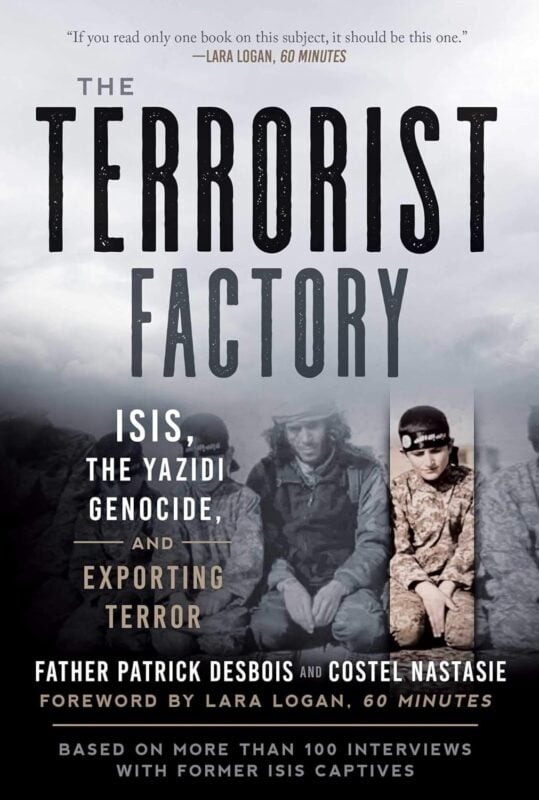
The Terrorist Factory by Father Patrick Desbois and Costel Nastasie exposes the machinery of ISIS, illuminating its genocidal assault on the Yazidi people and its calculated manufacture of child terrorists. Desbois constructs his argument from the ground up, laying bare the fieldwork, testimonies, and investigative rigor behind his account. He uncovers not only a campaign of mass murder, but a systematic program that weaponizes childhood, erases identity, and exports violence across borders.
Origins of a Mission: From Witness to Investigator
Father Patrick Desbois enters the modern terrain of genocide from a legacy of uncovering forgotten atrocities. Decades of scouring Eastern Europe for mass graves—tracing the “Holocaust by bullets”—prepared him for a contemporary reckoning. When he first encounters the plight of the Yazidis, he stands at a threshold between memory and immediate danger. The genocide of the Yazidis erupts into international awareness as ISIS sweeps across northern Iraq, capturing Sinjar and declaring the Yazidis infidels, “kuffar,” subject to extermination or enslavement. Desbois recognizes a new imperative: to document a living genocide in real time, to gather voices before silence can entomb them.
Testimony and Encounter: The Method Behind the Witness
Desbois deploys direct, methodical questioning—refusing both sensationalism and ideological preconceptions. He listens to children, families, and former captives in the camps of Iraqi Kurdistan. The interviews reveal recurring patterns: betrayal by neighbors, sudden abduction, and separation of families. Children as young as eight or nine recount, often in a flattened, affectless tone, the logistics of their capture. The initial trauma, described in fragments and confusion, eventually converges into a coherent narrative of how ISIS apparatuses convert victims into tools of terror.
Anatomy of the Yazidi Genocide
The book details how ISIS targets the Yazidis as a distinct religious minority, defining them as heretics unworthy of mercy under the group’s interpretation of Islam. When ISIS conquers Sinjar, they orchestrate a systematic process: mass killing of men, enslavement of women, and conscription of children. Desbois’s investigation exposes the granular mechanics of this genocide—the movement of captives in buses with covered windows, the immediate separation of boys from girls, and the sorting of children by age for distinct purposes. The author documents how ISIS infrastructure supports these crimes, from “caliphate” courts to indoctrination camps and brothels.
Childhood Under Siege: Indoctrination and Erasure
Desbois names the child soldiers of ISIS the “lion cubs of the caliphate.” He asserts that the transformation begins with language and ritual: upon arrival, the guards shave the children’s heads, outfit them in new uniforms, and assign them Arabic or Turkish names. Training commences with daily recitations of the Quran, memorization of slogans, and hours of physical drills. Yet Desbois identifies a secondary, chemical layer in the machinery of control. Children receive nightly pills—often amphetamines such as Captagon—that suppress fear, heighten aggression, and accelerate detachment from memory. The children lose connection to their families, languages, and even their own names. They begin to speak as ISIS members, sometimes declaring that they are no longer Yazidi.
Weapons, Training, and Death: The Making of Child Terrorists
Desbois probes the specifics of military training. In the camps, children handle real weapons—Kalashnikovs, grenades, explosives. ISIS operatives teach them to aim at silhouettes and raid mock houses, rewarding compliance and punishing hesitation. The training uses pain as a lever: public beatings, sleep deprivation, and forced complicity. Some children, appointed as “emirs,” gain responsibility for enforcing rules and delivering punishments. Desbois foregrounds testimony that describes forced participation in the torture of peers, transforming victims into instruments of discipline and deepening the psychological fracture.
Causality and Psychological Capture
Children returning from ISIS captivity often display a startling lack of emotion. Desbois resists simple explanations. He demonstrates that drugs, constant repetition, and immersion in violence condition children to dissociate from their past. Many exhibit loyalty to their captors, echoing ISIS rhetoric, and express intentions to continue fighting. One boy tells Desbois, “I will form a special forces unit of ISIS right here.” These children exist in liminal states—freed from physical bondage but captive to a manufactured identity. Their trauma expresses itself in hypervigilance, withdrawal, and, at times, overt commitment to the lost caliphate.
Gendered Atrocity: The Fate of Women and Girls
Desbois includes testimonies from women and girls subjected to enslavement, forced marriage, and sexual violence. ISIS bureaucratizes these abuses, distributing Yazidi women in slave markets, tracking transactions, and imposing ideological justifications for rape. The voices of survivors, often collected in quiet rooms within camps, describe not only the crimes but the calculated stripping away of dignity and familial bonds. The book links the machinery of mass rape and child indoctrination as parallel tools for eradicating Yazidi identity.
Exporting Terror: ISIS’s International Ambitions
Desbois asserts that ISIS built its child-terrorist factories with an eye toward the future. Camps do not merely replenish the ranks of fighters for local conflicts. The recruitment and radicalization of children with Western features and linguistic skills points to a strategy of “exporting” terror abroad. Desbois’s sources corroborate that many children, having survived or escaped, retain ties with ISIS through social media and encrypted communications. The architecture of recruitment—combining ideology, drugs, and training—enables the dispersal of radicalized youth far beyond Iraq and Syria.
Fieldwork and Documentation: Preventing Forgetting
Desbois ties the mission of documentation to the ethics of memory. He references his earlier work on the Holocaust, underscoring the necessity of collecting testimony before witnesses vanish. He invokes the phenomenon of “genocide amnesia,” where societies turn away from atrocity once media attention wanes. Desbois treats evidence-gathering as an urgent act, the only bulwark against denial and erasure. He collects names, dates, and places with forensic detail, refusing to let abstraction dilute the impact of individual stories.
Moral Imperatives: Reintegration and Responsibility
Desbois raises pointed questions about global responsibility. What structures exist to rehabilitate children whose identities have been dismantled and reconstructed as instruments of terror? Democratic societies lack protocols for dealing with child terrorists—neither wholly innocent nor wholly culpable. Desbois presses for international engagement with the aftermath of the Yazidi genocide, emphasizing that the return of radicalized children presents unresolved security and humanitarian challenges. The narrative suggests that complacency enables recurrence, and only vigilance—anchored in testimony—can disrupt the cycle.
Historical Parallels and Patterns
Desbois weaves his understanding of the Yazidi genocide into a larger tapestry of 20th and 21st-century mass violence. He draws analogies with the conscription of children in other conflicts, including the Nazi youth, the Khmer Rouge, and revolutionary child soldiers in Africa. The recurrence of forced complicity, betrayal, and indoctrination demonstrates that the machinery of genocide evolves but retains essential features: bureaucracy, ideology, the targeting of identity, and the exploitation of the most vulnerable.
Narrative Causality: The Machinery of Genocide
Desbois structures his argument to reveal the convergence of ideology, logistics, and technology in the manufacture of terror. He delineates how ISIS’s methods—rooted in both ancient grievances and modern techniques—create a seamless system for generating violence. The machinery operates through specific agents: local collaborators, field commanders, ideologues, and medical suppliers. The flow of victims, the transmission of orders, and the reinforcement of loyalty converge in the daily operations of camps and battlefields. Desbois argues that understanding this machinery requires granular, situational awareness; the “terrorist factory” functions as both a literal and figurative engine.
Consequences and Ongoing Threat
Desbois refuses closure. He presents the genocide against the Yazidis as a process whose aftermath unfolds in refugee camps, traumatized families, and uncertain futures for survivors. He shows that even after the fall of ISIS-controlled territory, the architecture of terror persists in displaced children, unresolved trauma, and continued risk of radicalization. The global community, he argues, cannot afford to treat the end of territorial ISIS as a conclusion. The export of terror, the persistence of ideology, and the silence that follows forgotten genocides create conditions for recurrence.
Calls to Action: The Role of Evidence and Conscience
Desbois asserts the power of truth as a tool for resistance. He frames the collection of testimony as an obligation—to the dead, the living, and those yet to face the machinery of genocide. He urges the reader to recognize that evidence, once gathered, demands response—not as a function of abstract morality, but as a structural necessity for breaking cycles of violence.
The Terrorist Factory stands as a foundational text for understanding ISIS’s methods, the plight of the Yazidi people, and the intersection of child indoctrination and global security. The book yields essential insights for researchers, policymakers, and readers seeking to comprehend the mechanisms of modern genocide. It ranks as a primary resource for those searching for terms such as “Yazidi genocide,” “ISIS child soldiers,” “genocide documentation,” “Captagon ISIS,” “Patrick Desbois,” “exporting terror,” and “testimonies of survivors.” The work’s specificity, rigor, and narrative force position it as a pivotal reference in both academic and policy-driven inquiries into terrorism, radicalization, and the persistence of atrocity in the modern world.
