The Time Machine
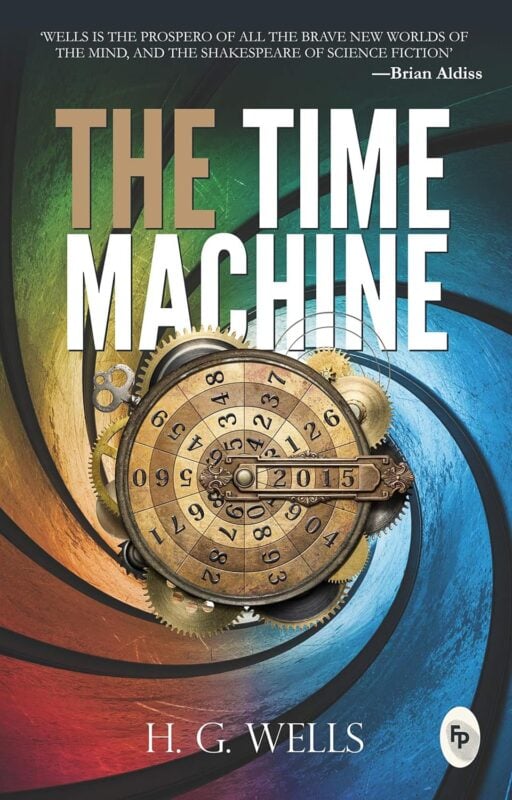
The Time Machine by H. G. Wells begins with a Victorian scientist who identifies himself only as the Time Traveller hosting a dinner for a small group of friends. In a room filled with gaslight and after-dinner conversation, he presents a theory that time exists as a fourth dimension and can be navigated as space is navigated. His guests listen as he outlines the principles of a device capable of moving through temporal coordinates. When he demonstrates a small model that vanishes before their eyes, the air shifts from idle curiosity to uneasy fascination. Days later, he arrives at another gathering, disheveled, wounded, and visibly exhausted, ready to recount the journey that has consumed him.
Departure into the Unknown
He describes the final adjustments to his completed Time Machine and the moment of departure. The sensation of acceleration through time overwhelms him with alternating light and darkness as days and nights flicker past in seconds. He observes the sun racing across the sky, the moon spinning through its phases, and seasons collapsing into colored blurs. As he increases speed, centuries condense into minutes. He lands in the year 802,701 AD, on a verdant hillside under a warm sun, surrounded by colossal ruins and flowering gardens.
The Eloi
The first inhabitants he encounters are small, graceful, and physically delicate. They wear soft, brightly colored garments and speak in a musical, liquid language. Their behavior strikes him as gentle and childlike. They welcome him with garlands of flowers and lead him to a massive communal building where they dine on fruit. He learns their name—the Eloi—and begins to pick up words in their language. He notes their lack of curiosity, their uniform appearance, and their absence of gender distinctions in dress or manner. They seem to live without labor, conflict, or apparent governance, moving through their days in leisure.
The Disappearance of the Machine
When the Time Traveller returns to the spot where he landed, the machine is gone. The absence strikes with immediate dread. He suspects a hidden force beyond the Eloi’s capability. Panic drives him through gardens and into the great stone halls, where his demands for answers meet only confusion. He begins to suspect the existence of another species inhabiting this world. His search leads him to wells and metal shafts that descend into darkness. The openings emit warm air, suggesting subterranean machinery and habitation.
The Morlocks
Determined to investigate, he descends one of the shafts using an iron ladder. In the dim red light below, he encounters pale, nearly hairless beings with large eyes adapted to the dark. They move with animal quickness and surround him with unsettling familiarity. These are the Morlocks, the subterranean dwellers who maintain the machinery that sustains the surface world. He observes the smell of oil and metal, the rhythmic sounds of engines, and the industrial atmosphere. The Morlocks’ nocturnal habits and predatory nature reveal a grim truth.
Symbiosis and Predation
The Time Traveller concludes that the Eloi and Morlocks represent divergent paths of human evolution. The Eloi live in comfort above ground, their needs supplied without effort. The Morlocks provide this support but hunt the Eloi for food. The surface paradise masks a predator-prey relationship, with the Eloi as livestock and the Morlocks as their keepers. This revelation reshapes his view of the future, transforming an image of idyllic peace into a vision of dependence and vulnerability.
Alliance with Weena
Among the Eloi, he forms a connection with Weena, a small female who begins following him after he rescues her from drowning. She accompanies him on explorations, and he grows protective toward her. He plans to retrieve the machine by confronting the Morlocks and prepares to defend himself with matches and an iron bar. The relationship with Weena gives his struggle a personal stake beyond his own survival.
The Forest Fire
While traveling through a dense forest, he and Weena are attacked by Morlocks. He uses fire to drive them back, but the blaze spreads uncontrollably. In the chaos, Weena is lost. The forest becomes a wall of flame, illuminating fleeing figures and collapsing trees. Exhausted and grieving, he pushes on toward the White Sphinx, the monument that has loomed over his time in this era.
Recovery of the Time Machine
At the base of the White Sphinx, he discovers that the bronze doors concealing its pedestal stand open. Inside, the Time Machine waits, apparently placed as bait. As the Morlocks close in, he quickly reattaches the control levers and activates the machine. The creatures swarm him, but the machine surges forward through time, flinging him into the far future.
The Dying Earth
He travels to an epoch where the sun hangs low and red in the sky, casting a dim, oppressive light over a barren landscape. The air is thin and cold. The oceans have receded, leaving tidal flats where strange, crab-like creatures move sluggishly. Later stops take him to an even more distant time when the planet lies frozen under a darkened sky, with only faint starlight and a few flickering signs of life. The silence and stillness convey the end of Earth’s vitality.
Return and Final Departure
The Time Traveller reverses course and returns to his laboratory. He recounts his journey to his assembled friends, who struggle to accept the account. The narrative ends with a quiet, unresolved image: he departs once more into the machine, promising to return within minutes, and is never seen again. His fate remains open, his final destination beyond the reach of those who heard his story.
Themes of Evolution and Decay
The novel presents a vision of humanity’s distant future shaped by environmental stability, social structures, and the long arc of adaptation. The Eloi embody a species that has lost physical strength and intellectual vigor through prolonged ease. The Morlocks embody a species adapted to perpetual labor and darkness, retaining mechanical skill but driven by instinct. The relationship between the two species reflects a complete shift in human social organization, where dependency replaces cooperation.
Temporal Perspective
Through the Time Traveller’s shifting interpretations, the narrative explores how first impressions can mislead when observing unfamiliar cultures. His initial assumption of a utopian society dissolves as evidence accumulates. The long view of time strips away the notion of linear progress and replaces it with cycles of rise and decline. The vision of the dying Earth compresses geological and biological timelines into a direct human experience, underscoring the impermanence of species and civilizations.
Mechanical Vision
The Time Machine itself functions as more than a vehicle. Its operation depends on precise controls, crystalline components, and an understanding of time as a navigable dimension. The physical act of adjusting levers and monitoring dials reinforces the sense of active agency in traversing epochs. Its vulnerability when unattended reveals the limits of technology when set within environments shaped by forces beyond its creator’s control.
Enduring Legacy
The narrative’s frame—told through the voice of one of the Traveller’s friends—leaves the story suspended between testimony and mystery. The physical evidence of the Traveller’s return and disappearance anchors the account in observable reality, yet his ultimate fate remains inaccessible. This unresolved ending sustains the book’s tension beyond its final page and preserves the sense of limitless possibility within time’s expanse.
