They Were White and They Were Slaves: The Untold History of the Enslavement of Whites in Early America
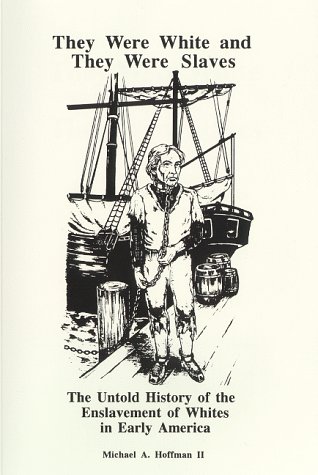
They Were White and They Were Slaves: The Untold History of the Enslavement of Whites in Early America by Michael A. Hoffman II uncovers a rarely discussed saga of mass exploitation, social engineering, and forced labor shaping the destiny of millions across centuries. Hoffman, a prominent independent historian, delivers a compelling account of white bondage that traverses ancient civilizations, medieval power struggles, and the industrial transformation of the West, culminating in the systematic enslavement and commodification of poor whites in early America. The book offers precise historical research, detailed primary sources, and analytical depth, challenging established narratives about slavery and its impact on Western society.
Origins of the Term and Practice
The origins of slavery as an institution reach into the heart of European history, where Greeks, Romans, and subsequent empires institutionalized the mass enslavement of their own people. The term “slave” derives from “Slav,” denoting the vast numbers of Eastern Europeans trafficked and subjected to bondage through the Middle Ages. Aristotle classified these people as living tools, their humanity denied and their value measured by their capacity for labor and obedience. Roman law confirmed this dehumanization, prescribing owners absolute authority, even to the point of death, over their white slaves.
Arabs, Vikings, and the Transcontinental Slave Trade
Centuries of transcontinental commerce entrenched white slavery in global trade. Arab merchants fueled demand for white slaves across North Africa and the Middle East, sourcing vast numbers from European markets. Merchants in Rouen and Venice orchestrated this traffic, exchanging timber and iron for living captives. Slavic, Irish, and Finnish populations became prized commodities, routed through Caspian and Black Sea networks. Muslim scholars codified the subjugation of white eunuchs, praising their utility and docility. Castration, mutilation, and sexual exploitation marked the fate of thousands, while attempted escape typically resulted in mutilation or execution.
Viking expansion further intensified the capture and sale of white slaves. Norse raids swept through the British Isles and Ireland, seizing tens of thousands and delivering them to the harems and galleys of Muslim Spain and beyond. The Viking slave trade structured regional economies, with Icelandic literature and archeological records testifying to mass infanticide and murder of slave offspring.
The Social and Legal Foundations of Enslavement
Feudal Europe generated a political and economic structure where the poor lost land, rights, and agency. The Magna Carta signaled a legal revolution empowering lords over the yeomanry, whose dispossession accelerated through enclosure acts and economic centralization. The collapse of customary landholding rights produced a vast underclass forced into dependency, pauperism, and labor without bargaining power.
In England and Scotland, punitive legal codes criminalized minor offenses, channeling the destitute into servitude and death. The Waltham Act threatened hanging for petty theft, and courts consigned children as young as five to chemical factories and coal mines. Surplus poor endured workhouse incarceration, where death rates reached catastrophic levels—mortality among children in the St. Giles workhouse in London soared to 90 percent. Political economists such as Malthus and Ricardo theorized starvation as a mechanism for population control, rationalizing the elimination of the poor as necessary for social progress.
White Slavery in Colonial America
Colonial North America became a vast theater of forced migration and white enslavement. Merchants, ship captains, and colonial officials trafficked children, convicts, political prisoners, and the poor from Britain and Ireland to plantations and settlements throughout the New World. The legal language of the colonies often conflated white “servants” with slaves, codifying life-long bondage, sale, and hereditary servitude.
Testimonies, parliamentary debates, and colonial records confirm a relentless campaign of kidnapping, spiriting, and transportation. In 17th-century Barbados, estimates place the white slave population at over 20,000, forming the backbone of the sugar economy. English planters viewed these laborers as capital, interchangeable with livestock and subject to the same instruments of sale and discipline.
Indenture and Proto-Slavery
Indenture contracts offered the illusion of temporal limitation, yet abuses converted many white laborers into de facto chattel. Plantation records and wills routinely grouped English servants alongside Negroes, cattle, and goods, defining their value purely by market demand. Contracts could be sold, inherited, or broken at the discretion of the owner, reducing white workers to transferable property.
The Atlantic crossing decimated white cargoes through starvation, disease, and violence, as conditions below deck rivaled or surpassed those of the African Middle Passage. Survivors faced whippings, shackling, and forced labor from sunrise to sunset. Rebellion met with execution or extended sentences. Some records suggest that mortality rates among transported white children exceeded those of Black slaves.
Industrial Revolution and the Factory System
As British and American economies shifted, industrialization introduced a new epoch of forced labor. The factory system mobilized child workers from workhouses, orphanages, and the streets, compelling them to labor in textile mills, mines, and foundries for sixteen hours per day. Overseers deployed physical punishment, billy-rollers, and whips to maintain production.
Charles Dickens, William Dodd, and other contemporaries documented mass injury, mutilation, and death. Chimney-sweep apprenticeships, thinly disguised as opportunities, delivered boys as young as four into deadly flues, where death by suffocation, burns, or cancer became commonplace. Legislation to protect children met with resistance from landowners and factory interests, who valued property rights above human life.
Contemporary Apologia and Social Justification
Throughout the modern era, academics and reformers rationalized white slavery as an unfortunate necessity or even a benefit. Influential economists and historians defended the deprivation of children’s liberty on grounds of economic progress and social order. As philanthropic campaigns targeted Black slavery abroad, white suffering at home remained unaddressed by policy or public sympathy.
The book highlights figures such as Rev. Richard Oastler, who exposed the hypocrisy of English society, denouncing the zeal for abolition abroad while ignoring slavery in Yorkshire’s mills. English and American reformers, such as Theophilus Fisk, documented the continued use of white child labor in New England, observing that mill owners who agitated for abolition often employed thousands of white children in brutal conditions.
Dehumanization and Social Engineering
The dehumanization of the white poor involved systematic stigmatization. Laws required recipients of poor relief to wear a visible “P” for “pauper,” and authorities whipped those who disobeyed. The British elite engineered a hierarchy that placed landed interests above working-class existence, excluding millions from rights, suffrage, and property.
The white poor formed the raw material for social experiments—workhouses, factories, penal colonies—engineered by politicians and industrialists who sought to maximize labor supply and minimize social unrest. The industrial machine demanded bodies; surplus population fed its gears. Hunger, disease, and dispossession forced compliance, and legal innovation ensured a steady flow of children to meet production needs.
Race, Class, and Historical Amnesia
The prevailing narrative of slavery in the modern West often centers Black bondage as the singular tragedy of forced labor. Hoffman’s book insists that the scope and impact of white enslavement demand critical reconsideration. The English language itself encodes this history: “slave” emerges from “Slav,” and colonial documents refer repeatedly to whites as “slaves,” “merchandise,” and “perpetual servants.”
Societal elites suppressed the memory of white slavery through selective documentation and cultural amnesia. Contemporary histories softened the vocabulary, renaming slaves as “indentured servants” and rationalizing their suffering through economic or moral arguments. Memoirs, poems, and pamphlets by the enslaved themselves record the unvarnished truth: children sold, families broken, lives consumed for profit.
Material Consequences and Social Transformation
The forced migration and enslavement of whites structured the population, economy, and culture of the British Empire and colonial America. Sugar plantations in Barbados, tobacco fields in Virginia, and textile mills in Manchester all extracted wealth from the relentless labor of the poor. Legislators and industrialists used the rhetoric of mercy to justify factory slavery, workhouses, and transportation, declaring these alternatives a form of progress compared to starvation or idleness.
The commodification of labor forged a society built on transactional relationships, where human value hinged on productive capacity. The legal, economic, and ideological frameworks constructed during these centuries shaped modern attitudes toward poverty, class, and race.
Legacy and Modern Implications
They Were White and They Were Slaves compels readers to confront the structural origins of class stratification and systemic exploitation in Western society. The erasure of white bondage from popular consciousness distorts the history of both race and class, obscuring the true roots of industrialization, social hierarchy, and the evolution of human rights.
Hoffman’s analysis calls for honest recognition of the full spectrum of slavery and its aftermath. He documents a lineage of dispossession, violence, and engineered poverty whose echoes persist in modern social and economic systems. The suffering, resistance, and forgotten legacy of white slaves offer a foundation for reevaluating the principles of justice, equity, and historical memory.
