Tuxedo Park: A Wall Street Tycoon and the Secret Palace of Science That Changed the Course of World War II
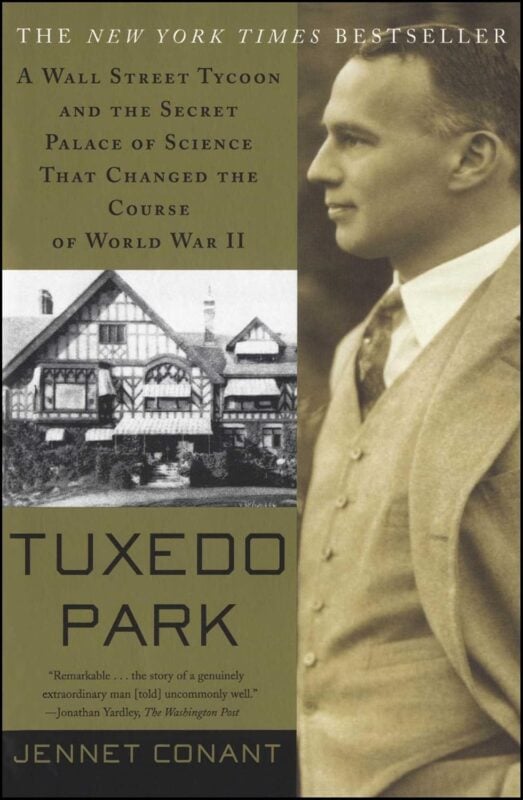
Tuxedo Park by Jennet Conant recounts the life of Alfred Lee Loomis, a financier whose private laboratory in a gated New York enclave became a crucible of scientific innovation during the Second World War. Conant unveils how Loomis mobilized his fortune, intellect, and influence to catalyze pivotal technological breakthroughs that altered the course of history. The narrative binds science, secrecy, and psychological depth through intersecting personal and political trajectories.
The Ascent of a Scientific Patron
Loomis amassed wealth through Wall Street acumen, predicting and escaping the 1929 crash. He redirected his capital toward scientific pursuits, erecting a state-of-the-art laboratory in Tuxedo Park. He recruited leading physicists and chemists, creating an oasis of experimentation where curiosity met capability. This lab achieved early success in exploring brain waves and time measurement, setting a foundation for later, war-driven objectives.
The Birthplace of American Radar
Loomis anticipated the critical role of radar in military defense. Before formal U.S. mobilization, he pivoted his lab toward radio wave technologies, collaborating with elite scientists and pushing forward microwave research. His initiative fostered tools essential to tracking enemy aircraft and submarines. He seeded the Rad Lab at MIT, influencing the deployment of radar in Allied operations and transforming battlefield strategy.
Tuxedo Park as Scientific Haven
Within the guarded walls of Tuxedo Park, Loomis created a community where leading minds lived, worked, and theorized together. This setting stripped away academic bureaucracy and embedded science into daily ritual. Luminaries such as Ernest Lawrence and George Kistiakowsky visited frequently. The laboratory operated with lavish hospitality but demanded results. Loomis encouraged risk and reward cycles of experimentation, fostering an ethos of high-stakes discovery.
William Richards and the Shadow of Genius
Jennet Conant introduces William Richards, a brilliant chemist entangled with Loomis’s world, whose suicide coincided with the publication of a roman à clef novel mirroring his experiences at the lab. This fictionalized account revealed private scientific efforts and hinted at classified wartime research. Richards’ second manuscript, a speculative story on nuclear weapons, alarmed top officials and prompted intervention by Conant’s grandfather, Harvard president James B. Conant.
Secrets, Science, and Surveillance
Richards’ unpublished story presaged atomic fission as a weapon. Conant traces the circulation of drafts through figures like Leo Szilard and Enrico Fermi, illustrating the informal networks that shaped early atomic discourse. Loomis remained silent, but his lab’s involvement in sensitive research grew deeper. The narrative exposes how fiction mirrored fact, and how speculative writing became a trigger for institutional censorship in a climate of rising global stakes.
The Conant Family Legacy and Historical Fracture
The author’s lineage crosses with her subject. James B. Conant helped oversee the Manhattan Project and enforced tight controls over nuclear narratives. His brother-in-law’s death and stories threatened these boundaries. The account integrates family trauma with national tension, framing the scientific rise against personal descent. Mental illness, familial silence, and institutional secrecy interlace, grounding the geopolitical in the psychological.
From Laboratory to War Room
Loomis’s transformation from financier to wartime strategist followed his absorption into Vannevar Bush’s elite circle. He advised on defense technologies, funded key innovations, and orchestrated civilian scientific mobilization before government action began. His influence extended into radar deployment and nuclear experimentation logistics. Conant details these maneuvers with precision, revealing how private initiative often preceded public command.
Collapse of the Gentleman Scientist Era
Loomis’s withdrawal from public life marks the end of an age. As government institutionalized wartime science, his Tuxedo Park lab shut down. The collaborative ethos faded under layers of classification and regulation. Conant captures this transition as both technological progress and cultural loss. Loomis's retreat into obscurity aligns with the national shift from amateur-led inquiry to militarized research infrastructures.
The Mythos of Control
Loomis controlled environments, outcomes, and appearances. He managed people with charm and authority, navigated financial systems with strategic foresight, and engaged scientific inquiry with rigorous discipline. His orchestration of laboratory life reflected a belief in directed experimentation—chaos constrained by precision. His later-life reclusion, precipitated by personal betrayal and institutional change, reveals the psychological cost of sustained control.
Legacy in the Shadows
Conant reclaims Loomis from historical omission. His contributions shaped radar warfare and accelerated nuclear science. Yet his name faded due to his aversion to publicity and his allies’ discretion. The book restores narrative weight to a figure who shaped scientific momentum through quiet force. By embedding Loomis in the intersecting domains of finance, intellect, and warfare, Conant frames his story as foundational to modern scientific mobilization.
Embedded Genius
Loomis’s life illustrates how embedded genius reshapes history. He integrated networks of capital, influence, and intellect into an operational framework that drove wartime breakthroughs. His laboratory model prefigured state-sponsored research institutions. His early radar work directly informed combat technologies. His strategic investments in people and ideas ensured technological superiority in critical moments.
What Does Private Power Enable?
Loomis’s case demonstrates the potential of private agency in shaping scientific destiny. His wealth insulated him from bureaucracy. His vision created a model of non-institutional innovation. His foresight placed tools of war into Allied hands. His influence realigned the course of global conflict. The question arises: where would modern defense technologies stand without his timely interventions?
Narrative Structure and Historical Design
Conant structures the biography as a convergence of personal drama, scientific advance, and geopolitical escalation. She uses the suicide of Richards as narrative inception, unfolding backward into elite familial networks and forward into world-shaping technologies. This arc intensifies with the approach of war, culminating in the transformation of Loomis from socialite scientist to invisible architect of victory.
Science at the Edge of Secrecy
Tuxedo Park operated within a tension between open inquiry and classified application. Loomis’s laboratory began as a site of intellectual freedom and transitioned into a node of wartime secrecy. Conant depicts this shift as a response to necessity, not ideology. The scientists’ collaboration persisted, but their context narrowed. Experimentation continued, but consequence loomed larger. This dynamic forged a new model of scientific practice under duress.
Strategic Timing as Scientific Catalyst
Loomis’s effectiveness depended on timing. He exited the market before the crash. He redirected resources toward radar before Pearl Harbor. He supported atomic experimentation before federal funding. Conant highlights these decisions as outcomes of pattern recognition and rapid execution. Loomis acted before others recognized urgency. His pattern of early intervention reshaped timelines.
The Structure of Innovation
Loomis institutionalized innovation through structure. His lab ran with precision. His invitations curated intellect. His funding removed barriers. His vision preempted governmental delay. Conant shows how these systems turned abstract possibility into operational reality. Under Loomis’s guidance, breakthroughs accelerated. Science advanced not through accident, but through constructed momentum.
Moral Contours of Patronage
Loomis’s story opens ethical questions. How does private patronage shape public consequence? Who governs the direction of discovery? What happens when secrecy shields achievement? Conant weaves these dilemmas through her narrative without imposing resolution. Loomis empowered science, yet dictated its frame. He advanced knowledge, yet withdrew documentation. His power shaped outcomes, his silence preserved ambiguity.
Echoes in Contemporary Research Models
Modern research ecosystems reflect Loomis’s legacy. Private labs, venture-backed innovation, and elite scientific clusters follow his blueprint. Conant’s biography resonates beyond its historical moment, offering insight into the origins of these structures. Loomis’s Tuxedo Park lives on in models where capital, autonomy, and genius intersect.
Science as Drama
Conant builds her narrative through dramatic interlacing of character, consequence, and discovery. Loomis emerges not as a passive supporter, but as a dynamic protagonist. His lab becomes a stage for scientific theater where results unfold amid risk, ambition, and urgency. Richards becomes a tragic figure in this world, his story tethered to the larger arcs of war and innovation.
Historical Recovery Through Personal Inquiry
Conant’s personal stake sharpens her historical recovery. Her family’s silence around Richards’ death drove her investigation. This emotional motive undergirds the biography’s depth. Her search for understanding becomes a search for coherence within a fractured legacy. Through this lens, Loomis’s lab, Richards’ stories, and WWII technologies converge in a singular narrative line.
Precision as Authority
Conant writes with precision that mirrors her subject’s methods. She assembles a documentary narrative where evidence, chronology, and testimony sustain momentum. The clarity of her account anchors the structural argument: that individuals, networks, and foresight catalyze transformation when aligned by vision and means.
End of an Epoch
Tuxedo Park signals the conclusion of a scientific epoch defined by elite autonomy and intellectual camaraderie. Loomis closed his lab, science entered state institutions, and war redefined research priorities. Conant captures this transition with elegiac finality. Loomis faded into private life, but his work shaped the world that followed. His laboratory's silence marked the rise of something louder, larger, and less personal.
