Who Killed John Lennon
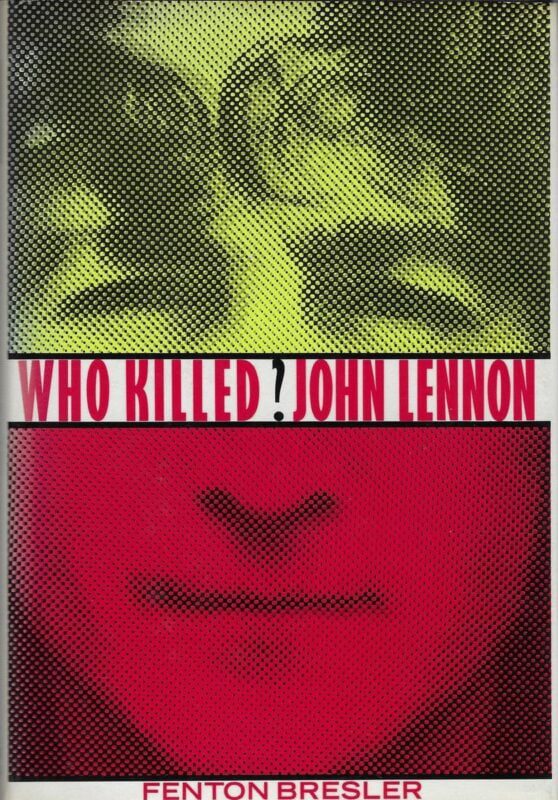
Who Killed John Lennon by Fenton S. Bresler advances a powerful investigation into the assassination of the most politically engaged member of the Beatles, asserting that Mark David Chapman did not act in a vacuum but emerged within a climate shaped by intelligence operations, surveillance, and covert campaigns against dissent. Bresler leverages his dual authority as barrister and journalist to explore the convergence of psychological conditioning, government interest in Lennon, and the deeper mechanics of American power during a pivotal political transition.
The Targeting of Lennon
John Lennon had become far more than a cultural icon. He embodied a public voice for antiwar activism, labor solidarity, and radical critique of authority. His FBI file extended to thousands of pages. His visa battles, surveillance, and pressure from government agencies demonstrate how seriously American institutions regarded his influence. At the time of his death, Lennon had reemerged from seclusion with new music and renewed activism. He had planned to participate in a labor rally in San Francisco, signaling a return to direct political engagement. These facts establish him as a figure whose capacity to mobilize mass protest intersected with the agenda of a newly elected Reagan administration.
Chapman and the YMCA Connection
Bresler scrutinizes Chapman’s background through his years of involvement with the YMCA. The organization, historically used by the CIA as a cover for recruitment and movement across borders, provides a framework through which Chapman’s travels and affiliations acquire significance. His six-year connection to the “Y” coincided with international placements, personal upheavals, and unexplained sources of financial support. Chapman’s transformation from a troubled young man to an individual capable of carrying out a high-profile killing emerges in this context. Bresler builds the case that such a trajectory does not arise solely from isolated psychology but can reflect external direction and conditioning.
Mind Control and Conditioning
The book develops its most unsettling dimension in its exploration of mind control research. Through extensive reference to documented CIA programs such as MKUltra and Operation Artichoke, Bresler establishes precedent for techniques of psychological manipulation designed to create programmable assassins. He cites evidence of experimentation with hypnosis, drug-induced states, and behavioral conditioning. Against this backdrop, Chapman’s behavior on the night of December 8, 1980 appears less like the impulsive act of a deranged fan and more like the execution of a program. His calm demeanor, tactical gun handling, and immediate confession without attempt to flee align with traits often described in studies of controlled operatives.
The Weapon and the Bullets
Attention to the mechanics of the murder underscores Bresler’s case. Chapman used a Charter Arms .38 Special, a weapon known for reliability and concealment. The ammunition consisted of hollow-point bullets that fragment on impact and maximize internal damage. The grouping of the shots was described as expert, producing confusion among morgue examiners attempting to identify entry wounds. These details elevate the act beyond random violence, suggesting training and precision. Bresler frames the choice of weaponry and technique as consistent with professional assassination standards.
The Absence of Proper Investigation
The police response to Lennon’s murder reveals another layer of concern. Investigators accepted Chapman’s guilt immediately, closing off deeper inquiries into motive, financing, or possible accomplices. Gloria Chapman, his wife, was never compelled to testify despite knowledge of his finances and travel. Authorities in Honolulu and Atlanta conducted only superficial background checks. No exploration of potential organizational connections occurred. Lieutenant Arthur O’Connor, who commanded detectives at the scene, later admitted Chapman appeared as if he had been programmed. This absence of a thorough inquiry strengthens Bresler’s assertion that authorities treated the crime as resolved before essential questions were asked.
Government Files and Suppression of Evidence
Through Freedom of Information Act requests, Bresler secured 217 pages from the FBI’s Lennon file, more than double what other researchers obtained. The contents reveal systematic monitoring of Lennon’s activities, his associations with antiwar leaders, and his potential as a mobilizing force. CIA releases were minimal, but the refusal itself demonstrates the depth of their involvement. The withholding of documents after Lennon’s death points toward the ongoing sensitivity of the case. Bresler interprets these gaps as indicative of classified operations intersecting with the assassination.
The Political Climate of 1980
Lennon’s death occurred during the transition from the Carter presidency to Ronald Reagan’s administration. Reagan’s campaign promised a hardline stance against perceived domestic subversion and international enemies. The election had produced anticipation of reactionary policies that would likely generate protest movements. Lennon, with his proven ability to draw mass demonstrations, represented a formidable counterweight. The timing of his murder—weeks before Reagan’s inauguration—meant the most visible and influential critic of militarism and repression would never mobilize. Bresler situates the killing within this context of preemptive political neutralization.
The Pattern of American Political Violence
Bresler contextualizes Lennon’s murder within a historical trajectory of American assassinations. From Lincoln and Kennedy to Martin Luther King Jr. and Robert Kennedy, the record demonstrates that political murders in the United States often carry broader implications than lone pathology. He emphasizes that only a minority of assassins were ever declared insane. Most were judged competent, their acts grounded in political motives or external influence. The “lone nut” explanation, widely applied in American history, functions as a narrative device rather than a conclusion grounded in evidence. Chapman’s case, when placed in this lineage, aligns with patterns of political elimination.
Aftermath and Continuing Silence
The aftermath of Lennon’s death saw global mourning, yet within official channels the event quickly dissipated into the framework of criminal closure. Chapman pleaded guilty, eliminating the possibility of a trial. Without courtroom testimony or cross-examination, the prosecution avoided exposure of contradictions. Media narratives centered on Chapman as a deranged fan, reinforcing public acceptance of the simplest story. Over time, Chapman’s silence, broken only in rare interviews, reinforced a sense of unresolved motive. Bresler maintains that the avoidance of judicial scrutiny preserved the integrity of a covert operation by suppressing avenues of inquiry.
Why This Case Still Matters
The significance of Bresler’s work lies in its refusal to accept surface explanations. The assassination of Lennon cannot be separated from the political culture of surveillance, covert intervention, and psychological experimentation documented throughout American history. The convergence of Lennon’s renewed activism, Chapman’s unexplained trajectory, CIA precedent in mind control, and the immediate foreclosure of investigation creates a compelling synthesis. The question emerges: who benefits from silencing a figure capable of galvanizing millions against militarism and state repression?
A Structured Case for Conspiracy
Bresler organizes his evidence with the discipline of legal reasoning. He establishes motive through Lennon’s activism, demonstrates means through Chapman’s skills and connections, and reveals opportunity through the political context of 1980. He undermines prosecution and defense theories by showing their contradictions and lack of factual support. He highlights investigative failures that appear deliberate rather than incidental. His case functions as both a legal brief and a journalistic exposé, pressing the reader to consider the assassination as an act of power rather than madness.
Enduring Legacy of the Investigation
Decades after Lennon’s death, Bresler’s book continues to provoke. Its detailed use of declassified files, interviews with police and legal officials, and grounding in documented intelligence history ensures its endurance as a reference. It stands as one of the most systematic challenges to the official story. By drawing together strands of covert history and the lived reality of Lennon’s life, Bresler demonstrates how cultural power intersects with political repression. The book asserts that Lennon’s murder must be understood as part of the architecture of control that shaped late twentieth-century America.
The Open Question
The narrative closes with a sense of unresolved accountability. Chapman remains imprisoned, Lennon remains silenced, and government agencies retain control over unreleased files. Bresler invites readers to consider the architecture of secrecy that prevents closure. The assassination of a musician becomes the assassination of a political force. The book leaves the pressing inquiry: when a state defines dissent as a threat, what limits exist to the measures taken against its most resonant voices?