The Colonel House Report of 1919
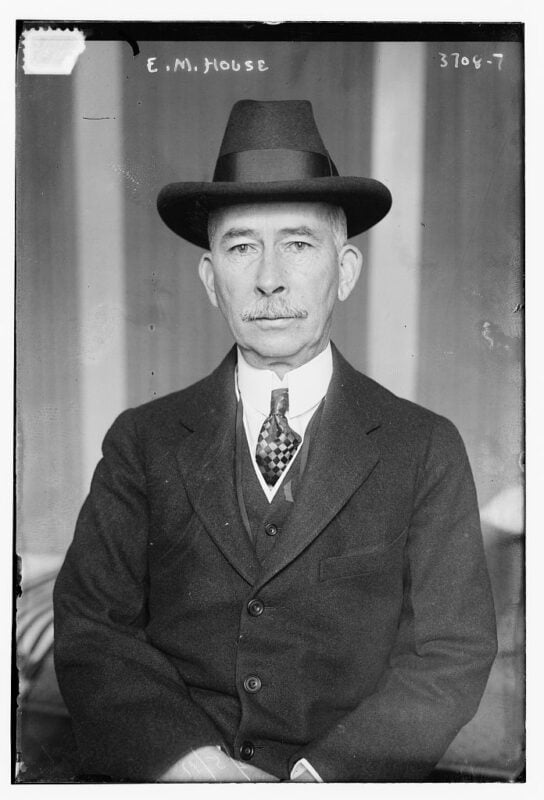
Colonel House Report (1919) by the British Secret Service presents a striking account of strategies that sought to bind the United States into the framework of imperial unity after the First World War. Congressman Thorkelson of Montana introduced the report to the Congressional Record, giving American audiences a glimpse into an alleged memorandum addressed to Prime Minister David Lloyd George. The report details financial influence, media manipulation, academic networks, and political maneuvers designed to align the United States with British global ambitions.
Imperial Unity through Education and Culture
The report emphasizes the shaping of American elite opinion through deliberate educational and cultural exchange. British-trained or British-born professors secured teaching positions at American universities. The Rhodes Scholarship program served as a pipeline to instill imperial loyalty among promising American students. The report highlights the insufficiency of scholarships and suggests new funding streams through Carnegie trustees to expand British influence.
Cultural organizations such as the Boy Scouts, YMCA, Red Cross, and various church-based charities appear as auxiliary channels of influence. These institutions fostered the sense of an international Anglo-American community under the guise of humanitarian cooperation. The Overseas Club, with its nearly 100,000 pledged members, functioned as a grassroots vehicle to instill imperial sentiment among Americans who might otherwise resist overt political appeals.
Media Control and Censorship
The report claims British strategists leveraged censorship, control of cable communications, and passport oversight to shape American press output during the war. By limiting American newspapers’ exposure to foreign perspectives, they effectively created an isolated news environment favorable to imperial narratives. British-born editors and reporters embedded in American outlets advanced imperial unity under the appearance of domestic journalism.
The Associated Press and other major syndicates, except for the Hearst chain, reportedly carried British perspectives as authoritative. The subtlety of this method mattered: writers with British origins framed their arguments as American voices addressing American readers, thereby blurring the line between national and foreign advocacy.
J. P. Morgan & Company as Financial Agents
One of the most provocative claims involves J. P. Morgan & Company acting as financial agents of Britain within the United States. The report outlines how Morgan bankers placed British bond issues in American markets, tying thousands of investors directly to the fortunes of the Empire. By creating this financial interdependence, the firm turned bondholders into defenders of imperial stability.
The report credits Morgan partners Thomas Lamont and Henry P. Davison with acquiring influential publications such as Harper’s Magazine and the New York Evening Post, extending financial influence into cultural production. Through advertising networks controlled by Morgan associates, editorial policy across a broad spectrum of American papers tilted toward support of British objectives. Their efforts at the Paris Peace Conference further reinforced the Anglo-American financial axis.
British Strategy and Resource Control
The report underscores British dominance of oil production as a central pillar of imperial strength. Control extended across Mexico, Canada, Persia, Rumania, and Armenia, while British firms sought to outmaneuver American competitors like Standard Oil. Plans included preferential treatment for ships fueled with British oil at imperial refueling stations, thereby ensuring commercial advantage on global sea routes.
This economic leverage dovetailed with a broader push to cancel Britain’s $4 billion war debt to the United States. British agents argued that Britain had fought America’s battles before American entry into the war, making debt cancellation a matter of fairness. Simultaneous campaigns pressed for fresh loans from American financiers to rebuild European markets, a maneuver that blurred cause and consequence for American policymakers.
The League of Nations as Imperial Mechanism
The League of Nations appears in the report not as a neutral forum but as an extension of the British Empire. Its structure, when examined through the report’s lens, transferred essential powers of national legislatures into the hands of an executive council controlled by imperial leaders. President Wilson’s sponsorship of the League is portrayed as an outcome of careful manipulation, designed to mask the surrender of sovereignty under the rhetoric of peace.
The report suggests Wilson’s devotion could be maintained only by appealing to his personal vanity and sense of heroism. Plans for ceremonies, honors, and royal receptions sought to bind him emotionally to the imperial cause. His presidency of the League, staged as a gesture of American leadership, would in practice secure the Crown’s global authority.
Wilson’s Personality and British Tactics
Detailed psychological profiling of Wilson appears throughout the report. It stresses his desire for flattery, his vindictive tendencies, and his inclination toward hero worship. British strategy involved satisfying these traits through controlled praise and symbolic gestures. Gifts of art, jewelry, and ceremonial honors were cataloged as instruments to sustain his loyalty.
The report even proposes staging the first session of the League in Washington to convince Americans of their central role. By allowing Americans to feel ownership, British planners sought to conceal the structural reality of imperial integration. Missions from European leaders, religious figures, and military heroes would stage-manage public enthusiasm for the League.
Propaganda Infrastructure
The report highlights a vast propaganda machine designed to naturalize the League of Nations in American life. Eight thousand preachers enlisted as advocates. Universities, civic organizations, and professional associations organized conferences and publications endorsing the League as the dawn of peace. Pamphlets distributed by the World’s Peace Foundation flooded the public sphere.
Motion picture studios prepared films dramatizing the League’s virtues. Newspapers, controlled directly or indirectly through advertising and editorial appointments, framed the League as both moral obligation and practical necessity. Churches observed a dedicated “League Sunday” to sacralize the project within religious life.
Mexico and Strategic Distraction
A section of the report explores Mexico as a strategic lever against the United States. A potential American war with Mexico would drain American resources, fracture domestic politics, and ensure British freedom of action elsewhere. At the same time, such a war would secure British influence over Mexican oil fields and force Americans to recognize their dependence on imperial naval protection in the Pacific against Japan.
Press campaigns emphasized alleged Mexican outrages to cultivate outrage in the American public. The report notes that apathy remained widespread, suggesting that only spectacular border incidents or atrocities could produce the desired mobilization.
Carnegie, Rhodes, and the Long Strategy
The report situates its program within the longer arc of imperial planning traced back to Cecil Rhodes’s 1877 will. Rhodes envisioned a secret society dedicated to the extension of British rule and the ultimate recovery of the United States into imperial structure. Andrew Carnegie emerges as his successor, using philanthropic foundations to shape American education and intellectual life.
Carnegie’s League to Enforce Peace and the affiliated League of Small Nations advanced the cause by embedding imperialist goals within the language of international order. Carnegie’s own writings explicitly predicted the eventual reunion of Britain and America as a political union.
Toward a British-American Union
The report closes with an assertion that Britain’s strategic objectives had nearly been fulfilled. Through financial integration, cultural control, media influence, and the League of Nations, the groundwork for reunion of the United States with the British Empire was in place. The final struggle would be over the American legislature’s independence. By transferring decisive powers into international structures dominated by imperial agents, British planners aimed to secure the “last great battle” for unity.
This vision framed the League not as a peacekeeping experiment but as a constitutional mechanism to align American governance with imperial sovereignty. The outcome promised a “British-American union,” fulfilling both Rhodes’s prophecy and Carnegie’s vision. The report positions this development as both inevitable and imminent, a culmination of decades of planning and wartime execution.
Structural Implications
Colonel House Report (1919) demonstrates how imperial planners perceived influence as a multilayered process encompassing education, media, finance, and politics. Each domain reinforced the others: professors shaped elite thought, financiers tied capital to imperial bonds, journalists controlled narratives, and politicians responded to orchestrated pressures. The cumulative effect presented American independence as a façade concealing deep integration into British strategy.
The document traces a web of actors from Morgan bankers to Carnegie trustees, from Wilson’s advisors to British oil magnates, describing a machinery of influence with global reach. Whether taken as fact or as political propaganda, the report crystallizes the anxieties of the postwar moment: the fear that America’s democratic sovereignty had been quietly redirected into an imperial design.
Enduring Significance
By presenting a narrative of British influence over America’s press, politics, and economy, the report continues to provoke debate. Its specificity—the names of bankers, professors, politicians, and cultural organizations—anchors it in the historical realities of 1919. The claims of manipulation and hidden coordination reflect both the ambitions of empire and the vulnerabilities of republics enmeshed in global war.
Colonel House Report (1919) functions as more than a record of its time. It reveals how great powers envisioned the fusion of finance, culture, and politics into a single strategy for dominance. It captures a vision of unity that sought to erase the distinction between empire and republic, presenting a future in which American independence merged into a broader Anglo-imperial system.