Francis Bacon
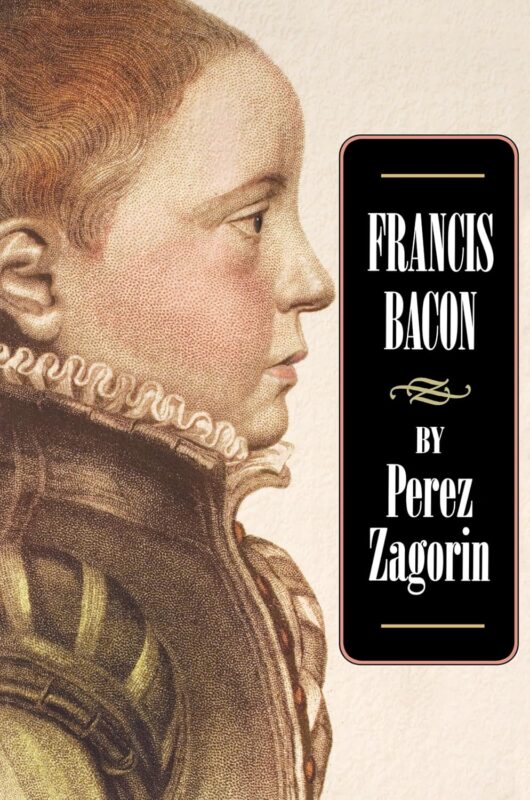
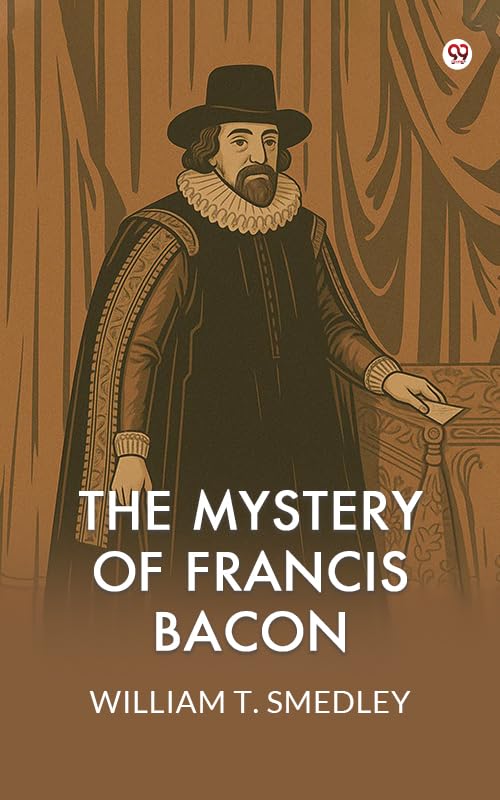
Francis Bacon by Perez Zagorin examines the intellectual formation, political career, and philosophical ambition of Francis Bacon within the decisive transformations of late Tudor and early Stuart England. Zagorin constructs a portrait of Bacon as a statesman of extraordinary ambition and a reformer of knowledge whose life fused the pressures of court politics with a visionary program for human advancement through science. The book establishes Bacon as a coherent thinker rather than a fragmented emblem of early modern empiricism, integrating biography, philosophy, and cultural history into a unified analytical structure.
The Making of a Statesman and Philosopher
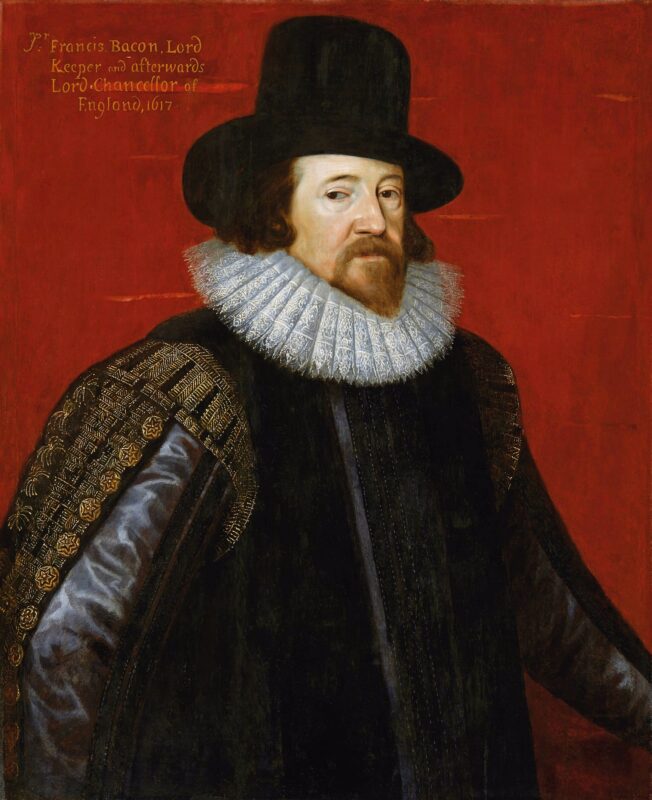
Francis Bacon emerged in a world of dynastic uncertainty, humanist education, and administrative reform. Born in 1561 into a family positioned at the heart of Elizabethan governance, he absorbed the languages of both politics and learning. Zagorin traces Bacon’s education at Trinity College, Cambridge, and Gray’s Inn as formative environments that impressed upon him the instability of scholastic philosophy and the practical cunning of legal reasoning. The early chapters situate Bacon’s service under Elizabeth I and later James I as an apprenticeship in the operations of monarchy and patronage. The court shaped Bacon’s sense that knowledge and power were inseparable instruments of governance. His political rise, culminating in the role of Lord Chancellor, carried both the grandeur and the fatal risks of royal service. Zagorin details Bacon’s impeachment for corruption in 1621 not as moral collapse but as a demonstration of the precarious alignment between intellectual ideal and political survival.
The Architecture of Knowledge
Bacon conceived philosophy as a vast architecture for the reorganization of human understanding. Zagorin elucidates the Instauratio Magna as the structural heart of Bacon’s enterprise—a six-part plan to rebuild the sciences from the foundations of method, observation, and collective inquiry. He reads the Novum Organum as a manual of intellectual reform whose aphorisms operate like philosophical instruments rather than abstract dicta. Bacon’s insistence on induction, experiment, and the elimination of “idols” represented an administrative model of thought. Knowledge advanced through organized labor, through the disciplined gathering of particulars and their arrangement into ordered series. Zagorin emphasizes that Bacon’s vision extended beyond epistemology. The project defined a social mission: the reconstitution of learning as a cooperative enterprise aimed at the relief of human life. Science, for Bacon, functioned as the moral economy of a new age, grounded in utility, progress, and civic beneficence.
Human Ambition and Divine Order
The tension between human aspiration and divine ordinance runs through Bacon’s writings. Zagorin explores this theological dimension with precision, showing how Bacon reconciled empirical inquiry with reverence for divine creation. The pursuit of knowledge, Bacon believed, fulfilled rather than violated the Creator’s intent. The Advancement of Learning declared that ignorance, not curiosity, corrupted the soul. Zagorin examines Bacon’s careful distinction between the “two books”—Scripture and Nature—and his claim that reading both correctly would restore harmony between faith and reason. The study of nature revealed the divine order imprinted upon the world, while theology disclosed the moral law governing human conduct. Bacon’s natural philosophy thus functioned as an extension of his ethical and religious commitments, integrating piety with pragmatic reform.
Political Thought and the Commonwealth of Learning
Bacon’s political writings—Essays, The New Atlantis, and his letters of counsel—extend the philosophical structure of his science into the realm of governance. Zagorin interprets these texts as expressions of a unified doctrine of prudence. The state, like nature, required methodical organization and measured reform. The Essays, in their lapidary compression, translate philosophical principles into rules of conduct for the administrator and counselor. The New Atlantis transforms these principles into utopian architecture: Salomon’s House embodies the institutional realization of Bacon’s vision for regulated, empirical inquiry serving the public good. Zagorin shows how Bacon’s politics derive from his intellectual method. Order, moderation, and utility govern both nature and the commonwealth. The philosopher’s ambition mirrors that of the ruler: to bring latent potential into disciplined operation.
The Fall and Rehabilitation
Bacon’s political downfall, his confession of taking gifts as Lord Chancellor, and his retreat into private study form the dramatic axis of his life. Zagorin reconstructs the events with archival rigor, describing the charges, the parliamentary proceedings, and the psychological cost of disgrace. Bacon accepted responsibility without protest, interpreting his punishment as providential correction. In his later years, freed from the machinery of office, he completed the Historia Naturalis et Experimentalis, conducted experiments on condensation and motion, and refined his philosophical system. Zagorin frames this period as Bacon’s spiritual and intellectual renewal. The loss of worldly authority clarified his lifelong conviction that genuine advancement lay in knowledge rather than favor.
Style and Method
Zagorin’s analysis privileges Bacon’s language as an active force in the creation of modern prose. The rhythm of Bacon’s aphorisms, their compression of moral insight and empirical assertion, produces a new intellectual style. The fusion of classical brevity and vernacular precision expresses the transition from humanist rhetoric to scientific exposition. Zagorin interprets Bacon’s stylistic economy as both aesthetic and epistemological: the form of the sentence mirrors the economy of method. Each aphorism functions as a miniature experiment, testing the boundaries between moral wisdom and empirical fact.
Bacon’s Legacy and the Transformation of Thought
Zagorin situates Bacon within the continuum of early modern intellectual history, tracing his influence on the Royal Society, on figures like Robert Boyle, and on the conceptual foundations of modern empiricism. Bacon’s method, reinterpreted by later generations, established the procedural ethics of scientific inquiry: observation, verification, and collective labor. Yet Zagorin insists that Bacon’s true legacy lies in the synthesis of intellect and governance. His philosophy envisioned institutions as engines of learning, designed to coordinate discovery across generations. The transformation of the world required organized intelligence, and Bacon supplied its charter. The modern project of research, administration, and progress unfolds as the realization of Bacon’s architectural vision.
The Moral Dimension of Knowledge
Zagorin restores the ethical weight of Bacon’s enterprise. Knowledge for Bacon bore responsibility; it demanded humility before nature and justice among men. The Great Instauration proposed not only a technical program but a moral reformation. The pursuit of truth required discipline, temperance, and collaboration. Zagorin underlines Bacon’s belief that intellectual advancement and moral integrity must proceed together. Science detached from virtue would degenerate into tyranny. Bacon’s insistence on charity and moderation emerges as the ethical foundation of his philosophy. The transformation of learning becomes inseparable from the cultivation of character.
The Scholar’s Architecture
Zagorin’s own method reflects the structure he attributes to Bacon. The book arranges biography, philosophy, and politics as interlocking systems, each illuminating the others. Detailed archival research supports close textual analysis, creating a narrative that progresses with cumulative logic. The prose moves with deliberate rhythm, allowing philosophical exposition to grow naturally from historical circumstance. Zagorin writes with controlled energy, balancing clarity and depth. His interpretation avoids simplification, preserving the density of Bacon’s ambition while rendering it accessible through precise exposition.
The Context of Early Modern England
Zagorin anchors Bacon’s thought in the institutional realities of late Renaissance England. The legal profession, the patronage networks of the court, and the emergent culture of print form the environment in which Bacon’s ideas took shape. The Inns of Court trained a generation of scholars who combined jurisprudence with rhetoric; Bacon’s intellectual formation drew on both. The expansion of the English monarchy under James I created new opportunities for administrative reform and new tensions between innovation and authority. Zagorin maps these pressures across Bacon’s writings, revealing how his philosophical project mirrored the structures of governance he served. Knowledge, like law, required order; discovery demanded institutions; reform proceeded through methodical articulation.
The Philosopher’s Ambition
Zagorin interprets Bacon’s ambition as both intellectual and civic. The philosopher sought to reform the entire apparatus of human inquiry. He envisioned a society where discovery replaced disputation, where experiment replaced commentary. The New Atlantis dramatized this future in the image of Salomon’s House, an institution that combined research, administration, and ethical regulation. Zagorin presents this ambition as neither utopian fantasy nor personal vanity but as a coherent response to the fragmentation of Renaissance learning. Bacon’s dream of progress was institutional, grounded in the possibility of organized human effort directed toward beneficence. Knowledge would become the engine of public welfare.
The Enduring Relevance of Bacon’s Vision
Zagorin concludes with the enduring vitality of Bacon’s thought. The modern world continues to inhabit the structures he imagined: the university laboratory, the state research bureau, the scientific academy. The language of progress, utility, and method flows from Bacon’s original articulation. Zagorin invites reflection on how Bacon’s integration of science, ethics, and politics defines the moral architecture of modernity. The philosopher’s faith in the redeeming power of knowledge remains the central challenge of the age. How should discovery serve humanity? What obligations follow from the expansion of power that Bacon foresaw? Zagorin’s analysis turns these questions into the enduring resonance of his subject.
Conclusion: The Unity of Life and Thought
Francis Bacon by Perez Zagorin stands as a definitive interpretation of a thinker whose life embodied the convergence of intellect and action. The book demonstrates that Bacon’s philosophy cannot be separated from his career, his faith, or his language. Zagorin restores coherence to a figure long divided between scientist, moralist, and courtier. Through disciplined analysis and historical acuity, he constructs a portrait of Bacon as the architect of a new human vocation—the mastery of nature guided by reason, ordered by method, and sanctified by the moral purpose of service. The study achieves a rare synthesis of historical scholarship and philosophical insight, reaffirming Bacon’s place at the origin of modern thought and illustrating the enduring power of his vision for the advancement of knowledge and the betterment of human life.