Our Partnership
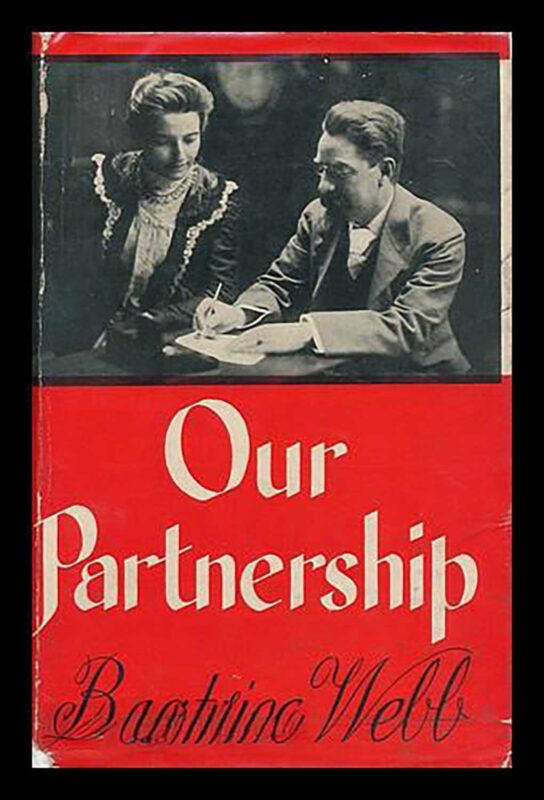
Our Partnership by Beatrice Webb chronicles the intertwined personal and public lives of Beatrice and Sidney Webb, mapping the origins, mechanics, and enduring significance of their unique intellectual and political collaboration. The narrative asserts the historical presence of two “second-rate minds but curiously complementary,” who shaped the methods and outcomes of British social reform between 1892 and 1911. In its progression from the circumstances of Sidney Webb’s family background to the formation of the couple’s philosophy and the detailed realities of research, administration, and reform, the book establishes a model of partnership that fueled innovation across trade unionism, education, local government, and national policy.
Genesis of a Social Partnership
Sidney Webb emerged from a lower-middle-class English environment in Kent and Essex, shaped by the practical decency and industriousness of traders, property-owners, and self-made public servants. His parents lacked wealth and status but imparted habits of public-spiritedness, thrift, and cultural independence. In this setting, Sidney absorbed a respect for service and a rejection of conspicuous ambition. The structure of family life, defined by mutual help and the avoidance of class rivalry, generated a distinctive moral temperament. The roots of Sidney’s intellectual drive appear, as Beatrice observes, inexplicable through inheritance, suggesting a physiological anomaly. His career advanced through modest beginnings as a public accountant and self-directed education in French and German, which opened doors to the civil service. Sidney’s formative context laid the groundwork for a lifelong preference for substantive contribution over visibility.
From these foundations, the partnership with Beatrice Potter arose. Beatrice brought her own heritage of cosmopolitan connections, intellectual curiosity, and an experiential understanding of poverty and industry. Before meeting Sidney, she investigated sweated labor in East London, developed methods of participant observation, and established connections with trade unionists, co-operators, and radical intellectuals. Together, Beatrice and Sidney acquired assets—an unearned income of £1,000 per year, shared health and youth, and an appetite for simplicity—that liberated them to choose research and public service as a vocation. Their marriage, grounded in mutual respect and the absence of children, generated a structure for sustained intellectual exchange and fieldwork. Their daily routines fused methodical investigation, lively discussion, and an emotional bond that fostered a sense of confidence and unity.
The Mechanics of Collaborative Research
Beatrice Webb describes a systematic division of labor within their partnership. Sidney developed techniques for rapid documentary analysis, statistical tabulation, and logical argumentation, producing organized sheafs of research material in immaculate handwriting. He built networks among journalists, government officials, and municipal administrators, especially as a leader in the Progressive Party of the London County Council. Beatrice specialized in gaining social access, deploying conversational skill, and collecting confidential information through interviews, participant observation, and friendship with workers’ leaders. Her fluency in navigating diverse social milieus—from the drawing rooms of bankers to the homes of Lancashire operatives—allowed her to conduct cross-examinations, obtain documents, and document the reactions of different social groups.
Their research interests converged on the structures and dynamics of British trade unionism. Both engaged in direct observation of Congresses, studied the internal life of unions, and published works such as The History of Trade Unionism (1894) and Industrial Democracy (1898). Through these efforts, they illuminated the internal mechanics, political ambitions, and shifting strategies of labor organizations at a time when trade unionism both shaped and responded to the demands of an industrial nation. The couple’s firsthand participation in events like the London Dock Strike of 1889 provided unique access to debates between “Old Unionists” and “New Unionists,” revealing the tensions between practical administrators and socialist idealists. Their ability to observe, record, and synthesize diverse viewpoints established their credibility as impartial investigators and practical reformers.
Philosophy of Life and Method
The Webbs designed a plan of life that placed scientific research and public service at its core. Both identified as scientists and socialists, convinced that progress demanded knowledge of social institutions and their transformation toward public service. The scientific method—observation, hypothesis, and verification—served as the foundation for their analysis of everything from trade unions to municipal governance. Secularism shaped their worldview, as they found meaning in the observable rather than the supernatural, yet Beatrice’s diaries expose a continual wrestling with the need for religious feeling, discipline, and a sense of the sacred in moral conduct. This tension infused their research with a persistent search for meaning beyond materialism, as Beatrice sought to reconcile scientific investigation with the quest for personal and collective holiness.
Their independence from financial necessity insulated their work from market pressures. Payment for articles or lectures became supplementary, enabling the couple to fund further research without compromising intellectual freedom. The absence of children further reinforced their capacity to dedicate time and resources to investigation and reform. They viewed writing, research, and public intervention as both vocation and sport, deriving satisfaction from the harmonious convergence of personal interest and public utility. The practical policy emerging from their studies championed regulated social service over anarchic profit-making, advancing arguments for collective control in the organization of production and distribution.
Fieldwork, Policy, and the Public Sphere
The partnership’s influence extended beyond academic research into the sphere of policy, institution-building, and advocacy. Sidney’s appointment to various governmental commissions and his chairmanship of the Technical Education Board of the London County Council created platforms for direct intervention in the shaping of London’s educational and social infrastructure. The founding of the London School of Economics became a major institutional legacy, promoting scientific social research and advanced instruction in economics, politics, and administration. The Webbs’ engagement in Fabian propaganda fueled debates over collectivism, public ownership, and the boundaries of democratic administration.
Beatrice’s diaries record encounters with leading trade unionists, political strategists, and activists. Her presence at Trade Union Congresses captured the competitive dynamics among old-guard officials, emerging socialists, and pragmatic administrators. She documented the practical mechanisms of lobbying, the consolidation of leadership, and the practical calculations involved in strikes, union formation, and legislative reform. Through direct observation, Beatrice identified the challenges facing the labor movement, from the parochialism and conservatism of established unions to the ambitions and limitations of socialist outsiders. These observations shaped the Webbs’ understanding of institutional evolution and their recommendations for reform.
Personal Dynamics and the Ethics of Partnership
The narrative of Our Partnership balances the public story with an intimate portrayal of married life. Beatrice reflects on the emotional and intellectual dimensions of their union, characterizing Sidney as a man of intellectual power, public spirit, and lack of personal vanity. Sidney preferred the role of the committee man, excelling at drafting, negotiation, and the orchestration of collective decision-making. He avoided personal publicity and focused on the substantive business of research and administration. Beatrice, by contrast, thrived in social interaction, bringing humor, insight, and emotional vitality to their partnership.
The couple’s approach to decision-making relied on a disciplined adherence to shared plans and the cultivation of common tastes, habits, and values. Beatrice identified the pursuit of reasoned action—rather than impulsive self-expression—as the structural basis for marital happiness and productive collaboration. Their routines included regular walks, mutual support in adversity, and the cultivation of gratitude for their good fortune. The absence of children reinforced the intensity of their focus on shared work and the daily exchange of ideas, reinforcing their commitment to public service.
Philosophical Inquiry and the Challenge of Meaning
Beatrice Webb’s diaries introduce a persistent theme of philosophical inquiry. She interrogated the boundaries of scientific method, the necessity of religious emotion, and the possibility of synthesizing the discipline of science with the moral force of religion. She questioned whether a society could sustain ethical progress without rituals, discipline, and a communion of the faithful. The search for a code of conduct rooted in both scientific inquiry and spiritual conviction generated an ongoing tension in her narrative. Beatrice sought evidence in history for the relationship between religious mysticism and moral development, recognizing the risk of fanaticism yet affirming the potential for science to become an instrument of social transformation.
Her engagement with Soviet Communism, described late in her life, stemmed from admiration for the passionate, religious faith of its founders in the brotherhood of man, and their deliberate deployment of science in pursuit of social justice. She recognized the dangers of intolerance but emphasized the structural parallels between religious and political movements in their capacity to generate commitment and discipline. Through this analysis, Beatrice underscored the necessity of aligning scientific mind with religious life, positing that the solution to the problem of man’s relation to the universe and his fellows would emerge from this synthesis.
Enduring Legacy and Influence
Our Partnership closes with a reflection on the enduring legacy of the Webbs’ work. Beatrice acknowledges the incomplete nature of the narrative but insists on the historical impact of their combined efforts. Their partnership, grounded in public spirit, personal disinterestedness, and tenacity of purpose, produced a steady influence on British social legislation and administrative reform. Their contributions advanced new forms of social research, institutional design, and public service that became reference points for future generations. The model of collaboration established in their marriage provided a framework for integrating scientific investigation, practical policy, and ethical commitment.
The Webbs’ approach to the challenges of social reform—empirical, deliberate, and responsive to the complexities of institutional life—remains a central feature of the book’s legacy. Their partnership demonstrates how disciplined inquiry, shared values, and practical engagement can generate transformative effects in both personal and public domains. The convergence of intellectual curiosity, moral conviction, and administrative skill within a single partnership became a generative force in the creation of modern British society.
In its documentation of daily routines, philosophical inquiries, political struggles, and institutional triumphs, Our Partnership by Beatrice Webb articulates a vision of collaborative achievement. The book’s structure, rooted in diary extracts and retrospective analysis, immerses the reader in the lived experience of social investigation and reform. The unfolding narrative affirms the power of partnership—within marriage and public life—to shape historical outcomes and to foster the sustained pursuit of knowledge, justice, and communal well-being. The Webbs’ example continues to inspire those who seek to combine rigorous research with the demands of public responsibility and ethical engagement.