The Empire on which the Black Sun Never Set: The Birth of International Fascism and Anglo-American Foreign Policy
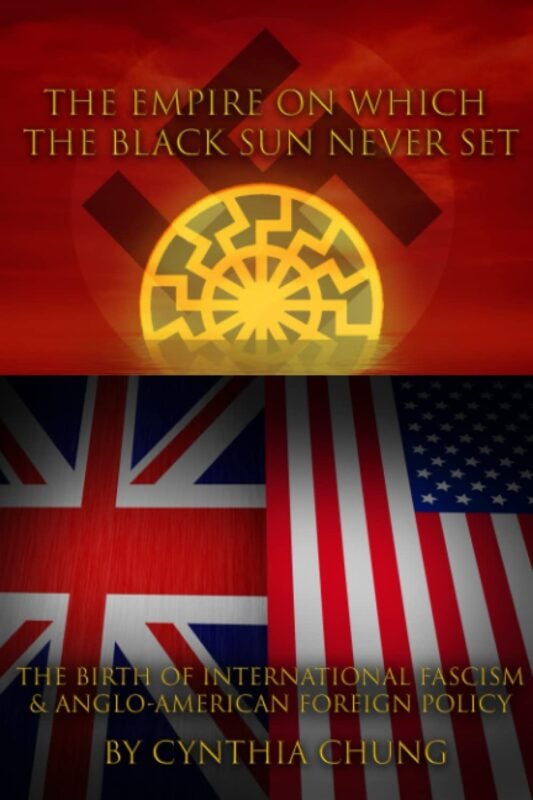
The Empire on Which the Black Sun Never Set by Cynthia Chung excavates the historical undercurrents of Anglo-American geopolitical strategies that harnessed and institutionalized international fascism from the early twentieth century through the Cold War and beyond. It reveals a network of ideologues, intelligence operations, and transnational elites that coordinated in secret to redirect the legacy of Nazism into Western power structures. Across military alliances, covert warfare, financial architectures, and psychological operations, this empire recalibrated the ideological and operational frameworks of fascism into new forms of statecraft.
The British Genesis of Modern Fascism
Cynthia Chung opens with a deep exploration of the British establishment’s affinity for fascist models in the interwar period. Figures such as David Lloyd George, Winston Churchill, and Oswald Mosley emerge not as fringe actors, but as influential architects of an imperialist, technocratic worldview. British imperial ideology, repackaged through guild socialism, Keynesian economics, and Fabian social engineering, created the conceptual groundwork for what would become international fascism. The British Union of Fascists, far from being an isolated phenomenon, mirrored broader elite ambitions to sustain empire through authoritarian mechanisms disguised as national efficiency.
From Pan-Europeanism to Intelligence Fusion
British policymakers supported projects like the League of Nations and Pan-European movements, not to decentralize power, but to contain nationalism while reinforcing a managerial elite. These frameworks provided ideological cover for cooperation with Italian fascists and, later, Nazi intelligence networks. Postwar integration was not driven by democratic reconciliation but by strategic absorption of Nazi infrastructures. The CIA and MI6 formed alliances with former SS officers and Gestapo agents, using their networks to construct new surveillance and counter-insurgency regimes under the guise of anti-communism.
The Cold War as Cover
The Cold War offered a theater in which intelligence agencies, unburdened by legal oversight, mobilized fascist networks to wage psychological and paramilitary campaigns. Operations like Gladio were not defensive but preemptive, designed to suppress socialist parties, eliminate populist leaders, and manipulate democratic institutions in Europe. Chung outlines how NATO, the CIA, and the British state recruited former Nazis into top military and intelligence roles across the West German Bundeswehr and NATO command. These personnel did not merely serve—they shaped policy, coordinated clandestine operations, and extended fascist strategies through proxy warfare.
The Nazi-CIA Synthesis
Through the declassified archives of the Interagency Working Group and other sources, the book traces how Reinhard Gehlen, former head of Nazi military intelligence on the Eastern Front, was installed by the CIA to build West Germany’s BND. The recruitment of SD, SS, and Gestapo veterans was not incidental. It reflected a structural strategy to fuse fascist intelligence expertise into the American-led security architecture. The United States did not simply tolerate Gehlen’s duplicity—it bankrolled it for over a decade, despite awareness of his recruitment of war criminals. These operatives, skilled in ideological subversion, were redeployed against leftist movements and nationalist resistance across Europe.
Fascist Infrastructure in Postwar Europe
Chung establishes that NATO’s upper command was staffed, for more than a decade, by former Nazi generals. Adolf Heusinger, Hans Speidel, and Johannes Steinhoff were not passive appointees but strategic placements. These men, embedded in NATO’s chain of command, shaped doctrine, coordinated counterinsurgency, and reinforced Atlanticist alignment. The institutional continuity between Nazi Germany’s military leadership and NATO’s postwar command was not an oversight—it was a feature of the Western order’s new security model.
Operation Gladio and Covert War
Operation Gladio was a NATO-directed paramilitary program that embedded stay-behind armies across Western Europe. Its purpose was to neutralize left-wing political influence through terror, assassination, and psychological warfare. Chung presents extensive evidence of Gladio’s involvement in high-profile political murders—including Italian Prime Minister Aldo Moro and Swedish Prime Minister Olof Palme—and its role in fomenting instability to justify right-wing crackdowns. These acts were executed by networks with direct lineage to wartime fascist groups, funded and protected by Western intelligence.
From Anti-Communism to Narco-Strategy
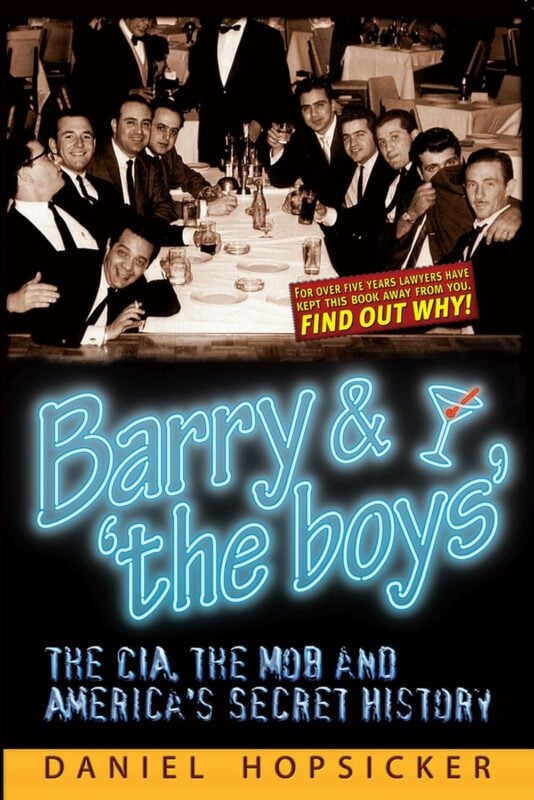
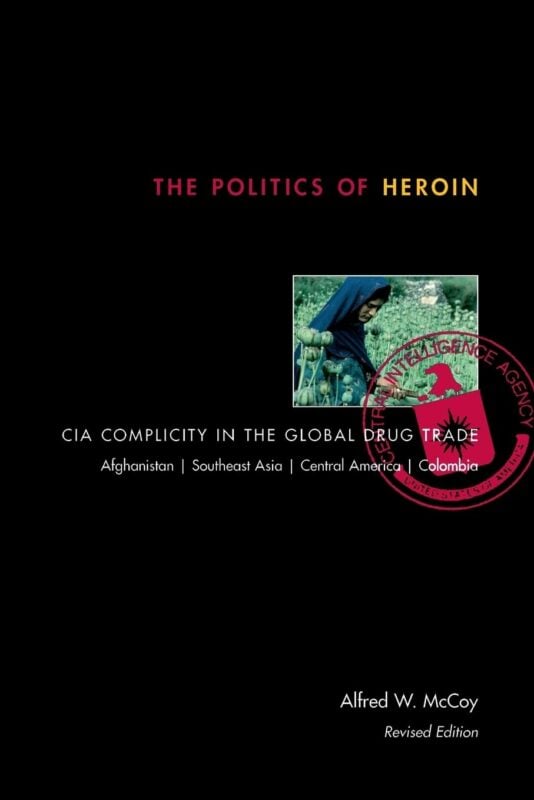
The book expands beyond Europe, detailing how the CIA, through alliances with organized crime, converted anti-communist operations into drug trafficking empires. In chapters on Miami, Vietnam, and Latin America, Chung documents how intelligence operations used heroin and cocaine networks to fund covert war. Figures like Meyer Lansky and Cuban exiles became essential assets in these operations. Drug policy became a dual tool: a revenue stream for black ops and a mechanism for domestic repression.
The Middle East as Imperial Continuum
The British and American manipulation of Middle Eastern politics receives thorough analysis. The book recounts how British imperialists used Zionist promises, secret treaties, and Arab uprisings to divide and control the region. Figures like Herbert Samuel and operations like the Balfour Declaration illustrate a continuity between imperial land management and modern geopolitical engineering. British and Nazi affiliations with Middle Eastern actors—including the Mufti of Jerusalem and the Muslim Brotherhood—served long-term strategies of divide-and-rule, later adapted into CIA operations during the Cold War.
Cultural Manipulation and Psychological Warfare
Cultural policy emerges as another battleground. From Operation Mockingbird to the Congress for Cultural Freedom, Chung explores how the CIA infiltrated media and the arts to shape ideological perception. These campaigns did not promote freedom—they defined its limits. Fact-checking, media control, and narrative engineering functioned to suppress dissent and normalize elite consensus. James Burnham’s transformation from Trotskyist to father of neoconservatism illustrates the ideological grooming process by which thinkers were absorbed and redirected.
Toward a Managed Democracy
The trajectory culminates in a system that masks control as consent. Through controlled elections, media monopolies, and staged geopolitical conflicts, the postwar Western order codified fascism within democratic veneers. Leadership assassination, mass surveillance, and ideological purging were not remnants of a defeated enemy—they were tools rebranded by its former adversaries. What appears as democratic decay is better understood as imperial strategy.
The Empire’s Financial and Institutional Core
London remains the financial hub of this legacy. Chung maps how the City of London, with institutions like HSBC and offshore banking schemes, maintained imperial revenue channels. These systems operated with legal impunity and strategic invisibility. The fusion of financial deregulation, intelligence laundering, and elite immunity created a permanent architecture of power that survives electoral change and policy reform.
Conclusion: A Structural Continuum
Cynthia Chung’s historical architecture does not construct conspiracy—it maps convergence. The actors, institutions, and operations she documents form a continuous structure of power, not a sequence of disconnected events. Fascism, in this schema, is not a historical anomaly or a foreign import. It is an embedded strategy of elite governance, rebranded and redeployed through evolving forms. To recognize this architecture is to understand the coherence behind the chaos. To name it is to see its vulnerabilities. Where institutions once wore uniforms, they now wear suits. Where they once issued commands, they now write laws. The empire did not vanish. It reorganized.