Shadow Masters: An International Network of Governments and Secret-Service Agencies Working Together with Drugs Dealers and Terrorists for Mutual Benefit and Profit
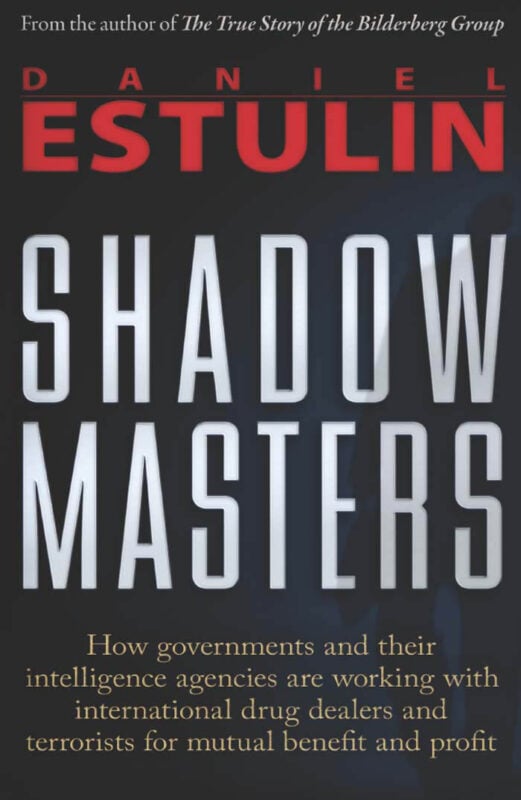
Shadow Masters by Daniel Estulin exposes the concealed alliances binding governments, intelligence agencies, drug cartels, and terrorists into a single, mutually reinforcing system of power. Estulin opens with his own displacement from the Soviet Union and the personal costs inflicted by forces beyond public scrutiny. This foundational loss echoes throughout his argument, setting the stakes: the erosion of self-determination through invisible control.
The Architecture of Shadow Power
Estulin traces the emergence of “Shadow Masters”—elite actors who operate behind official institutions. They build networks across government, finance, military, and organized crime. These networks depend on secrecy, historical continuity, and the management of public perception. Leaders meet at summits, parliaments legislate, and agencies intervene, but the true direction arises from deals struck away from democratic oversight. Estulin details how the consolidation of media by corporate and intelligence interests enables the manufacture of consent and the distortion of truth. The construction of consensus relies on repeated crisis, engineered distractions, and the systematic manipulation of information. Each decision—war, economic policy, legislative action—serves the design of this hidden hierarchy.
Orchestration of Crises and Economic Warfare
Shadow Masters use crisis as a method, not an accident. Estulin narrates the “economic rape of Russia,” showing how the collapse of the Soviet Union unleashed a fire sale of assets to insiders and foreign agents. Oligarchs, created almost overnight, receive state industries in exchange for loyalty. Western interests channel financial instruments to extract wealth while imposing “reforms” that disempower populations. Estulin exposes the mechanism: orchestrated economic meltdowns create artificial scarcity, then transfer public assets into private hands. The financial crises of the 2000s follow the same pattern. Demand destruction—engineered contraction of economies—paves the way for consolidation. Those with insider knowledge liquidate positions before collapse, buy assets at a fraction of their value, and perpetuate control through indebtedness. The public suffers loss, uncertainty, and deprivation as a new class of transnational rulers accumulates advantage.
Alliances with Organized Crime and Terror
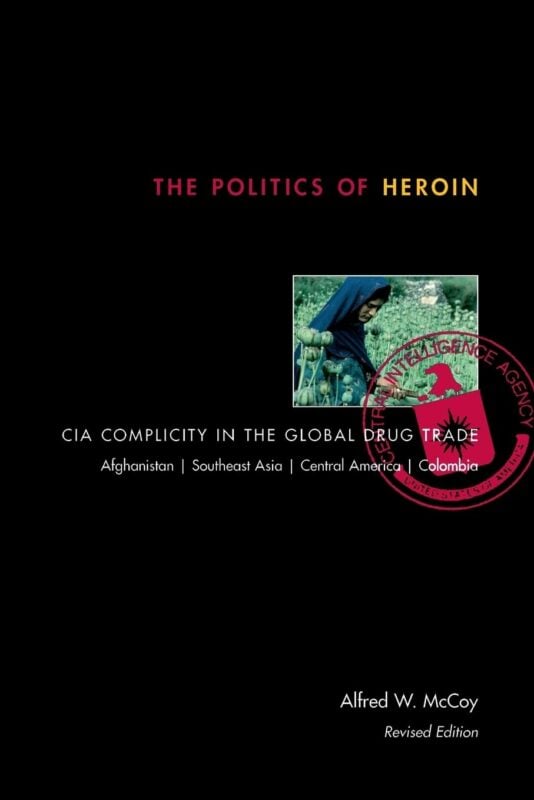
Estulin directly links state power to illicit enterprises. Intelligence agencies work with drug dealers and terrorists, using them as strategic tools and sources of untraceable revenue. This alliance enables black operations, the destabilization of rival states, and the maintenance of “managed chaos.” Drug money finances covert interventions. Terrorist groups serve as pretexts for expanded surveillance, domestic crackdowns, and military deployments. Estulin documents examples in Afghanistan, Kosovo, Latin America, and the Middle East. Intelligence actors, seeking plausible deniability, create networks that overlap with organized crime and extremist movements. The global war on drugs and the war on terror converge, reinforcing budgets and legitimizing interventions while hiding the deeper purpose: resource control and social management. Who profits when instability spreads, when entire regions become trafficking corridors, and when fear becomes the rationale for surveillance? The answer, Estulin asserts, lies in the intersection of official policy and clandestine enterprise.
Information Control and the Psychology of Consent
The manipulation of public perception emerges as a central function of the Shadow Masters. Media conglomerates, intelligence operatives, and corporate strategists shape narratives to elicit specific emotional responses. Estulin describes the transformation of mass media into an instrument of psychological warfare. News cycles highlight threats, enemies, and emergencies, compelling citizens to accept restrictions on liberty and acquiesce to unpopular policies. Propaganda no longer functions solely through censorship or falsehood; it depends on the creation of confusion, the saturation of competing versions, and the framing of debate around managed outcomes. The “consensus shapers,” in Estulin’s account, manufacture belief through the repetition of key themes: national security, external threat, economic necessity. Citizens experience a fragmentation of reality, mistrusting institutions yet struggling to organize resistance. Shadow Masters excel in using division as a strategy, fostering factionalism, identity conflict, and culture wars that dissipate collective action.
The Mechanisms of Oligarchic Rule
Estulin examines the historical evolution of oligarchic rule, connecting medieval Venetian banking families to contemporary elite groups like the Bilderbergers. He identifies continuity in the methods of control: hereditary privilege, alliance-building, secrecy, and the manipulation of ideology. The legacy of “natural law,” the development of the nation-state, and the advances of the Enlightenment become battlegrounds for control over legitimacy. In the modern era, the language of democracy cloaks structures designed for elite benefit. Institutions serve as facades, while real decisions emerge from private gatherings, informal networks, and secret agreements. Estulin underscores the role of patents, scientific progress, and education as contested fields. When society fosters creativity and literacy, citizens resist domination. Oligarchs respond by restricting access to knowledge, undermining civic education, and promoting narratives that justify concentration of power.
Case Studies: From Russia to Kosovo
Concrete episodes ground Estulin’s analysis. The economic transition in Russia under Boris Yeltsin, managed by Western advisers and internal collaborators, results in mass impoverishment and the rise of new oligarchs. The disintegration of Yugoslavia and the Kosovo conflict showcase the use of war for territorial and economic advantage, facilitated by covert alliances with criminal elements. Intelligence agencies leverage organized crime to destabilize regions, influence outcomes, and profit from arms and narcotics flows. Estulin’s recounting of these events illustrates how official policy intersects with clandestine action, producing outcomes that reinforce the power of the Shadow Masters.
The Litvinenko Poisoning: A Case of Narrative Construction
Estulin dissects the high-profile poisoning of Alexander Litvinenko, highlighting the rush to assign blame and the orchestration of public outrage. Media and officials focus attention on Vladimir Putin and Russian intelligence, but Estulin questions the underlying logic and the selection of method—radioactive polonium. He suggests the event fits a broader pattern: spectacular crimes produce confusion, delegitimize opponents, and justify geopolitical maneuvering. The Shadow Masters thrive in this environment, using spectacle to direct attention and manufacture enmity.
Demand Destruction and Economic Engineering
The 2008 global financial crisis reveals the intentional engineering of economic collapse. Estulin explains the concept of “demand destruction,” where insiders trigger contractions, seize assets, and reinforce their dominance. Publics experience sudden loss of jobs, homes, and security while elites restructure markets. Estulin’s predictions regarding the housing crash and the surge in gold prices arise from his access to confidential sources within elite gatherings. These insights illustrate how those with privileged information position themselves ahead of market cycles, ensuring gains while others bear losses. Shadow Masters use economic cycles not as happenstance but as levers to restructure society.
Psychological Operations and the Division of Society
Propaganda evolves into psychological operations designed to splinter society. Estulin points to the deliberate stoking of fear, identity politics, and factional animosity as methods to prevent unified resistance. The language of “us versus them” permeates political discourse, while orchestrated scandals and staged crises keep publics distracted. Consensus fragments as citizens confront a blizzard of contradictory claims, retreating into cynicism or tribalism. The Shadow Masters exploit this fragmentation to introduce new policies, consolidate surveillance, and reinforce dependency.
The Erosion of Democratic Legitimacy
Estulin asserts that real democracy depends on civic and cultural literacy, the capacity for informed participation, and the protection of the public good. Shadow Masters erode these foundations by marginalizing dissent, narrowing debate, and transforming citizenship into passive consumption. The privatization of public assets, the centralization of money supply, and the restriction of rights through legalistic mechanisms transfer sovereignty from citizens to transnational authorities. Treaties and charters drafted in the name of progress carry clauses that suspend rights when “the interests of the Union” require. Estulin interprets this as a structural shift: from republics accountable to citizens to entities managed for the benefit of an elite.
Resisting the New Dark Age
Estulin closes by invoking the moral imperative to resist. He frames personal freedom as an ethical demand and links the exposure of corruption to a refusal to participate in inhumanity. The stakes become existential: to acquiesce means to accept the normalization of misery and injustice. Estulin’s appeal challenges readers to question authority, seek independent verification, and participate in the defense of liberty. He warns that the failure to recognize and oppose the workings of the Shadow Masters risks the onset of a “New Dark Age,” characterized by surveillance, poverty, and perpetual conflict.
The Continuing Relevance of Shadow Masters
Shadow Masters persists as a vital text for understanding the convergence of criminality and governance in the modern era. Estulin’s synthesis of firsthand testimony, historical research, and detailed case studies provides a map of concealed power. He demonstrates how crisis, economic engineering, propaganda, and strategic alliances operate in tandem to produce outcomes beneficial to a narrow elite. The book calls readers to action by making visible the structures that render populations compliant, divided, and vulnerable. Estulin identifies the restoration of democracy and justice as achievable only through relentless inquiry, cultural literacy, and the courage to confront the spectacle of human misery.
By laying bare the mechanisms of global control, Estulin transforms skepticism into a foundation for action. Shadow Masters serves both as a warning and a call, insisting that humanity’s future depends on recognizing and dismantling the networks that thrive in secrecy.