Conspirators’ Hierarchy: The Story of the Committee of 300

The Conspirators' Hierarchy: The Committee of 300 by Dr. John Coleman proposes that an elite organization, operating at the highest echelons of global power, directs major world events and orchestrates sweeping changes in political, economic, and social systems. Dr. Coleman, drawing on his background as an intelligence officer, traces his introduction to this secretive group through access to classified documents during his field service in Africa. He asserts that the Committee of 300, a covert oligarchy, coordinates the strategies and operations of numerous well-known and obscure organizations, all in pursuit of a centralized world order.
Origins and Structure of the Committee of 300
Dr. Coleman identifies the Committee of 300 as a lineage-based, interlocking system of influential families, aristocratic houses, and powerful financiers whose networks extend across governments, industries, and secret societies. He positions this entity as the "ultimate controlling body," with the capacity to influence policy decisions at the highest levels in the United States, the United Kingdom, and beyond. The Committee’s reach encompasses both public figures and hidden directors whose actions shape the fate of nations.
Dr. Coleman names organizations such as the Royal Institute for International Affairs, the Council on Foreign Relations, the Bilderbergers, and the Club of Rome as institutional arms executing the Committee's designs. He explains that these bodies, far from acting independently, serve as coordinated mechanisms for disseminating policy, manipulating social movements, and directing technological progress. The text advances the claim that power is exerted in open view, within government halls and global summits, even as public attention remains diverted.
Historical Case Studies and Evidence
To support his thesis, Dr. Coleman presents a sequence of case studies and historical incidents. The murder of Italian Prime Minister Aldo Moro is framed as a consequence of opposition to population reduction and economic policies dictated by the Committee’s agents. Through documented testimony from Italian courts and witnesses, Dr. Coleman attributes direct threats to Henry Kissinger, asserting that high-level U.S. officials executed Committee orders. The destabilization of Pakistan under Ali Bhutto follows a similar narrative, with Bhutto’s advocacy for nuclear self-sufficiency leading to fatal reprisals orchestrated through global intelligence networks.
He recounts episodes in Latin America, such as the Malvinas War and the Central American conflicts, as calculated moves by the Committee to stifle nationalist development and promote instability. Dr. Coleman traces patterns linking economic crises, regime changes, and the emergence of new political orders to decisions made by this elite body. The convergence of social engineering, covert operations, and economic policy demonstrates a methodology designed for durable control.
The Mechanisms of Global Control
Dr. Coleman’s analysis identifies key methods the Committee employs to maintain dominance. Control over international finance, manipulation of commodity markets, and orchestration of debt dependencies serve as economic levers. Through global institutions such as the International Monetary Fund and the World Bank, the Committee enforces policies that favor resource extraction, suppress indigenous industries, and subordinate national interests.
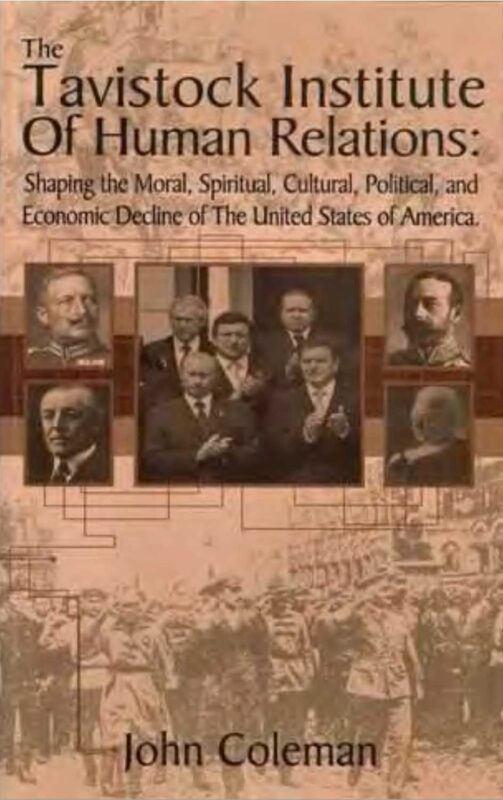
Simultaneously, Dr. Coleman asserts that ideological warfare operates through the cultivation of social movements, dissemination of countercultural trends, and strategic deployment of mind control technologies. Institutions like the Tavistock Institute and Stanford Research Institute, he argues, design psychological campaigns that disrupt social cohesion and foster mass compliance. Popular culture, including rock music, drug proliferation, and media saturation, is treated as a deliberate method for demoralization and atomization of society.
Depopulation and the Global 2000 Agenda
A central contention within the book concerns the Committee’s approach to population control. Dr. Coleman asserts that policies to reduce global population—articulated in reports such as the "Global 2000 Report"—operate through mechanisms of war, disease, famine, and sterilization. He describes the Committee’s view of humanity as hierarchical, with a small elite entitled to resources and authority, while the remainder are categorized as "useless eaters." Strategic use of environmental crises and managed scarcity perpetuates dependency and curtails demographic growth in targeted regions.
Industrial Suppression and the Zero-Growth Model
Dr. Coleman details how the Committee enforces a transition from industrial productivity to a "post-industrial zero-growth society." He links the deindustrialization of advanced economies, suppression of nuclear power, and technological stagnation to policies promulgated by the Club of Rome and related organizations. These institutions, often under the banner of environmentalism or sustainability, channel scientific inquiry away from projects that would enhance energy independence or mass prosperity. According to Coleman, scientific progress is selectively permitted, serving only those sectors that reinforce elite dominance, such as computing and surveillance.
Educational Subversion and Social Engineering
The book claims that educational systems undergo systematic degradation by design. Dr. Coleman argues that the Committee’s agents infiltrate educational policymaking, introduce curricula that discourage independent thought, and foster apathy among students. The result is a populace less equipped to challenge authority or innovate beyond prescribed boundaries. Media, entertainment, and even religious institutions are recruited to propagate confusion, nihilism, and division, thus neutralizing potential sources of organized resistance.
Goals and Objectives of the Committee
Dr. Coleman enumerates a series of explicit objectives that, he claims, guide the Committee’s operations. These include the creation of a unified global government and monetary system, elimination of national identities, eradication of Christianity and other established religions, institution of pervasive surveillance and mind control, legalization and promotion of drugs and pornography, forced migration and urban depopulation, curtailment of scientific research except where it serves elite interests, management of social crises through agencies like FEMA, and comprehensive control of education and information.
He describes a future wherein genetic manipulation, biochemical control, and technotronic governance merge to create new forms of authority. The manipulation of mass data, surveillance technologies, and crisis management agencies prepares societies for the emergence of "robotoid" populations, compliant with directives from the Committee’s central planners.
Institutional Integration and the Web of Power
The narrative details the interplay between supranational organizations—the United Nations, International Monetary Fund, Bank of International Settlements, and World Court—and the Committee’s inner circle. These institutions function as transmission belts, harmonizing national policies with global objectives. Dr. Coleman asserts that subversion of governments occurs from within, with key officials recruited, trained, or coerced to implement Committee directives.
The text advances the proposition that terrorist organizations and revolutionary movements are frequently manipulated as tools for destabilization, negotiation, or distraction. Cults and new religious movements serve as laboratories for psychological experimentation and means of further undermining traditional belief systems.
The Psychological and Cultural Dimension
Central to Dr. Coleman’s thesis is the argument that the Committee’s power derives not only from economic and political command but from mastery of psychological influence. He cites the deployment of cultural products—music, entertainment, fashion, and mass sport—as mechanisms for engineering consent, shaping desires, and manufacturing social reality. These instruments of soft power mold expectations, divert attention from structural change, and preempt the formation of coherent opposition.
Through the development and promotion of "liberation theology," the Committee influences religious reformations that erode established doctrines and foster political movements aligned with globalist agendas. Infiltration and co-optation of activist groups ensure that energy for change dissipates in directions that ultimately reinforce elite interests.
Consequences and the Path Forward
Dr. Coleman closes his work with an urgent call for awareness and action. He asserts that the process of global consolidation has accelerated, with major elements of the Committee’s program already implemented or in advanced stages of execution. The integration of financial, political, cultural, and technological control produces a system of governance with unprecedented reach and resilience.
The Committee’s plans for population reduction, deindustrialization, and psychological management generate crises that, in turn, legitimize the further expansion of centralized authority. As control becomes more sophisticated, the scope for independent action diminishes. Dr. Coleman charges his readers with the task of recognizing these patterns, disseminating the knowledge of their existence, and organizing resistance grounded in national sovereignty, religious integrity, and community self-determination.
Structural Implications for the Future
The book prompts consideration of the mechanisms by which a small elite can direct the fate of continents. What relationships drive the convergence of economic collapse, social decay, and technological stagnation? How does engineered crisis, whether economic, political, or cultural, create opportunities for deeper control and the incremental removal of freedoms? When media, government, and educational systems function as instruments of a unified directive, what avenues for independent thought and collective agency remain viable?
Dr. Coleman’s thesis implies a future wherein the logic of centralization extends beyond conventional political boundaries, encompassing the spheres of biology, cognition, and identity. The capacity to control information, perception, and belief becomes the final terrain upon which authority is exercised.
Global Policy, Local Resistance
Within this framework, Dr. Coleman identifies the formation of alliances between nationalists, populists, and independent thinkers as the chief obstacle to the Committee’s ambitions. The success of the Committee’s program depends on the sustained disintegration of traditional bonds—familial, religious, national, and professional. Where communities reassert control over education, defend cultural heritage, and demand transparency in governance, the expansion of globalist control meets structured opposition.
Conclusion
The Conspirators’ Hierarchy: The Committee of 300 by Dr. John Coleman provides a densely argued, provocative account of global power. It synthesizes historical analysis, institutional critique, and psychological theory into a narrative of elite orchestration. The work confronts readers with the proposition that world events unfold as the consequence of calculated design by a small but highly organized ruling class. The significance of this argument rests in its capacity to provoke inquiry into the visible and invisible forces shaping modern life, urging the reader to investigate the origins, intentions, and structures of power that define the present age.