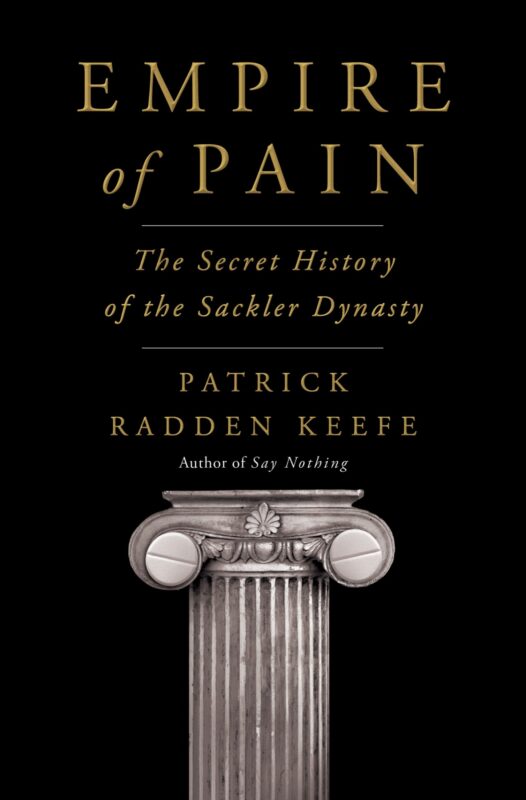
Empire of Pain: The Secret History of the Sackler Dynasty by Patrick Radden Keefe excavates the rise of a family whose name dominates the walls of museums, universities, and hospitals while its wealth flows from a pharmaceutical revolution that triggered historic suffering. Keefe traces the Sacklers’ trajectory from the tenements of Brooklyn to global prominence, interrogating how ambition, secrecy, and corporate power intersected to create a dynasty defined by both generosity and devastation.
The Roots of Ambition
In early twentieth-century Brooklyn, Arthur, Mortimer, and Raymond Sackler inherit their parents’ immigrant aspirations and drive for respectability. Their father, Isaac, insists that a “good name” surpasses material inheritance. The brothers internalize this principle while confronting the volatile fortunes of their household. Arthur, the eldest, hustles through adolescence, stacking jobs and responsibilities, embodying a drive that soon infects his siblings. Academic success becomes the family’s vehicle for ascent, leading the brothers into medicine during the golden age of American healthcare.
Education, for the Sacklers, signifies opportunity, but entrenched discrimination shapes their journey. Medical school quotas targeting Jewish students force Mortimer and Raymond abroad, landing them in Scotland and later Massachusetts at an institution that welcomes those marginalized elsewhere. Arthur subsidizes his brothers’ ambitions, reinforcing a familial structure of mutual obligation and relentless advancement.
Genesis of the Pharmaceutical Empire
Arthur Sackler channels his curiosity and business acumen into psychiatry and pharmaceutical advertising, cultivating a rare expertise at the intersection of medicine and persuasion. The Sackler brothers immerse themselves in hospital life, enduring the horrors of mid-century psychiatric practice: electroshock therapy, lobotomies, overcrowded asylums. Their scientific drive finds an outlet in experiments aimed at uncovering chemical treatments for mental illness. Arthur’s dual experience as physician and adman orients the family’s gaze toward the possibilities of pharmaceutical innovation.
The brothers acquire a struggling company, Purdue Frederick, transforming it through research and a network of scientific collaborators. Their ventures in drug advertising reshape industry practice. Arthur’s campaigns pioneer a new style of marketing, targeting doctors directly with scientific persuasion, cementing his influence over both clinical practice and industry profits.
OxyContin and the Creation of a Blockbuster
Purdue Pharma, the evolution of the family’s enterprise, introduces OxyContin in 1996, a painkiller engineered for high potency and sustained release. The company’s marketing machine frames OxyContin as a breakthrough in pain management, advocating its use for chronic pain patients who had previously lacked access to strong opioids. Sales representatives, guided by intensive training and aggressive quotas, saturate the American medical landscape with persuasive messaging about the drug’s safety and efficacy.
Doctors embrace the narrative, reassured by marketing materials that downplay the risk of addiction. Purdue’s sales soar. OxyContin generates billions in revenue, transforming the Sacklers into one of the richest families in the United States. Institutions across the world accept Sackler donations, installing the family’s name on cultural and academic landmarks. This proliferation of philanthropy shapes the public face of the dynasty, projecting benevolence and vision.
The Hidden Costs of Pain Management
As OxyContin’s sales climb, reports of abuse, addiction, and overdose accumulate in medical journals and local news. Communities across the U.S. experience surges in prescription opioid addiction, followed by waves of heroin and fentanyl deaths as users seek alternatives when prescriptions run out. The Centers for Disease Control and Prevention documents staggering mortality: hundreds of thousands dead from opioid overdoses since the drug’s launch.
Internal Purdue documents, later uncovered in litigation, reveal that the company’s executives recognize the addictive potential of OxyContin even as they instruct sales teams to push for higher dosages and broader prescribing. Keefe’s investigation exposes systematic suppression of unfavorable evidence and the deployment of legal and PR resources to deflect accountability.
Legal Warfare and the Culture of Secrecy
Mounting lawsuits from states, counties, and Native American tribes converge into a national reckoning. Plaintiffs argue that OxyContin’s launch marks the taproot of the opioid epidemic. The Sacklers, long absent from public view, appear in legal depositions, denying responsibility and framing their actions as contributions to medical progress. Elite law firms defend the family and Purdue, orchestrating settlements and bankruptcy strategies designed to preserve as much of the Sackler fortune as possible.
Public outrage accelerates as journalists, activists, and politicians demand transparency and restitution. Investigations reveal the extent of the Sacklers’ efforts to shield their assets and maintain philanthropic influence. Keefe details a culture of control and secrecy, observing how the family’s commitment to their “good name” transforms into an obsession with legacy management, even as the scale of human loss becomes undeniable.
The Machinery of Reputation
The Sacklers’ strategy for reputation management extends beyond legal defense. Their philanthropy serves as a bulwark against criticism, sustaining partnerships with world-renowned museums, universities, and hospitals. Naming rights contracts ensure the Sackler imprint persists on buildings and endowments. The family’s story becomes entwined with the narrative of American achievement, presenting the dynasty as patrons of progress and enlightenment.
Yet the convergence of media scrutiny and litigation generates a new narrative: that of the benefactor whose generosity originates in calculated harm. The tension between public recognition and private accountability intensifies as institutions begin to distance themselves, reconsidering their association with the Sackler name.
The Dynamics of Power and Accountability
Keefe’s account reveals the intricate interplay of wealth, law, and influence. The Sacklers’ access to elite attorneys and public relations consultants shapes the legal landscape, forestalling consequences that could alter the family’s fortune or public standing. The strategies deployed in courtrooms echo the tactics used in pharmaceutical marketing: precision, persistence, and an unyielding focus on outcomes.
Lawyers and regulators confront unprecedented obstacles as they attempt to secure justice for the victims of the opioid crisis. Purdue’s bankruptcy proceedings channel billions in settlements to plaintiffs, yet the structure of these deals preserves much of the Sacklers’ personal fortune. The family’s assertion of legal innocence and philanthropic virtue persists, even as evidence accumulates of deliberate misrepresentation and strategic indifference to suffering.
Patterns of Legacy and Denial
As Keefe chronicles the unraveling of the Sackler dynasty’s public persona, the narrative returns to its origins in familial aspiration and cultural belonging. The drive for a “good name,” transmitted from Isaac Sackler to his sons and grandchildren, becomes both a principle and a paradox. The family’s achievements, measured in art collections, scientific research, and institutional endowments, collide with the irrevocable consequences of their business choices.
Kathe Sackler, in her 2019 deposition, embodies this legacy: publicly defending OxyContin’s merits, disavowing legal or moral fault, and expressing pride in her role in the drug’s development. The convergence of personal conviction, corporate structure, and societal catastrophe offers a singular study in how power functions in modern America.
A Defining Chronicle of American Capitalism
Empire of Pain asserts that the story of the Sacklers is inseparable from the story of American capitalism—its innovations, its ambitions, and its failures. The family’s pursuit of progress through medicine aligns with national narratives of ingenuity and merit. Their mastery of marketing and legal maneuvering demonstrates the capacity of private actors to shape public health policy and evade regulation.
The opioid epidemic, as Keefe details, arises from a convergence of scientific promise, regulatory vulnerability, and commercial strategy. The Sacklers’ empire, built on the premise of relieving suffering, becomes the engine of one of the greatest public health disasters in American history. The book traces how decisions made in boardrooms and family meetings ripple outward, reshaping communities, industries, and institutions.
The Anatomy of Catastrophe
Keefe’s reporting synthesizes interviews, court records, corporate documents, and decades of medical history to construct a granular portrait of causality. He tracks the development of OxyContin from laboratory to market, documenting how innovation, unchecked by adequate oversight, can unleash consequences that transcend intention. The narrative lays bare the human dimension of catastrophe—parents, children, doctors, and first responders swept into a crisis engineered from the pursuit of profit.
The Sacklers’ legacy, according to Keefe, will endure in the structures of American philanthropy and the annals of the opioid epidemic. Their story poses urgent questions: What happens when the guardians of public welfare prioritize self-interest over collective well-being? How does a society confront the architects of its own undoing, when those architects stand atop its most revered institutions?
A Study in Consequence
Empire of Pain documents the convergence of ambition, innovation, and tragedy in a story that spans continents and generations. Keefe’s structural clarity reveals the mechanisms by which private power accumulates, projects influence, and resists accountability. The Sacklers’ rise and the opioid crisis they helped ignite stand as a testament to the enduring interplay of wealth, secrecy, and consequence in the American experience.
By examining the origins, expansion, and consequences of the Sackler dynasty, Keefe’s work provides an indispensable account for readers seeking to understand the anatomy of catastrophe—and the prospects for justice and restitution amid structures designed to shield power from its own legacy.