Blitzed: Drugs in Nazi Germany
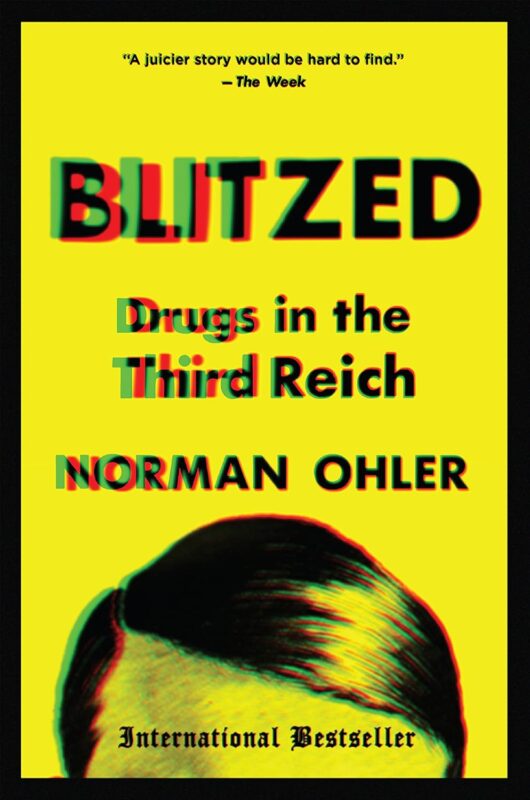
Blitzed: Drugs in the Third Reich by Norman Ohler presents a chemically infused portrait of Nazi Germany, tracing the pervasive role of methamphetamine in both the military campaigns and personal routines of the Third Reich’s leaders. Ohler reconstructs a narrative in which pharmaceutical engineering fused with ideology, driving decisions, behaviors, and social dynamics across the Nazi state.
The Methamphetamine Revolution
Methamphetamine entered German life under the brand name Pervitin, synthesized by the Temmler pharmaceutical company in 1937. Packaged as a remedy for fatigue and low morale, it spread rapidly across professions and social classes. Students, factory workers, and homemakers adopted it as a legal stimulant. Advertised with the flair of commercial consumer goods and distributed through promotional campaigns, Pervitin reshaped daily rhythms. Doctors prescribed it liberally. The drug's physiological effects—dopamine surges, appetite suppression, extended wakefulness—aligned with Germany’s push toward higher productivity and social discipline.
Chemical Foundations of the Nazi State
Germany dominated global drug markets before World War II, controlling morphine, heroin, and cocaine exports through industrial conglomerates like IG Farben and Merck. Synthetic pharmaceuticals expanded alongside nationalist ambitions. The state's pharmaceutical sector fused scientific excellence with economic clout, enabling Nazi planners to imagine and sustain chemically supported mass mobilization. Drugs did not operate as peripheral elements. They structured labor capacity, mental performance, and social compliance.
From Weimar Decadence to Nazi Control
The liberal drug culture of Weimar Berlin—a city where morphine, heroin, and cocaine circulated freely—collapsed under Nazi purges. The regime reclassified drug use through the lens of racial hygiene. Laws targeted users for sterilization or confinement, placing addiction within the spectrum of hereditary degeneracy. Jewish doctors and intellectuals were publicly associated with narcotic culture, positioning anti-drug policy as an extension of antisemitic ideology. Health regulation served the dual purpose of societal purification and bureaucratic domination. State surveillance merged with eugenics through drug records and citizen reporting systems.
The Doctor and the Dictator
Theodor Morell, a once-marginal physician specializing in vitamin injections and tonics, entered Hitler’s inner circle in the late 1930s. Initially treating the Führer’s gastrointestinal distress with probiotics and glucose infusions, Morell escalated to more potent concoctions, including opiates, hormones, and stimulants. Hitler relied on these treatments for physical endurance and emotional steadiness. He permitted multiple daily injections and delegated his medical autonomy. Morell’s influence deepened as his prescriptions expanded. He recorded every dose. His notes chronicle the gradual medicalization of Hitler’s leadership.
Military Strategy on Meth
The Wehrmacht institutionalized Pervitin as a tactical advantage. Soldiers received tablets during campaigns, most notably in the 1940 invasion of France. Methamphetamine enabled extended marches, reduced the need for sleep, and intensified aggression. Commanders observed increased efficiency in fatigued troops. Military doctors and planners incorporated the drug into logistics. Otto Ranke, director of the Institute for Defense Physiology, championed Pervitin’s use, framing it as a biological resource to counteract mental and physical limits. His trials and reports validated distribution on a strategic scale.
The Blitzkrieg Effect
Speed defined the early years of the war—mechanical speed, operational speed, pharmacological speed. Meth-fueled troops bypassed French defenses in record time. Reports from the front celebrated the endurance of divisions operating for days without rest. Stimulants enabled round-the-clock offensives. In the Luftwaffe, pilots used meth to extend flight hours and focus during bombing missions. Tactical manuals integrated dosing schedules. The chemical momentum became a structural feature of military performance, creating a feedback loop of dependence and success.
Public Health and Private Destruction
Pervitin’s popularity extended beyond the battlefield. Chocolates laced with meth circulated as novelty items. Office workers and homemakers turned to the drug to manage long hours and domestic strain. Children and adolescents gained access through casual prescriptions or shared household supplies. Addiction rates rose as tolerance built quickly. Users reported euphoria followed by crashes, memory loss, and emotional instability. Physicians noted declining effectiveness and documented withdrawal symptoms, yet production continued at industrial scale.
Escalation and Collapse
As the war dragged on, Hitler’s treatments escalated. Morell administered Eukodal (oxycodone), cocaine solutions, and barbiturates in complex regimens. These substances shaped Hitler’s moods, movements, and decisions. Cabinet members expressed concern over his demeanor, but few challenged Morell’s authority. The Führer’s increasing isolation and erratic behavior coincided with the intensification of his drug intake. In parallel, supply shortages and Allied bombing disrupted pharmaceutical production. The Wehrmacht faced stimulant scarcity during critical operations, revealing the fragility of its drug-enhanced readiness.
Structural Addiction of a Regime
Nazi governance embedded chemical dependency into its structure. Productivity, ideology, and control merged with pharmacology. Propaganda emphasized vitality and discipline while the regime administered synthetic solutions to sustain performance. Drug consumption became a mechanism of social engineering. Methamphetamine bridged gaps between ideological demands and human limitations. As victories waned and crises mounted, chemical compensation failed to maintain coherence. The collapse of the Third Reich mirrored the burnout of its artificially accelerated energy.
Historical Reverberations
Blitzed locates the pharmacological dimension of Nazi power within the broader context of modernity and biopolitics. It tracks how a political system internalized its chemical tools, turning medicine into an instrument of war and governance. Norman Ohler reframes the Nazi experience as one that fused technological ambition with drug-induced intensity. The revelations of institutionalized meth use and Hitler’s private pharmacopoeia revise assumptions about leadership, agency, and decision-making during the war. Ohler’s work challenges readers to reconsider the biochemical undercurrents of twentieth-century history.