Poisoner in Chief: Sidney Gottlieb and the CIA Search for Mind Control
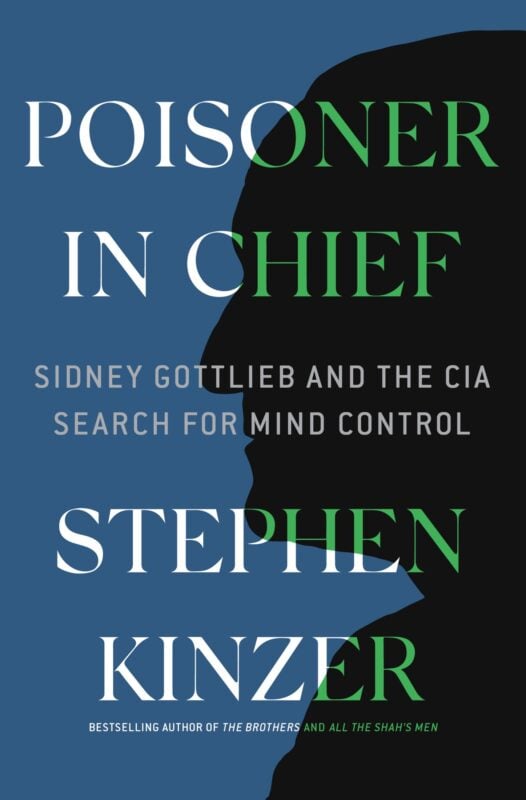
Poisoner in Chief by Stephen Kinzer reveals the hidden history of the CIA’s most notorious scientist, Sidney Gottlieb, whose work shaped the dark contours of American intelligence and covert operations during the Cold War. This biography examines the ambitions, secrets, and consequences of a man whose actions redefined the limits of science, law, and morality in the pursuit of mind control.
The Unlikely Alchemist of the CIA
Sidney Gottlieb grew up in the Bronx, the son of Hungarian Jewish immigrants. Childhood surgeries corrected clubfoot, but left him with a lifelong limp. Gottlieb overcame physical and social barriers, excelling in science and developing a fascination with the chemical structures that govern life. His academic journey from City College to a PhD in biochemistry at Caltech positioned him for a career in government service during World War II. Gottlieb’s early government work in the Department of Agriculture and the FDA introduced him to the intersecting worlds of pharmaceuticals and toxins. Searching for deeper purpose and challenge, he joined a scientific elite shaped by the urgencies of war.
Recruitment into the Secret War
The end of World War II triggered a scramble among American intelligence agencies to secure knowledge possessed by Axis scientists. The Joint Intelligence Objectives Agency, operating under the newly formed Operation Paperclip, actively recruited German and Japanese experts with experience in biological warfare, chemical weapons, and experimental interrogation. U.S. authorities sought to extract and exploit the expertise of men like Nazi doctor Kurt Blome and Japanese General Shiro Ishii, architect of the infamous Unit 731. These deals produced an influx of wartime scientific data obtained through criminal experimentation on prisoners. In exchange, former war criminals secured immunity from prosecution and new careers as American government contractors. Paperclip’s bureaucratic ingenuity rewrote histories and erased affiliations to facilitate visas and secret appointments, even when evidence of atrocities lay in plain view.
Origins of MK-ULTRA
Within this climate of clandestine recruitment and ethical suspension, Gottlieb found his vocation. The CIA’s Technical Services Division, responsible for developing spy tools and lethal devices, placed him at the heart of a growing campaign to dominate the psychological battlefield. The Cold War created relentless pressure to develop capabilities that would offset the perceived advantage of the Soviet Union and Communist China in mind control, interrogation, and psychological manipulation. The 1949 trial of Hungarian Cardinal Jozsef Mindszenty, whose apparent mental breakdown during a show trial raised fears of communist mind control, drove American leaders to invest in extreme forms of scientific research. Gottlieb rose to direct Project MK-ULTRA, the agency’s most ambitious and secretive experiment in controlling, breaking, or reshaping the human mind.
Techniques of Mind Control
Gottlieb orchestrated and supervised an elaborate network of experiments, both in the United States and abroad, that sought to unlock the secrets of the mind through chemical intervention, hypnosis, sensory deprivation, and a range of psychological stressors. MK-ULTRA’s mandate included the covert administration of psychoactive drugs—including LSD—to unwitting subjects: prisoners, psychiatric patients, students, soldiers, and ordinary citizens. The search for a “truth serum” capable of unlocking hidden knowledge or inducing compliance drove an unending cycle of tests, failures, and refinements. Gottlieb’s laboratories created and distributed poisons, nerve agents, and devices for sabotage or assassination. Field operations extended these techniques to interrogation programs in Europe, Asia, and Latin America, targeting both adversaries and suspected double agents.
Secrecy, Accountability, and Destruction of Evidence
The scale and audacity of MK-ULTRA depended on secrecy maintained through compartmentalization, the destruction of records, and official deniability. Gottlieb, aware of the moral and legal implications, ordered the systematic eradication of evidence before leaving the CIA. Survivors of the experiments, along with their families, struggled for decades to obtain information and redress. Senate investigations in the 1970s brought fragments of the program to light, but most details remain obscured by the absence of documentation and the silence of those involved. Lawsuits by victims forced limited disclosures, but the full extent of the suffering and damage remains unquantified.
The Globalization of Covert Science
Gottlieb’s work was not isolated to domestic laboratories. MK-ULTRA and related programs drove the export of interrogation and mind control techniques to allies, client states, and overseas CIA stations. American agents and contractors operated secret detention sites, sometimes in collaboration with foreign intelligence services, to refine methods developed under MK-ULTRA. Techniques such as sensory deprivation, forced drugging, and psychological “breaking” migrated into international counterinsurgency campaigns. The methods pioneered under Gottlieb’s supervision laid the groundwork for subsequent intelligence and military operations that redefined the boundaries of lawful conduct.
Personal Contradictions and Spiritual Search
Gottlieb’s personality emerges as a study in paradox. Outside the agency, he lived simply, meditated, gardened, and engaged in humanitarian work, volunteering with his wife at leprosy hospitals in India after retirement. He sought meaning in poetry and spiritual quest, distanced from traditional religious dogma. Yet within the CIA, he pursued scientific and operational objectives with relentless focus, rationalizing the use of human subjects in pursuit of “national security.” His conscience, shaped by an ethic of service and curiosity, collided with the practical realities of covert action.
Ethical Collapse and Institutional Consequences
MK-ULTRA’s legacy endures as a case study in the suspension of ethics under bureaucratic and ideological pressure. The agency’s willingness to inflict suffering on vulnerable individuals, often without consent or knowledge, exposes the institutional logic that can arise when oversight and moral boundaries collapse. Scientists, doctors, and administrators found justification for their actions in the existential demands of the Cold War, the imperatives of technological competition, and the bureaucratic imperative to produce results. Senate hearings and media revelations forced partial accountability, but the persistence of official secrecy shielded the architects of the program from meaningful legal or moral reckoning.
Integration of War Crimes Expertise
The alliances forged with former Axis scientists shaped the technical foundation of America’s Cold War intelligence infrastructure. Data obtained from Japanese and German wartime experiments accelerated the development of American chemical and biological capabilities. Immunity deals for figures such as Shiro Ishii and Kurt Blome signaled to both insiders and the public that the U.S. government valued scientific advantage over the prosecution of atrocity. The consequences of this policy reverberated through subsequent decades, influencing the culture and practices of American intelligence and military research.
Gadgetry and the Expansion of Technical Services
As chief of the CIA’s Technical Services Division, Gottlieb presided over a network of engineers and inventors whose task was to produce the material tools of covert action. His team delivered escape kits, surveillance devices, and lethal gadgets ranging from cyanide-tipped fountain pens to poison-laced chocolates. These inventions reflected a technical culture of creativity, secrecy, and ruthless ingenuity. Gottlieb’s division enabled both the operational successes and the abuses of clandestine programs from Europe to Latin America and Southeast Asia.
The Aftermath and Continuing Mystery
Gottlieb retired in 1973, leaving a trail of speculation, suspicion, and unresolved questions. Media obituaries oscillated between describing him as a misunderstood genius and as the “maddest mad scientist.” Lawsuits and congressional investigations dragged his name from obscurity into the public eye, but he retained silence regarding the most damaging details of his work. The final destruction of records—carried out on his orders—ensured that the historical account remains fragmented. The damage inflicted by MK-ULTRA on individual lives, institutional trust, and the boundaries of scientific inquiry continues to provoke debate among scholars, policymakers, and citizens.
Legacy and Implications for Science and Power
Poisoner in Chief demonstrates the consequences of unaccountable power in the intersection of science and national security. The pursuit of ultimate weapons—whether chemical, biological, or psychological—demands vigilance, transparency, and ethical boundaries. The story of Sidney Gottlieb stands as a warning about the capacity for scientific ambition to serve both idealism and atrocity within the same career, the same agency, the same era. The lessons of MK-ULTRA inform ongoing discussions about the permissible limits of state power, the protection of human subjects, and the responsibilities of scientists and public officials in times of fear and uncertainty.
Search Engine Optimization and Discoverability
Readers searching for information about Sidney Gottlieb, MK-ULTRA, CIA mind control experiments, and the ethical history of American intelligence will find in Poisoner in Chief by Stephen Kinzer a thorough account based on archival research, interviews, and declassified documents. This book unearths the origins and operations of one of the most secret and influential programs in intelligence history, exposing the connections between Nazi and Japanese war crimes expertise and U.S. government research. Its relevance extends to those interested in the Cold War, the boundaries of science and ethics, and the history of state power in the twentieth century.
Why does the history of MK-ULTRA remain shrouded in secrecy? The destruction of records and official silence shield the full scope of the program’s actions and consequences. How did the integration of Nazi and Japanese scientific expertise shape American intelligence? The transfer of knowledge, methods, and personnel from Axis powers to U.S. agencies produced advances in technology and techniques, as well as ethical hazards. What drives scientists and officials to rationalize harm in the name of security? The book examines the psychological and institutional factors that justify suspension of ethics under pressure. What lessons emerge for science, law, and government? Vigilance, accountability, and transparent oversight represent necessary safeguards against future abuses.
Poisoner in Chief delivers a compelling narrative, rooted in documented fact and structured analysis, that brings clarity to one of the most complex and consequential episodes in the modern history of intelligence and science.